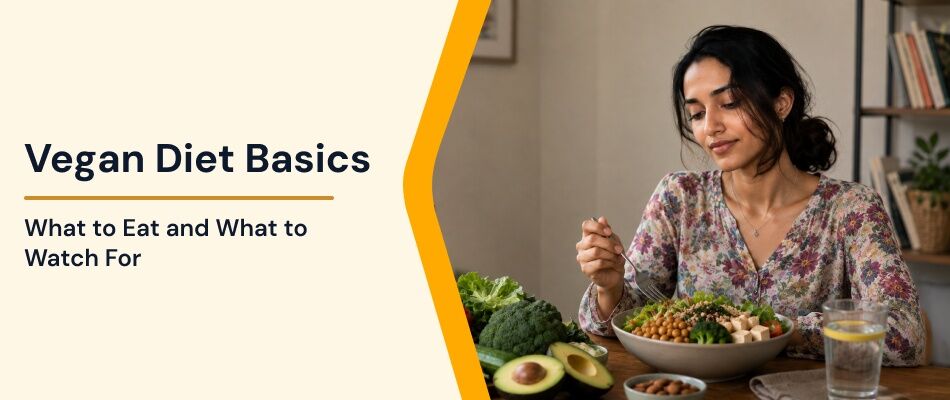
When appropriately planned, a vegan diet can meet nutritional requirements across all life stages. The Academy of Nutrition and Dietetics confirms this. Well-planned vegan diets are nutritionally adequate and can offer protective effects against obesity, cardiovascular disease, hypertension, and type 2 diabetes.
At the Institute of Nutrition and Fitness Sciences (INFS), we know that vegan diet basics can feel overwhelming. This guide breaks down everything you need to know about plant-based eating, key nutrients, and how to build a healthy vegan lifestyle.
What Is a Vegan Diet?
Foods to Include in Vegan Diet
A vegan diet is the most restrictive form of plant-based eating, excluding all foods and ingredients obtained from animals. Unlike vegetarian diets which may include dairy products or eggs, a vegan diet is based exclusively on plant-derived foods.
Foods typically consumed in a vegan diet include:
Vegetables
Fruits
Whole grains
Legumes
Pulses
Soy products
Nuts
Seeds
Herbs and spices
Plant-based beverages
Fortified foods []foods with added nutrients like vitamin B12, vitamin D, and calcium, for example, fortified plant-based milk or fortified cereals]
Originally Published At : Vegan Diet Basics: What to Eat and What to Watch For (https://infs.com/blogs/vega ...)