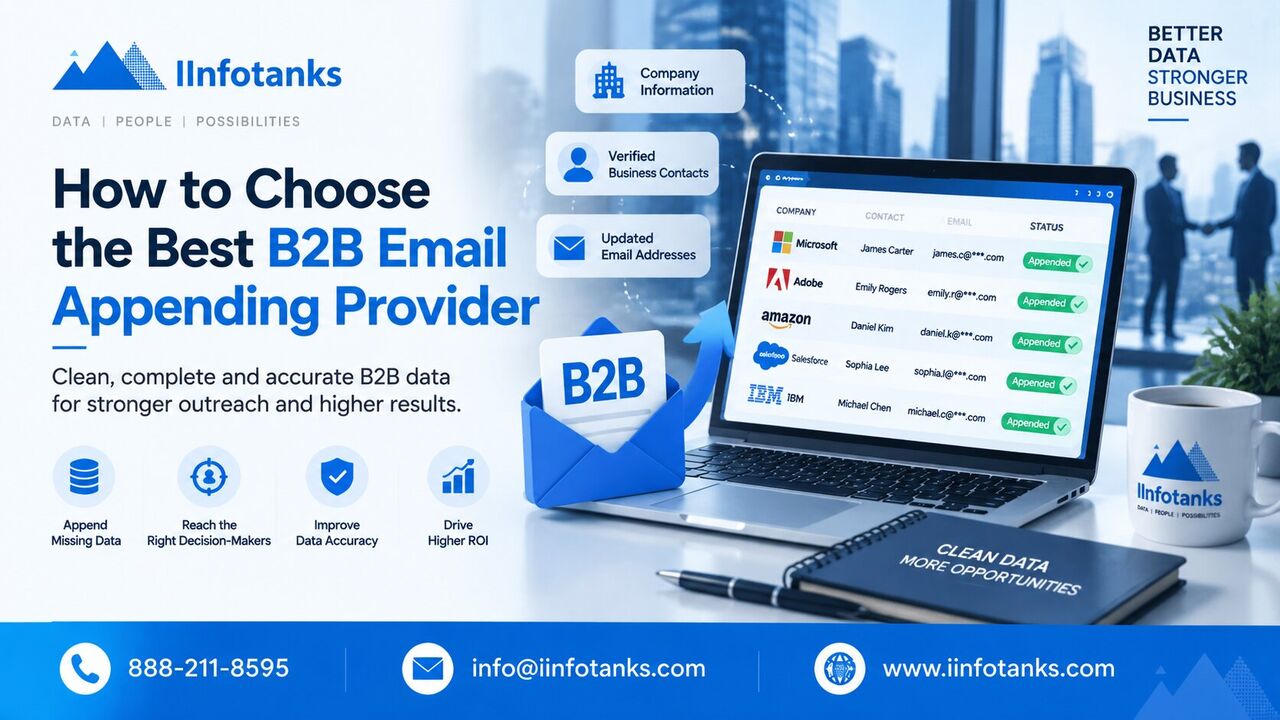
The buying decision therefore shouldn’t begin with the provider that promises the highest match count. It should begin with the records you can verify and explain without creating avoidable complaints or legal exposure. A provider may benefit from returning more matches, while your team carries the cost of bad addresses and damaged sender reputation.
Start with the match you can defend, not the largest match rate
Email appending is meant to fill missing email fields or update records by matching the data you already hold against another dataset. The benefit is straightforward: sales or marketing teams can recover contactability without rebuilding every record manually. The hidden tradeoff is that match volume and match quality aren’t the same measure.
A serious evaluation of Email Appending Services should ask what counts as a match, which identifiers are used, how ambiguous records are treated, and what verification occurs after matching. IInfotanks states that its service verifies matched addresses and runs a final quality check before delivery. Its page also states an accuracy rate above 95%, so a buyer should ask how that percentage is calculated and what happens when a delivered record fails the agreed standard.
Ask where the appended addresses came from
Source provenance matters because the buyer still has responsibilities after the file is delivered. The UK Information Commissioner’s Office says organisations buying or renting information for direct marketing should carry out proportionate due diligence rather than relying on a third party’s assurance. Its guidance on obtaining marketing information from third parties calls for checks covering who compiled the information, when it was collected, how it was collected, and what people were told about its use.
That makes provenance a buying criterion for any Email Appending Service Company. Ask the provider to explain the source categories, record age, suppression process, and proof behind any consent claim. A vendor that can explain those points gives your compliance and marketing teams something they can assess. A vendor that answers only with a match-rate percentage leaves the harder risk with you.
Measure usable accuracy instead of headline accuracy
An accuracy percentage is meaningful only when you know the denominator. A provider might measure syntactic validity, mailbox existence, person-to-company matching, or successful delivery. Those are different tests, and a high result in one doesn’t prove the others.
Run a controlled pilot on a representative slice of your file before committing the full database. Check accepted matches against records your team can independently confirm, then track hard bounces and obvious identity mismatches after permitted use. IInfotanks says its average email append takes about 3 business days, with larger or more complex databases taking 3 to 7 days. That turnaround can be useful, but speed should follow the verification method rather than replace it.
Read the service terms behind the accuracy claim
A percentage means little if the contract doesn’t say what happens when the provider misses it. Ask whether the stated accuracy covers every returned record or only a tested sample, and find out what evidence is required for a dispute. The remedy also matters because a credit for a bad record may not cover the time spent cleaning your CRM after delivery.
For Email Append Services, the contract should also explain file handling after the job is complete. Buyers should know how uploaded source files are transferred, who can access them, and when temporary copies are deleted. These terms help separate a low per-record price from the full operational cost of the append.
Compliance responsibility doesn’t transfer with the file
In the United States, CAN-SPAM applies to commercial email and makes no exception for B2B messages. The Federal Trade Commission also says businesses can’t contract away responsibility by hiring another company to handle email marketing. Its CAN-SPAM compliance guide states that opt-out requests must be honored within 10 business days and that the opt-out mechanism must keep working for at least 30 days after a message is sent.
That responsibility changes how a provider should be assessed. Supplier documentation can support your review, but it doesn’t decide whether a particular campaign is lawful or whether your suppression process is working correctly. Your own team still needs rules for handling objections and maintaining contact restrictions.
Jurisdiction can also change what you may do with appended data. The ICO guidance for B2B marketing distinguishes corporate subscribers from sole traders and some partnerships, while data protection rules can still apply when a business email identifies a person. Check where recipients are located and how existing suppression records will be preserved before activating appended contacts.
Deliverability can erase the savings from a cheap append
Low cost per matched record can become expensive when the file produces bounces or spam complaints. Google’s sender rules also place authentication and unsubscribe duties on higher-volume senders. The provider doesn’t control your whole sending program, but poor appended data can increase the pressure on it.
Price comparisons should therefore separate records returned from records accepted. Ask whether invalid records receive credits, whether duplicate records are removed, and whether the provider will recheck disputed matches. This is where Email Appending Services for Business Growth should be judged against the cost of usable contacts rather than the size of the delivered spreadsheet.
Use a pilot as the final buying test
A good provider should be willing to let evidence settle the decision. Give each provider the same representative sample and define the acceptance rules before testing begins. Compare the share of records that survives your validation, then examine dispute handling and contract terms before expanding the job.
The tradeoff is acceptable when the added reach is worth the verification and compliance work your team must still perform. If a provider can’t explain its data sources or measurement method before the pilot, a high match rate is weak evidence. Choose the vendor whose returned records hold up under your own checks.
Frequently asked questions
What should I ask a B2B email appending provider before buying?
Ask how records are matched, how recently source data was refreshed, what verification occurs, and how failed records are handled. You should also ask for the exact definition behind any accuracy or match-rate claim. The answer should be specific enough for your team to test during a pilot.
Is the highest match rate always better?
No. A higher match rate can include weaker or more uncertain matches if the provider uses broad