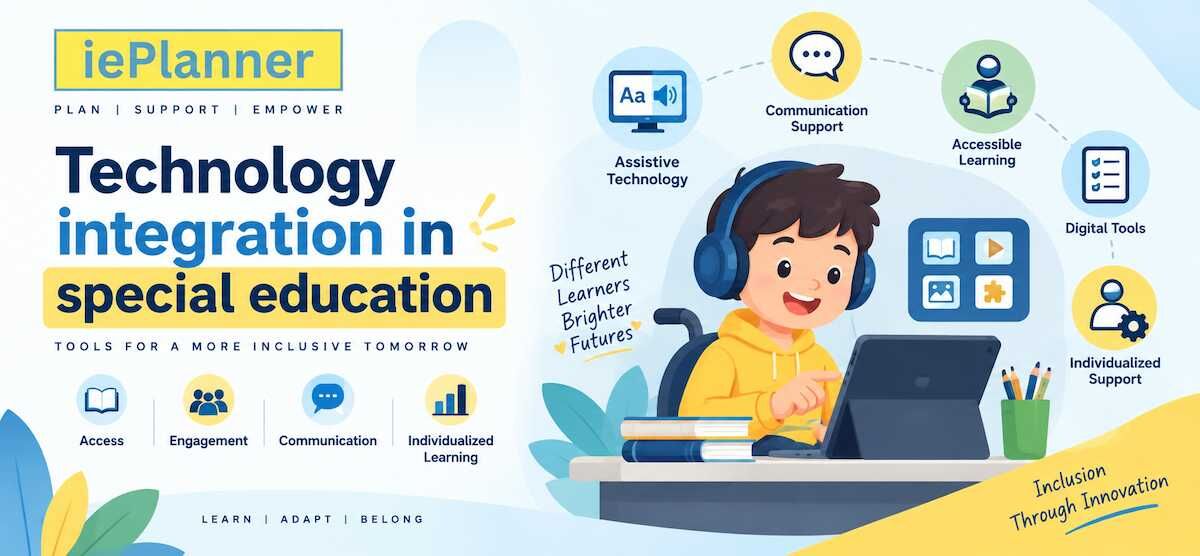
Assistive technology can include communication applications, speech-generating devices, screen readers, text-to-speech tools, visual schedules, adapted keyboards, and interactive learning software. The appropriate solution depends on the student's abilities, educational goals, accessibility requirements, and environment.
IEPlanner provides a digital platform for special education professionals, therapists, schools, and centers. It supports areas such as student assessment, individualized education program planning, progress monitoring, documentation, reporting, and collaboration.
Digital platforms can help professionals maintain organized information about student goals and developmental progress. When used alongside appropriate assistive technologies, they can contribute to a more coordinated approach to individualized educational planning.
Successful technology adoption requires more than purchasing software or devices. Staff need appropriate training, students may need time to become familiar with new tools, and institutions should establish processes for maintaining equipment and protecting student information.
Technology should ultimately be selected based on educational and accessibility needs rather than novelty. Regular review can help determine whether a particular tool continues to support the student's goals effectively.
Phone: +91 9811962970
Email: [email protected]
Address: B-901, Meenal Semeion, Sector-41, Faridabad, Haryana, India - 121003
🌐 https://www.ieplanner.org.i ...