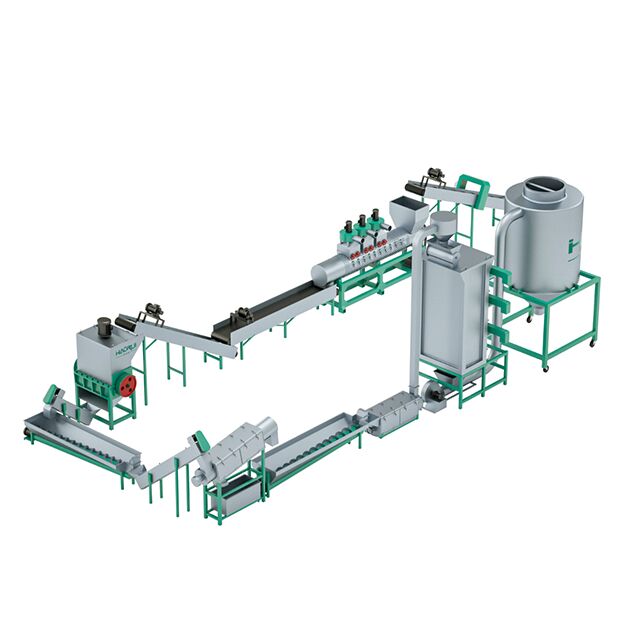
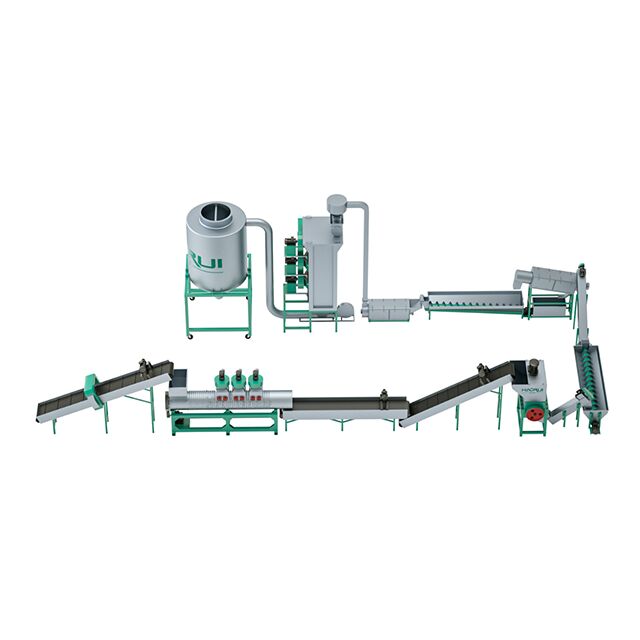
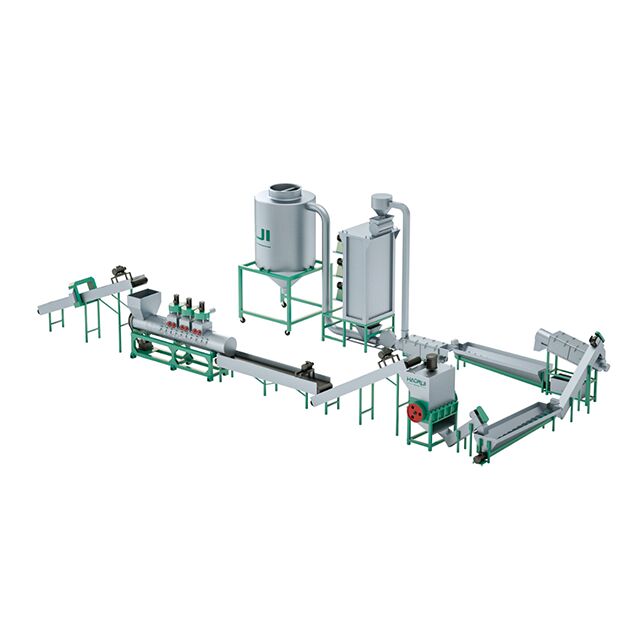
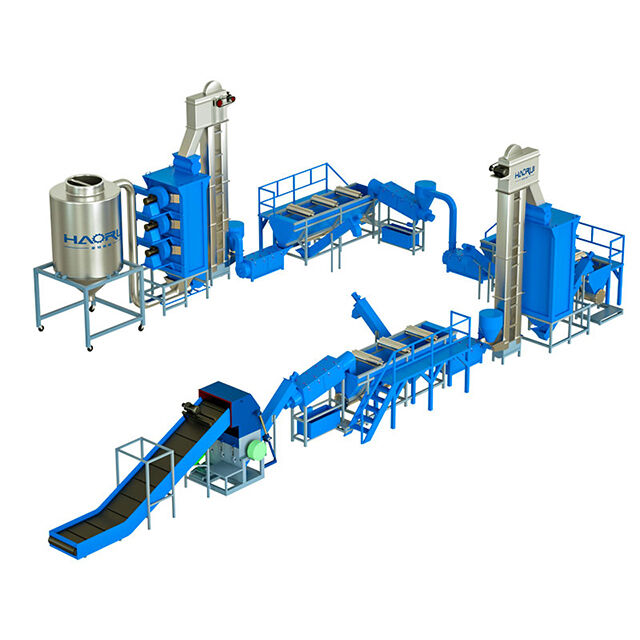
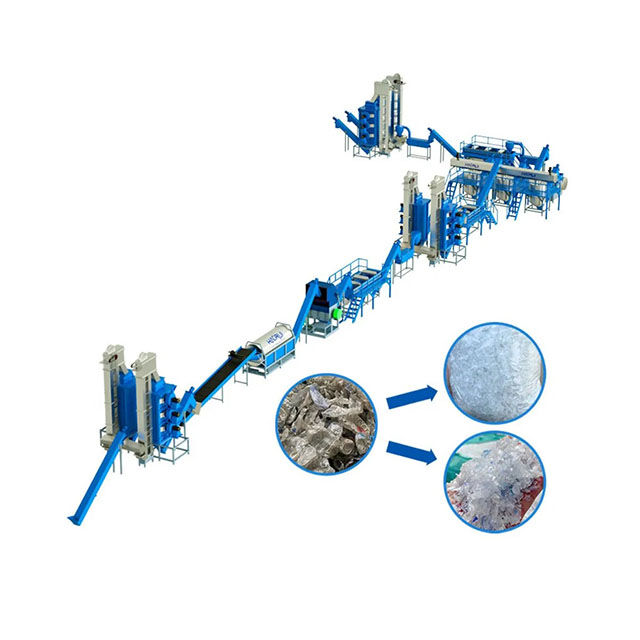
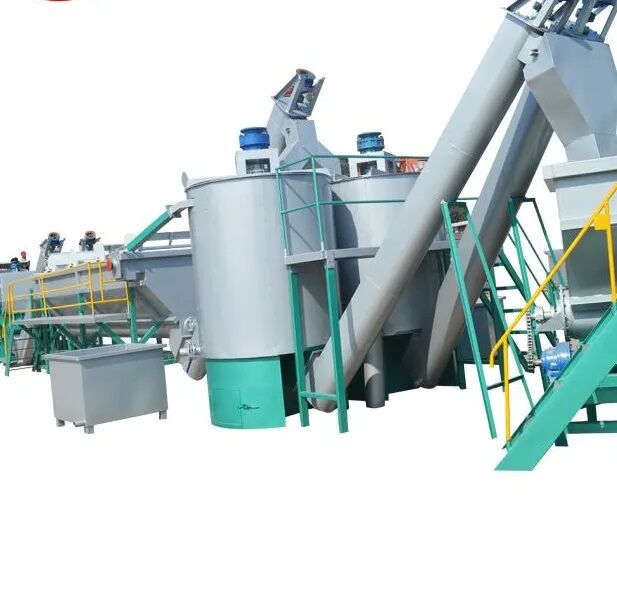
Engineered for continuous operation,high throughput,and efficient contaminant removal,the system integrates material feeding,sorting,size reduction,friction washing,hot washing,rinsing,dewatering,drying,and flake collection into one automated recycling solution.
Key Features
-Capacity range: 500–6,000 kg/h
-Compatible materials:pet bottles,pet preforms,pet sheets,thermoformed trays,and selected pet packaging waste
-Automatic continuous operation with synchronized material handling
-Complete washing and drying process in a single integrated line
-Efficient removal of contaminants,including dirt,sand,labels,adhesives,oils,beverages,and other residues
-Modular configuration to match different raw material conditions and production targets
-PLC-based control system for centralized operation and process monitoring
-Robust construction for demanding industrial recycling environments
-Adjustable processing parameters for different pet feedstocks
-Reduced manual intervention and improved production consistency
-Scalable design for small,medium,and high-volume plastic recycling plants
Typical Process Flow
The exact configuration can be customized according to the incoming material and required flake quality.A typical pet recycling process includes:
1. Feeding and Bale Opening
Pet bottles or sheets are introduced into the sheet grade pet bottle washing line through a conveyor,bale breaker,or automatic feeding system.The feeding equipment provides a stable and continuous supply of material to the sorting section.
2. Pre-Sorting
Manual or automatic sorting equipment removes non-pet materials and undesirable items,such as:
- Pvc and other incompatible plastics
- Metal components
- Stones and glass
- Paper and cardboard
- Heavily contaminated or non-recyclable waste
- Colored or non-standard materials,when required
For higher-quality output,optional optical sorting systems can be integrated into the sheet grade pet bottle recycling line.
3. Label and Cap Separation
Label removers and air-separation systems help separate loose labels,caps,rings,and other lightweight materials from the pet stream.This improves the purity of the recovered pet and reduces the load on downstream washing equipment.
4. Crushing and Size Reduction
A heavy-duty pet plastic crusher machine or plastic recycling granulator machine reduces bottles and sheets into uniform flakes.The cutting system is designed for stable operation and consistent particle size,supporting efficient washing and drying.
The granulator may include:
- Wear-resistant cutting blades
- Water-assisted wet crushing
- Adjustable screen size
- Overload protection
- Easy-access maintenance doors
- Automatic lubrication or centralized lubrication options
5. Pre-Washing
A pre-washing system removes loose dirt,sand,beverage residues,and surface contaminants before intensive washing.This stage helps protect downstream equipment and improves overall washing efficiency.
6. Friction Washing
The friction washer uses high-speed mechanical action and water to remove stubborn contaminants from the pet flakes.The equipment is designed to provide strong cleaning performance while continuously discharging dirty water and separated impurities.
7. Hot Washing — Optional
For heavily contaminated pet or applications requiring improved flake cleanliness,a hot washing system can be added.Hot washing uses heated water and cleaning agents to help remove:
- Adhesive residue
- Oils and grease
- Organic contamination
- Beverage residue
- Fine dirt
- Labels and coating materials
Temperature,residence time,and detergent concentration can be configured according to the raw material and target output quality.
8. Rinsing and Separation
Multiple rinsing stages remove residual detergents and suspended contaminants.Sink-float tanks may be used to separate pet flakes from materials with different densities,such as polyolefin caps,closures,and certain foreign plastics.
9. Dewatering
A high-speed centrifugal dewatering machine removes surface water from the washed pet flakes.The equipment supports continuous processing and prepares the material for thermal drying.
10. Thermal Drying
The thermal drying system reduces residual moisture using controlled hot air circulation.Proper drying improves flake flowability,storage stability,and performance in downstream processing.
11. Air Classification and Flake Collection
An air separator or zigzag classifier removes lightweight labels,dust,film,and other low-density materials.The cleaned pet flakes are then conveyed to a storage silo,big-bag filling station,or automatic packing system.
Main Equipment Configuration
Depending on capacity and material conditions,the pet sheet & bottle washing line may include:
- Automatic feeding conveyor
- Bale opener or bale breaker
- Sorting conveyor
- Magnetic metal separator
- Label remover machine
- Air classifier
- Pet plastic crusher machine or wet plastic recycling granulator machine
- Pre-washing machine
- High-speed friction washer
- Hot washing tank
- Screw conveyor
- Sink-float separation tank
- High-speed dewatering machine
- Thermal dryer
- Dust removal system
- Cyclone separator
- Storage silo
- Flake packing system
- Water circulation and filtration system
- Electrical control cabinet
- PLC and touchscreen interface
Automation and Control
The sheet grade pet bottle recycling machine is equipped with an integrated electrical control system that coordinates the operation of conveyors,crushers,washers,pumps,fans,heaters,and drying equipment.The plc control system allows operators to monitor and adjust key operating conditions from a central touchscreen panel.
Control functions may include:
- Start-up and shutdown sequencing
- Motor protection
- Overload and fault alarms
- Temperature monitoring
- Water-level control
- Conveyor speed adjustment
- Pump and fan control
- Emergency-stop protection
- Production status monitoring
- Automatic interlocking between machines
Automation helps maintain stable throughput,reduce operating errors,and improve overall production efficiency.
Output Material
The finished product is clean,dry pet flake suitable for a variety of recycling and manufacturing applications,including:
- Recycled polyester fiber
- Pet strapping
- Pet sheet extrusion
- Thermoformed products
- Injection-molded components
- Non-food packaging applications
-