What Is a Sugar Craving?
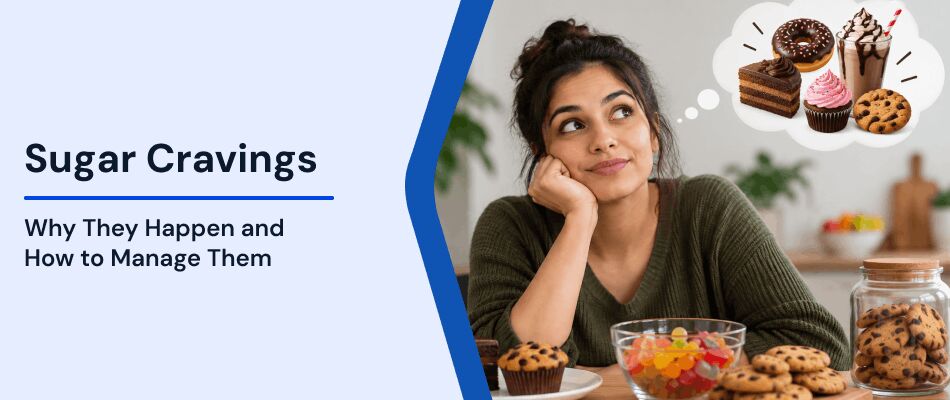
A craving is an intense desire for a specific food. Hunger is a broader need to eat.You can feel full and still crave sweets. You can eat balanced meals and still want chocolate.
Why cravings happen: Research shows cravings involve reward signals, hormones, psychological factors, and environmental cues. They are learned behaviors. If you always eat sweets while watching TV, eventually TV triggers craving.
A 2020 study found that food cravings were associated with intake patterns and metabolic health. This means cravings reflect real patterns in your life, not just your imagination or lack of discipline.
The key insight: Cravings are not random. They have causes. Understanding those causes is how you manage them.
Causes of Sugar Cravings: The Real Reasons You Want Sweets
Multiple factors trigger cravings. Usually, it is not just one.
Cause 1: Skipping Meals or Long Gaps Between Eating
When you go hours without food, hunger builds. By the time you eat again, anything sweet looks irresistible.
A study of breakfast-skipping women found that eating breakfast reduced sweet cravings. Eating a higher-protein breakfast had even stronger effects.
Why it matters: Large meal gaps make highly palatable foods more appealing. You are not weak, you are very hungry.
Learn More About Nutrition and Preventive Health
Explore INFSs preventive health education programs. Master nutrition strategies through evidence based nutrition course frameworks and professional health and fitness certifications that build expertise in craving management and behavior change.
Principles of Diagnostics in Preventive Healthcare: Learn when nutrition concerns need professional screening.
Cause 2: Poor Sleep
Sleep loss increases hunger and desire to eat. A study found that shorter sleep reduced fullness and increased food-craving scores.
Why it matters: When you sleep poorly, your body seeks quick energy. Sweets provide fast satisfaction.
Cause 3: Blood Sugar Spikes and Sugar Cravings Connection
Eating highly refined carbohydrates causes blood sugar to spike then crash. This crash triggers hunger and craving for more sweet foods.
Balanced meals with protein, fiber, and fat keep blood sugar stable. This reduces the crash and the resulting craving.
Cause 4: Stress and Mood
Stress, boredom, and negative emotions trigger cravings for comfort foods. Food cravings are more strongly related to emotional eating than to dietary restraint alone.
Why it matters: Sometimes you crave sweets because you want comfort, not because you are hungry.
Cause 5: Habit and Environment
If you always eat sweets at certain times or places, those cues trigger craving. A route past a bakery, television time, or late-night work can become automatic triggers.
Why it matters: The environment or routine, not actual hunger, drives the desire.
Originally Published At : https://infs.com/blogs/how- ...