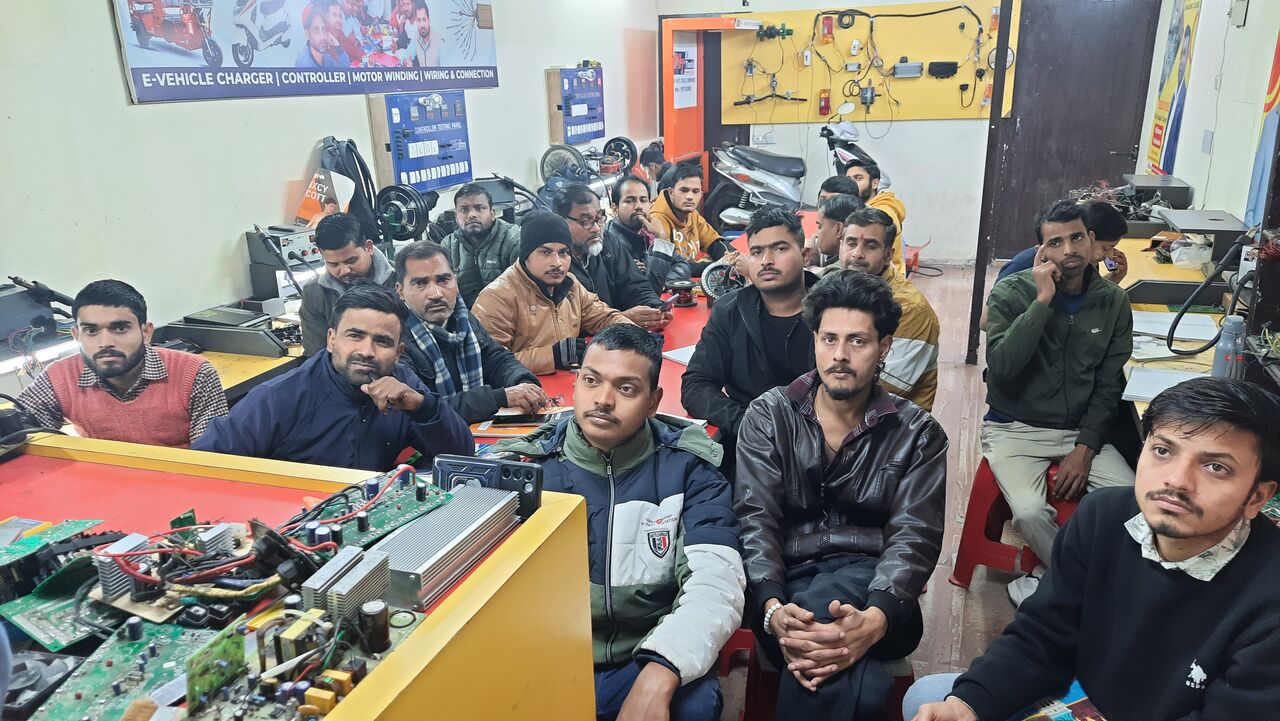
Important learning areas may include battery health assessment, voltage measurement, continuity testing, charger diagnosis, motor testing, controller troubleshooting, wiring fault detection, connector inspection, and preventive maintenance. Practical education can connect theoretical concepts with component identification, testing, assembly, dismantling, repair exercises, and workshop procedures using suitable tools and diagnostic equipment.
An informational EV course can also explain wiring diagrams, circuit symbols, component specifications, fault codes, service documentation, maintenance schedules, and diagnostic workflows. Learners can develop a method of observing symptoms, identifying possible causes, taking measurements, interpreting results, completing repairs, and verifying vehicle operation.
The course may be useful for beginners, students, mechanics, technicians, service personnel, and individuals exploring electric mobility careers. Broader subjects such as regenerative braking, thermal management, power electronics, charging infrastructure, battery chemistry, software diagnostics, and emerging EV technologies can provide deeper technical understanding.
Because EV models differ in battery voltage, motor configuration, controller design, charging requirements, connectors, and wiring layouts, adaptable diagnostic knowledge is important. Safety learning can include electrical isolation, protective equipment, battery handling, correct tool selection, and organized workshop practices. Continuous technical learning can help learners adapt to evolving EV service technologies in India’s electric mobility sector.
https://evtraininginstitute ...