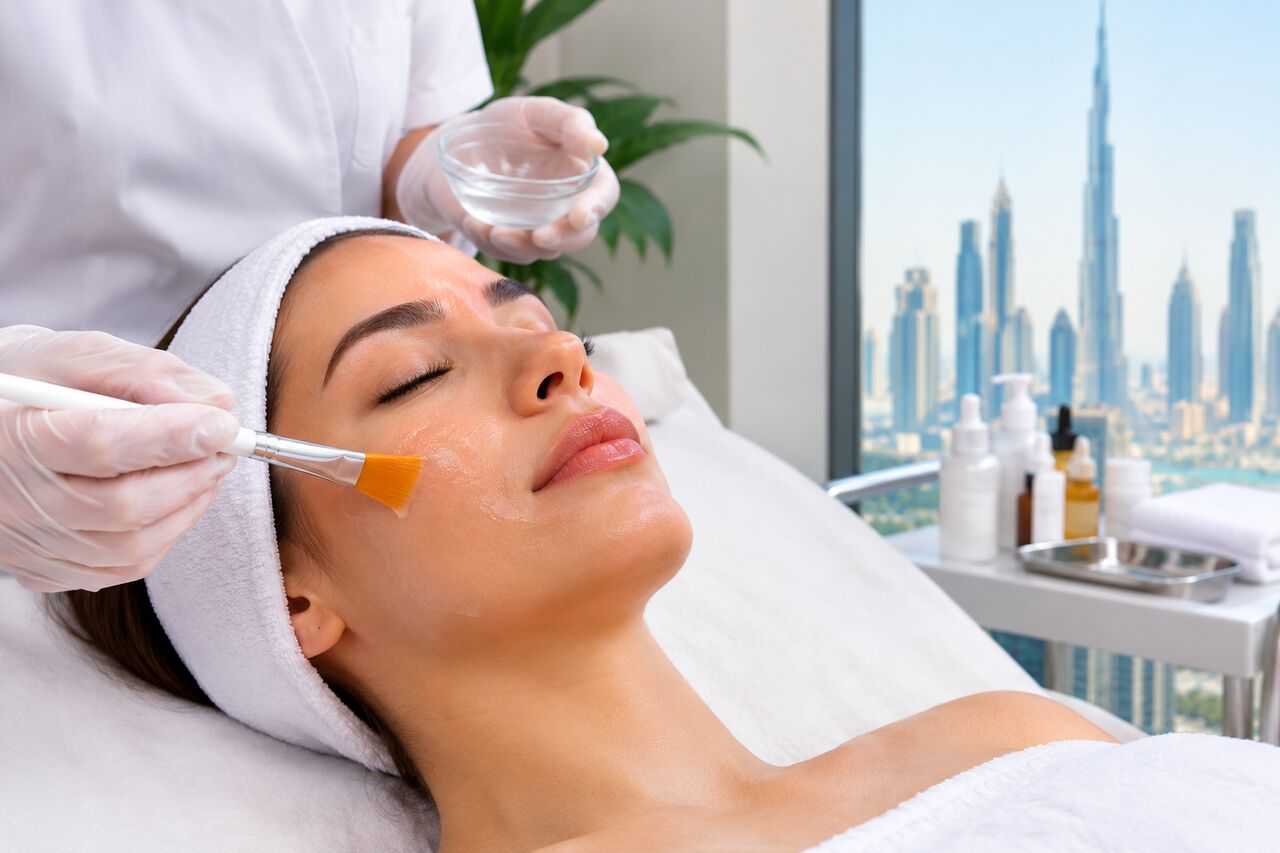
Chemical peels are a non-surgical skin treatment used to improve the appearance of concerns such as uneven pigmentation, dullness, rough texture, acne marks, and some signs of sun damage. In Dubai, regular sun exposure can make pigmentation and photoaging common skin concerns. A chemical peel involves applying a carefully selected chemical solution to the skin to exfoliate targeted layers and encourage skin renewal.
Compared with more invasive procedures, some chemical peels involve relatively short treatment times and limited downtime. However, the recovery period and results depend on the type and depth of the peel, the condition of the skin, and individual treatment needs.
Why Dubai's Climate Makes Skin Peels Relevant
Dubai's climate can influence several common skin concerns. Frequent exposure to ultraviolet (UV) radiation, combined with indoor air conditioning and changes in humidity, may contribute to pigmentation, dullness, uneven texture, and visible signs of photoaging. Chemical peels may help improve the appearance of some of these concerns by removing damaged outer skin cells and promoting skin renewal.
Sun exposure can also contribute to the appearance of sunspots and uneven pigmentation. Depending on the formulation and depth of the peel, professional treatment may help improve the appearance of certain pigmentation concerns. A skin assessment is important because the appropriate peel depends on factors such as skin type, pigmentation, sensitivity, and treatment goals.
Types of Chemical Peels Available
Chemical peels differ in their ingredients, strength, and depth of penetration. The main categories include superficial, medium-depth, and deep peels.
Superficial peels affect the outermost layers of the skin and may use ingredients such as glycolic acid or salicylic acid. They are commonly used to improve the appearance of dullness, mild uneven texture, and some pigmentation concerns. Recovery is generally shorter than with deeper peels, although individual reactions can vary.
Medium-depth peels penetrate further into the skin and may be considered for concerns such as more noticeable pigmentation, fine lines, and uneven texture. Peeling, redness, and heightened sensitivity are common side effects during the recovery period.
Deep peels reach deeper layers of the skin and are used for selected skin concerns under professional supervision. They generally involve a longer recovery period and require careful assessment before treatment.
The most suitable peel depends on the skin's condition, sensitivity, tone, treatment goals, and medical history. A qualified professional should determine the appropriate formulation and strength.
What Happens During a Chemical Peel?
A chemical peel usually begins with cleansing the skin to remove oil, makeup, and other surface impurities. The selected chemical solution is then carefully applied to the treatment area and left on the skin for a controlled period.
Depending on the type of peel, the solution may be neutralized or removed before a soothing product and appropriate sun protection are applied. Temporary sensations such as tingling, warmth, tightness, redness, or sensitivity may occur during or after treatment.
Aftercare is an important part of recovery. Following professional instructions, protecting the skin from UV exposure, avoiding harsh exfoliating products, and using suitable skincare products can help protect the treated skin while it heals.
Who Might Consider a Chemical Peel
Chemical peels can be an option for individuals looking to address:
Dull or uneven-looking skin
Certain types of pigmentation
Acne marks and some forms of superficial scarring
Rough or uneven skin texture
Fine lines and early signs of photoaging
Some forms of clogged pores
However, chemical peels are not appropriate for all individuals. Active skin infections, certain inflammatory skin conditions, recent skin procedures, some medications, and pregnancy may affect whether treatment is appropriate. A thorough evaluation of the skin and medical history by a qualified professional is essential before recommending a peel.
Safety Considerations
Chemical peels use active ingredients that intentionally affect the skin, so the concentration, application time, preparation, and peel depth need to be carefully considered. Possible reactions can include redness, irritation, dryness, peeling, sensitivity, and temporary or persistent changes in pigmentation.
The risk of complications can vary according to skin type, the formulation used, treatment depth, and individual factors. Therefore, professional evaluation is especially crucial for individuals with sensitive skin or a history of pigmentation issues.
At-home use of strong chemical peeling agents can carry additional risks. A qualified professional can assess whether a peel is suitable and recommend the most appropriate treatment based on each person’s unique skin type and concerns.
Realistic Expectations
The outcome of a chemical peel depends on the type and depth of the treatment, as well as the individual’s skin condition. Superficial peels may provide a smoother and brighter appearance, while deeper peels can produce more noticeable changes in selected pigmentation, texture, or other skin concerns.
In some cases, multiple treatment sessions may be necessary to achieve optimal results. The recommended interval between treatments depends on the peel used and the skin's recovery. It is important to have realistic expectations because skin renewal and improvement can take time.
Frequently Asked Questions
How long does a chemical peel take?
A chemical peel typically takes around 20 to 45 minutes, depending on the type and depth of the treatment.
Is there downtime after a chemical peel?
Downtime varies according to the peel. Superficial peels may involve minimal recovery, while medium-depth and deeper peels can cause redness, peeling, and sensitivity for several days or longer.
How many chemical peel sessions are needed?
The required number of sessions depends on the specific skin concern, type of peel, desired results, and individual response to treatment.
Can chemical peels help with sun-related pigmentation?
Chemical peels can improve the appearance of certain types of sun-induced pigmentation. The effectiveness of the treatment depends on the pigmentation’s type and severity, as well as the specific peel formulation and depth used.
Is a chemical peel painful?
Sensations vary by peel. Some people experience temporary tingling, warmth, stinging, or tightness during treatment. Deeper peels may cause greater discomfort and require additional measures for comfort.
Who should avoid a chemical peel?
Individuals with active skin infections or specific skin conditions may need to delay or forgo treatment. Pregnancy, medications, recent procedures, and a history of pigmentation problems may also affect suitability. An experienced professional should evaluate each person’s unique situation prior to treatment.
What should be done after a chemical peel?
Follow the provider's aftercare instructions, protect the treated skin from UV exposure, keep the skin appropriately moisturized, and avoid harsh exfoliating products until the