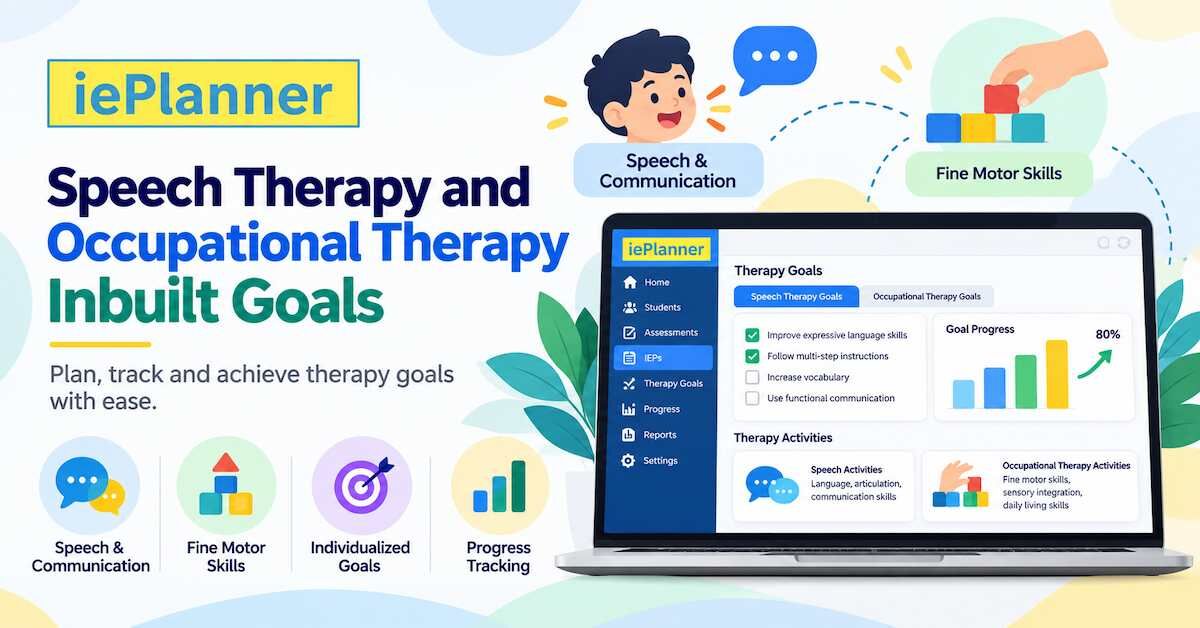
Speech therapy goals may cover requesting, responding to questions, following verbal directions, developing sentence structure, and improving social interaction. Occupational therapy goals may involve using utensils, managing clothing fasteners, improving visual-motor integration, and participating in personal care routines. These objectives can be divided into smaller steps to make progress easier to observe and document.
Digital therapy planning tools may provide goal categories, session records, and progress monitoring features that support this organization. Therapists can use these resources to maintain a record of selected goals and adjust intervention activities when additional practice or different strategies are required.
The relevance of each objective depends on individual assessment and the person's everyday environment. More details about speech therapy planning and related occupational therapy goals can be found at https://www.ieplanner.org.i ....