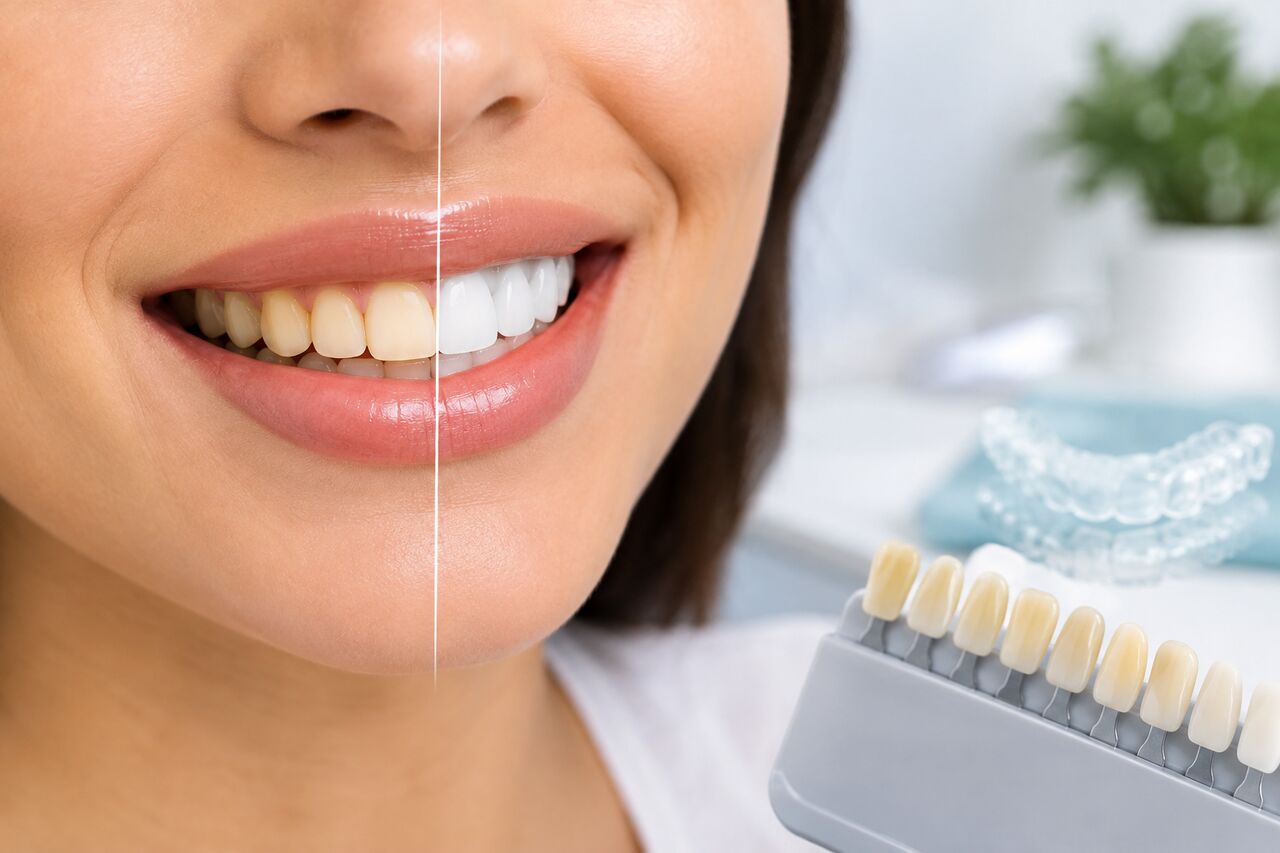
Teeth discoloration is a widespread aesthetic concern among dental patients, yet many remain unaware of its true prevalence and range of causes. While it is often assumed to result solely from poor hygiene, teeth discoloration actually stems from a complex interplay of factors—including genetics, nutrition, aging, and daily habits.
Why Do Teeth Lose Their Whiteness?
Tooth discoloration is commonly classified into two main forms: extrinsic and intrinsic.
The first form is known as extrinsic staining. Extrinsic stains form on the enamel—the outer surface of the teeth—and are caused by external factors such as tea, coffee, red wine, tobacco smoke, and deeply colored foods like berries or soy sauce.
Intrinsic stains, however, form inside the tooth. Intrinsic stains may be caused by:
As part of the normal aging process, the enamel layer gradually thins, making the yellowish dentine beneath more visible.
Overexposure to fluoride during early life (fluorosis).
Some drugs, such as tetracycline, may be taken during tooth development.
An injury to a particular tooth.
Genetics influences both the thickness of enamel and the color of dentin.
Identifying the type of discoloration is important, as surface stains are often treatable with bleaching, while intrinsic stains may require other approaches such as bonding or veneers.
What Actually Works: Evaluating the Options
1. Professional In-Clinic Whitening
In-office whitening performed by dentists involves the use of a higher concentration of hydrogen or carbamide peroxide than OTC products. Some of these procedures may utilize light or heat to enhance the whitening effect. In-office bleaching is the most effective way to achieve noticeable results in just one session, with the dentist protecting the gum tissues and monitoring for sensitivity throughout the procedure.
2. Take-Home Whitening Kits (Prescribed by Dentist)
Another option is a custom-made tray containing a low concentration of whitening agent. Although this method works more slowly, it is effective for whitening teeth and is often recommended. Custom-made trays are created from a mold of the patient’s teeth, ensuring that the whitening agent contacts the enamel without irritating the gums.
3. OTC Whitening Strips and Toothpaste
These products can lighten superficial stains on teeth, but their effectiveness is intentionally limited for safety reasons. Whitening toothpastes remove surface stains through mild abrasion or chemical action, but they do not change the natural color of the teeth.
4. Natural remedies: Baking soda, charcoal, and oil pulling
Natural remedies are widely promoted on social media, but they generally lack strong scientific evidence to support their effectiveness. Baking soda contains mild abrasives that can help polish tooth surfaces; however, excessive use may lead to enamel erosion. Although charcoal is a popular whitening remedy, studies have shown that it is not very effective at whitening teeth and can be quite abrasive.
5. Veneers and Bonding
When tooth discoloration is intrinsic and resistant to whitening procedures, cosmetic dental treatments such as porcelain veneers or composite bonding may be considered. These methods completely cover the surface of the tooth, concealing the discoloration rather than eliminating it. While these procedures may be relatively invasive and costly, they can provide dramatic improvements for severely discolored teeth.
What Doesn’t Work – And Why
There are quite a few home solutions that don’t work as expected:
Lemon juice and vinegar are both acidic substances, which may lead to corrosion of enamel and make teeth look even yellower as the enamel wears off.
Vigorous brushing cannot get rid of dark deposits and is likely to wear off enamel, thereby exposing yellow dentin.
Whitening mouthwash contains extremely small amounts of active substances.
Managing Sensitivity and Safety
Tooth sensitivity is the most common complication of tooth bleaching, occurring when peroxide temporarily increases the porosity of the enamel. This issue is temporary and should clear up after a few days. Professional supervision helps minimize this risk by ensuring correct application techniques and selecting products that reduce sensitivity. Individuals with cavities, exposed tooth roots, or gum disease are usually advised to address these issues before undergoing whitening, as bleaching agents can increase sensitivity in already compromised teeth.
Maintaining Results
Whitening is temporary. The duration varies from months to years, depending on the individual’s diet and practices. The following tips can help extend the effects:
Using a straw when drinking stained liquids
Rinsing the mouth with water after consuming stained foods and liquids
Keeping up with dental check-ups
Abstaining from tobacco products
Touch-up treatments using maintenance kits prescribed by a dentist
Frequently Asked Questions
Q1.Is teeth whitening procedure safe?
Yes, but only when performed under the supervision of a certified dentist. Concentration levels and exposure times are carefully controlled to minimize enamel damage and reduce tooth sensitivity.
Q2.How long can whitening effects last?
Results typically last from six months to two years, depending on factors such as diet, oral hygiene, smoking, and consumption of coffee or tea.
Q3.Do yellow teeth become naturally white?
No, because the natural aging process and enamel erosion are irreversible. Whitening mainly works by removing stains rather than restoring the original tooth color.
Q4.Do natural treatments such as charcoal or baking soda work?
The efficacy of these treatments is questionable, and their use may be detrimental to enamel, especially that of charcoal. They cannot be used as a replacement for clinical whitening treatments.
Q5.Is whitening effective for veneers and crowns?
No, it does not affect artificial materials, but natural tooth enamel, which is why shade-matching is crucial during the treatment planning process.
Conclusion
Achieving whiter teeth depends on identifying the type of tooth stain you have and choosing a treatment that is appropriate for it. Professional teeth whitening is the most effective method for removing surface stains, while intrinsically discolored teeth may require more advanced treatments such as bonding or veneers. Home treatments and over-the-counter products may help with discoloration, but they do not achieve the same results as professional treatments. Anyone considering a specific whitening method should consult a dentist, such as those at Retaj Cosmetic Dentistry.