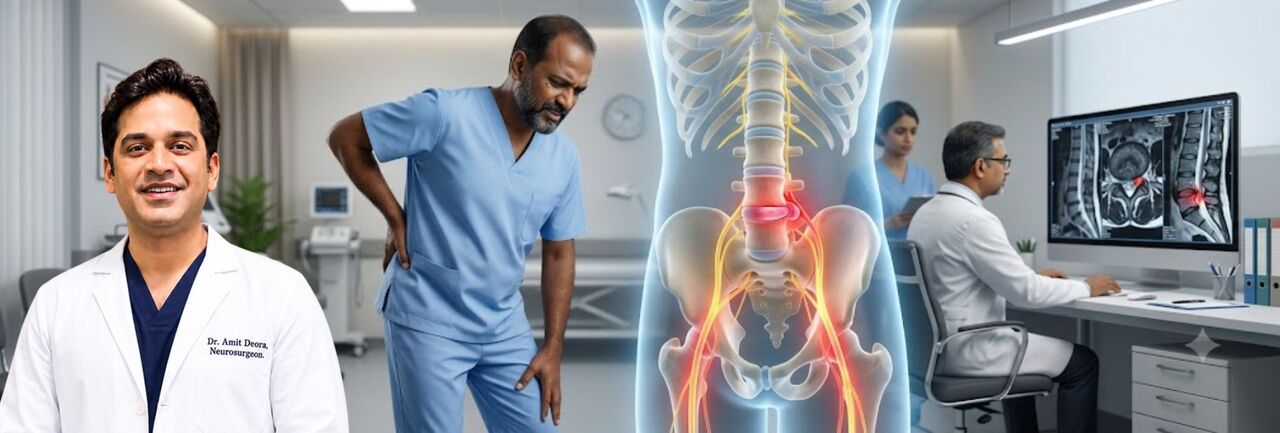
Minimally Invasive Spine Surgery: Procedure, Recovery, and Cost
Back and neck problems are becoming increasingly common due to sedentary lifestyles, prolonged sitting, poor posture, injuries, and age-related changes in the spine. While many spinal conditions improve with medicines, physiotherapy, exercise, and lifestyle changes, some patients may eventually require surgery. In such cases, MISS surgery in indore can be an option for selected patients who may benefit from a less invasive surgical approach.
Minimally invasive spine surgery (MISS) is designed to treat certain spinal problems through smaller incisions and with less disruption to the surrounding muscles and tissues. Dr. Amit Deora, an experienced spine surgeon in Indore, evaluates each patient individually to determine whether minimally invasive surgery is appropriate.
What Is Minimally Invasive Spine Surgery?
Minimally invasive spine surgery is a modern surgical approach in which specialized instruments, cameras, and imaging guidance may be used to access the spine through relatively small incisions. Unlike some traditional open procedures, MISS techniques aim to minimize damage to the muscles and soft tissues around the spine.
Depending on the patient’s condition, minimally invasive techniques may be used for problems such as certain types of slipped or herniated discs, spinal stenosis, nerve compression, selected spinal fractures, and some spinal instability conditions.
The goal of MISS surgery in indore is not simply to make the incision smaller. The procedure must safely address the underlying spinal problem while protecting important nerves, muscles, and other surrounding structures.
Who Is a Suitable Candidate MISS Surgery in Indore
Who Is a Suitable Candidate for Minimally Invasive Spine Surgery?
Not every patient with back pain needs surgery. A person may be considered for minimally invasive spine surgery when symptoms are caused by a specific spinal problem that has not responded adequately to appropriate non-surgical treatment.
Potential candidates may include patients with:
Persistent nerve pain caused by disc herniation
Certain cases of spinal stenosis
Nerve compression resulting in pain, numbness, or weakness
Selected spinal fractures
Certain cases requiring spinal stabilization or fusion
Structural spinal problems where a minimally invasive approach is technically suitable
Before recommending MISS surgery in indore, Dr. Amit Deora may assess symptoms, neurological findings, medical history, and imaging such as MRI or CT scans. The final decision depends on the exact diagnosis rather than pain severity alone.
How Is Minimally Invasive Spine Surgery Performed?
The exact technique depends on the spinal condition and the type of procedure required. Generally, the surgeon makes one or more small incisions and uses specialized instruments to reach the affected area.
A small tubular retractor or similar access system may be used to create a working channel. In some procedures, a microscope or endoscope provides magnified visualization of the surgical area. Imaging guidance can also help the surgeon identify the correct spinal level and position the instruments accurately.
The surgeon then treats the underlying problem—for example, removing material compressing a nerve or stabilizing an unstable spinal segment. After completing the procedure, the instruments are removed and the incision is closed.
Modern MISS surgery in indore focuses on precision, careful tissue handling, and appropriate patient selection rather than using minimally invasive techniques simply because they are newer.
How Is Minimally Invasive Spine Surgery Performed - best spine surgeon in indore
How Long Does Minimally Invasive Spine Surgery Take?
There is no single operating time for all minimally invasive spine procedures. The duration depends on the type and complexity of surgery, the number of spinal levels involved, the patient’s anatomy, and other medical factors.
Some relatively straightforward procedures may take around one to two hours, while more complex procedures can take longer. Dr. Amit Deora can provide a more realistic estimate after reviewing the patient’s diagnosis and imaging.
Patients should also remember that operating time is different from the total hospital stay. Recovery, monitoring, anesthesia, and mobilization after surgery are separate considerations.
Is Minimally Invasive Spine Surgery Effective?
For appropriately selected patients, minimally invasive spine surgery can effectively relieve symptoms and address specific structural problems of the spine. Potential advantages may include smaller incisions, reduced muscle disruption, less postoperative discomfort, shorter hospital stays in suitable cases, and an earlier return to routine activities.
However, minimally invasive surgery is not automatically better for every patient. Some complex spinal conditions may require a conventional surgical approach to achieve safe and effective treatment.
The effectiveness of MISS surgery in indore therefore depends on correct diagnosis, appropriate surgical planning, the patient’s overall health, and adherence to postoperative instructions.
Success Rate of Minimally Invasive Spine Surgery - Spne surgeon in indore
What Is the Success Rate of Minimally Invasive Spine Surgery?
There is no universal success rate for minimally invasive spine surgery. Outcomes differ considerably depending on the condition being treated, the specific surgical technique, patient characteristics, and how “success” is defined.
For example, pain relief, improvement in nerve function, mobility, return to work, and absence of complications can all be considered when evaluating surgical outcomes. Many minimally invasive procedures have demonstrated good outcomes in appropriately selected patients, but surgery cannot guarantee identical results for everyone.
Rather than relying on a single percentage, patients considering MISS surgery in indore should discuss the expected benefits, possible complications, alternatives, and realistic recovery timeline with their spine surgeon.
What Are the Advancements in Minimally Invasive Spine Surgery in India?
Spine surgery in India has progressed significantly with the introduction of improved imaging, endoscopic systems, operating microscopes, navigation technologies, specialized instruments, and enhanced surgical techniques.
Endoscopic spine procedures, tubular approaches, advanced spinal fixation systems, intraoperative imaging, and computer-assisted navigation are increasingly being used in appropriate cases. These developments can help surgeons perform selected procedures with greater visualization and precision.
However, technology is only one part of successful spine care. Surgical experience, proper patient selection, accurate diagnosis, and a multidisciplinary approach remain equally important. The availability of MISS surgery in indore has also made advanced treatment options more accessible to patients seeking specialized spine care.
How Much Does Minimally Invasive Spine Surgery Cost in Indore?
The cos