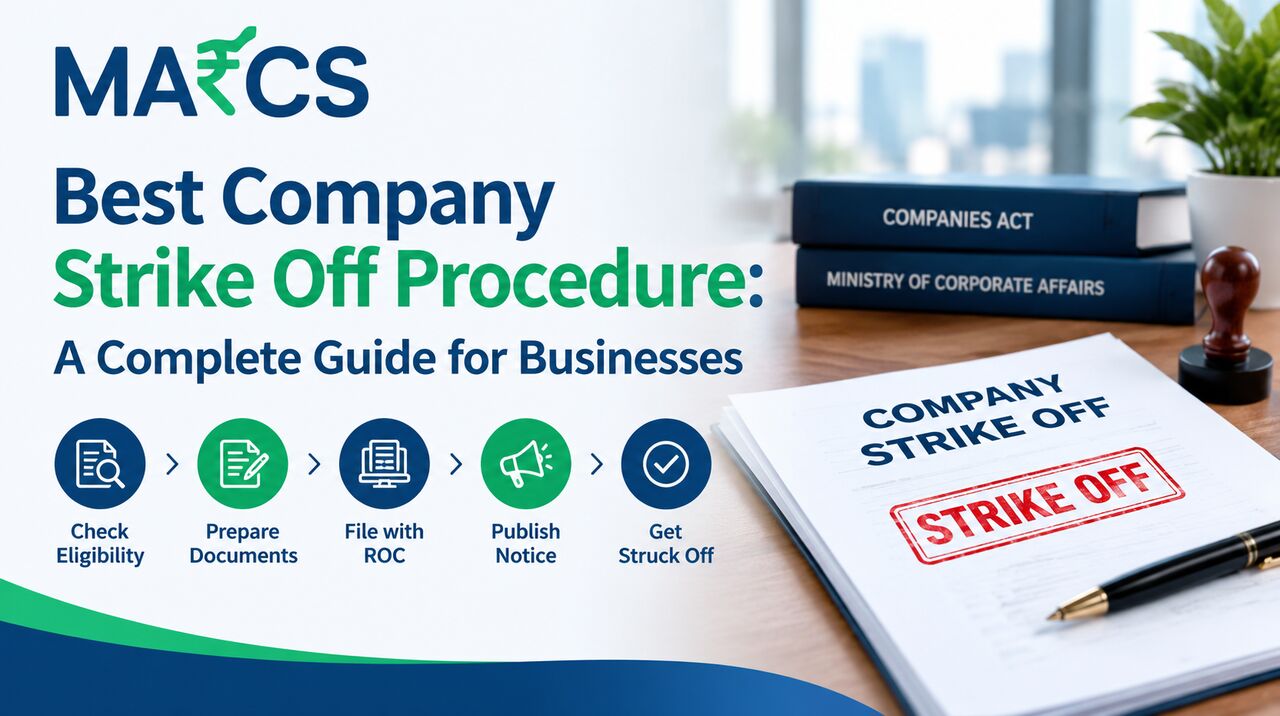
What Is the Company Strike Off?
A company strike off is the legal procedure by which a company is taken off the Register of Companies kept by the Registrar of Companies (ROC). After the required process has been finished, the company no longer exists as a legal entity. For eligible companies that have stopped conducting business activities, strike off can serve as a practical means of formally closing the company rather than leaving it inactive with outstanding compliance obligations.
Who Can Apply for Company Strike Off?
Usually, a company can request voluntary strike off once it has ceased conducting business or operations and intends to terminate its legal existence. Nevertheless, specific conditions and limitations are imposed under the Companies Act and the relevant rules. Prior to initiating the process, it is essential to verify whether the company has any unpaid liabilities, outstanding statutory filings, disputes, or other matters that might impact the application.
Company Strike Off Procedure
The company strike off procedure involves several important steps:
1. Clear Outstanding Liabilities
The company should settle applicable debts, liabilities, and financial obligations before applying for strike off.
2. Complete Pending Compliance
Required ROC filings, financial statements, annual returns, and other applicable compliances should be reviewed and completed.
3. Obtain Necessary Approvals
The company must follow the required internal approval process, including obtaining approval from the directors and shareholders wherever applicable.
4. Prepare Strike Off Application
The prescribed application and supporting documents are prepared and submitted to the ROC through the applicable MCA process.
5. ROC Verification
The Registrar examines the application and may issue notices or seek additional information before proceeding.
6. Publication of Notice
Where applicable, the proposed strike off is published through the prescribed process to provide an opportunity for objections.
7. Company Name Removal
If all requirements are satisfied and no valid objection remains, the ROC proceeds with removing the company's name from the register.
Why Professional Assistance Matters
Even though a company strike off might seem simple, problems with paperwork, outstanding compliance obligations, or unsettled liabilities can hold up the process. Getting professional help can uncover possible problems before the application is filed. MARCS BizAdvisors offers professional guidance to businesses looking for a well-organized and compliant company strike off procedure. From checking company status and compliance requirements to helping with documentation and filing, the process can be handled more efficiently with expert support.
Choose MARCS BizAdvisors for Company Strike Off Assistance
If your company is no longer active and you are thinking about officially shutting it down, it is essential to follow the proper legal procedure. Completing the top-notch strike off process correctly can help you steer clear of needless compliance obligations and bring the company's legal existence to a suitable end. Reach out to MARCS BizAdvisors to learn about the relevant requirements and receive expert help with your company strike off procedure.
For more Information Visit Us: https://www.marcsindia.in/c ...