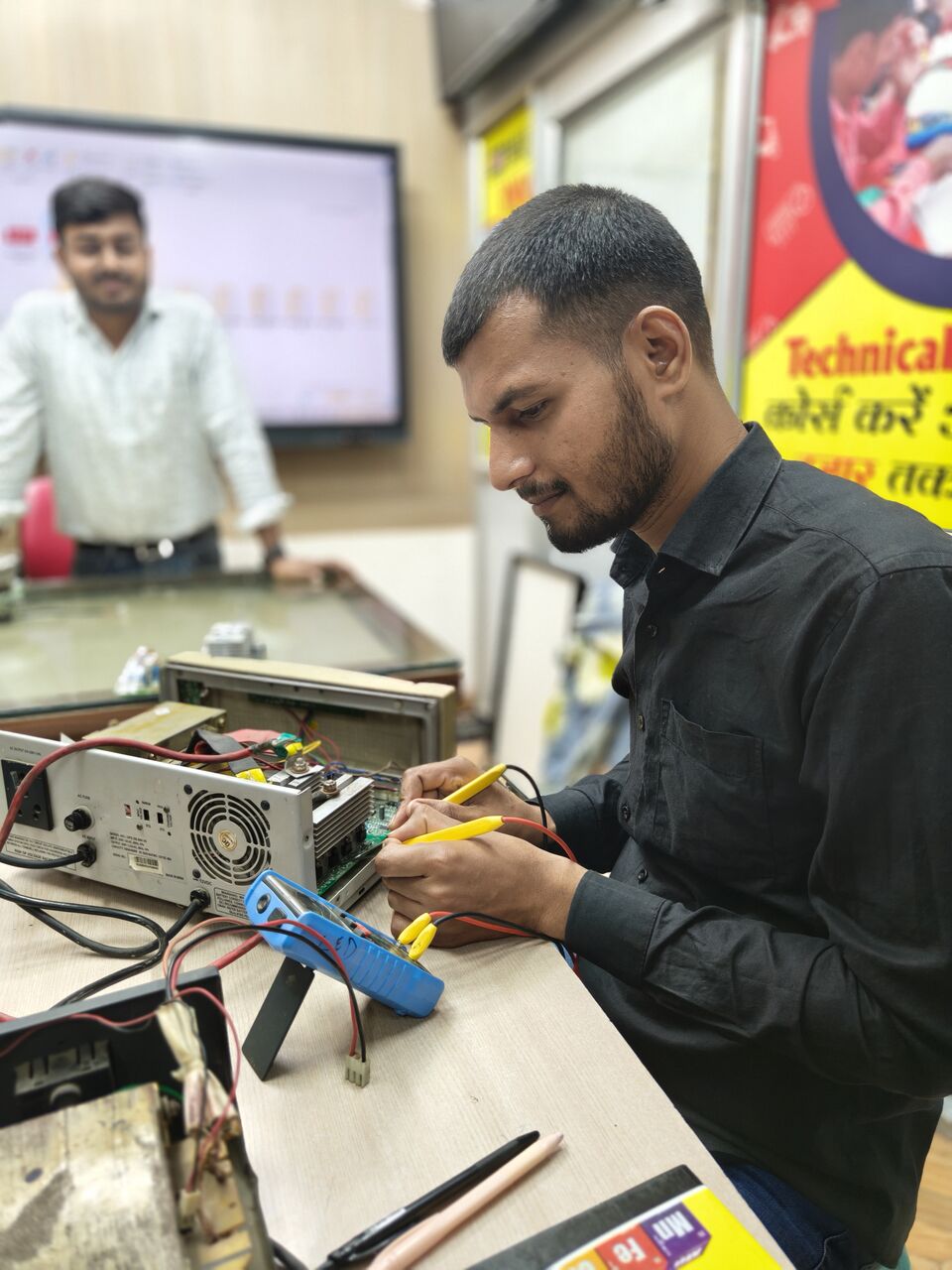
A practical Inverter Repairing Training program should introduce students to circuit diagrams, electronic components, testing instruments, soldering techniques, PCB inspection, voltage measurement, and troubleshooting procedures. Learners can gain experience in identifying defective components and understanding how individual components affect the overall performance of an inverter.
The curriculum may include common inverter problems such as no output, charging failure, battery not charging, overload indication, short-circuit faults, unusual sound, low output voltage, switching problems, and PCB-related faults. Students can learn how to approach these issues step by step instead of replacing components without proper diagnosis.
An Inverter Repairing Course can also introduce learners to different inverter technologies and their basic working principles. Practical knowledge of multimeters, testing equipment, soldering stations, and electronic components can make training more useful for real-world repair situations.
For beginners, this type of technical education provides a structured way to enter the electronics servicing field. Existing technicians can also use advanced inverter PCB repair knowledge to expand their service capabilities and handle more complex repair requirements.
https://www.multitechinstit ...