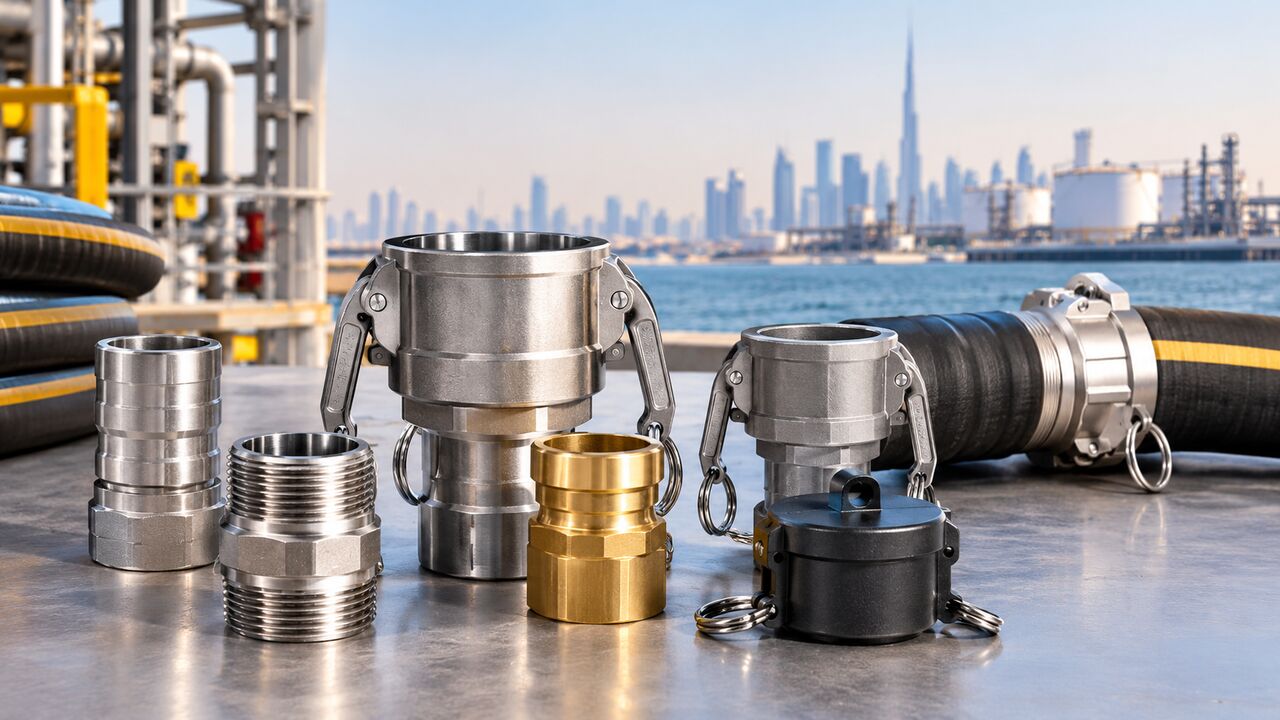
Camlock couplings are among the most widely used fittings for transferring liquids in the UAE's oil and gas, marine, construction, agricultural, and chemical industries. Their quick-connect design makes hose connections fast and tool-free. Still, selecting the wrong type, material, or seal can lead to leaks, equipment damage, and safety risks. This guide explains the key factors to consider when choosing a Camlock Coupling in UAE conditions.
Quick Answer
To choose the right camlock coupling, match five things to your application: the coupling type (A to F, DC, DP), the material (stainless steel, aluminium, brass, or polypropylene), the size and thread standard, the pressure and temperature rating, and the gasket material compatible with your fluid.
What Is a Camlock Coupling?
A camlock coupling, also called a cam and groove coupling, joins hoses and pipes using two parts: a male adapter and a female coupler with two lever arms. When the arms are pushed down, they lock the adapter in place and compress a gasket to form a seal. No tools are needed, which is why the design is common in tanker loading, fuel transfer, and industrial washdown systems.
Understand the Coupling Types
Camlock fittings follow a letter-based system, and both ends of a connection must be compatible:
Type A: Male adapter with female threaded end
Type B: Female coupler with male threaded end
Type C: Female coupler with hose shank (for clamped hoses)
Type D: Female coupler with female threaded end
Type E: Male adapter with hose shank
Type F: Male adapter featuring a male threaded end
Type DC: Dust cap for female couplers
Type DP: Dust plug for male adapters
A male adapter always connects to a female coupler. If you are connecting a hose to a tank outlet, for example, a Type E on the hose and a Type C or D at the other end may be needed, depending on the thread.
Select the Right Material
Material choice is the most important decision in the UAE, where heat, humidity, coastal salt air, and aggressive fluids all accelerate wear.
Stainless steel (316 or 304): Best for corrosive chemicals, seawater, food-grade use, and high pressure. Grade 316 resists chlorides better and suits coastal and offshore work.
Aluminium: Lightweight and cost-effective, suitable for petroleum products, water, and general transfer. It is incompatible with strong acids and alkalis.
Brass: Resists corrosion in water and oils and is often used in fuel and agricultural applications.
Polypropylene or nylon: Chemical-resistant and light, ideal for acids and low-pressure transfer, though less suited to extreme heat.
Check Size and Thread Standard
Camlock size is based on the hose or pipe inside diameter, typically from ½ inch to 6 inches. Threaded types use standards such as NPT, BSP (BSPP/BSPT), or NPT-compatible variants. Mixing thread standards causes leaks even when sizes appear to match, so verify the existing thread on your tank, pump, or pipe before ordering.
Confirm Pressure and Temperature Ratings
Every coupling has a maximum working pressure, which varies by material and size. Stainless steel typically handles higher pressures than aluminium or plastic. Check that the rating exceeds your system's peak pressure, including surges. With ambient temperatures in the UAE often exceeding 45°C, and fluids sometimes heated, also confirm the temperature limits of both the body and the gasket.
Match the Gasket to the Fluid
The gasket seals the connection, and it fails first when chemically incompatible. Common options include:
Buna-N (NBR): Fuels, oils, and water
EPDM: Water, steam, acids, and alkalis (not petroleum)
Viton (FKM): Aggressive chemicals, solvents, and high temperatures
PTFE: Broad chemical resistance for demanding applications
Always check a chemical compatibility chart before selecting.
Look for Standards and Certification
Reliable camlock fittings are manufactured to recognised standards, commonly MIL-C-27487 and EN 14420-7 (DIN 2828). Quality suppliers can also provide material test certificates (MTCs), which matter in regulated oil and gas environments where traceability is required.
Choose a Dependable Supplier
Availability of stock, technical guidance, and documentation matter as much as the product itself. UAE-based suppliers such as Hydromax list a range of cam and groove fittings across materials and sizes, which helps buyers compare options locally. Whichever supplier you use, ask for datasheets, certifications, and clear specifications before purchasing.
Common Mistakes to Avoid
Connecting two male or two female ends
Ignoring thread type (NPT vs BSP)
Using aluminium with corrosive chemicals
Selecting gaskets without checking fluid compatibility
Overlooking pressure surges and heat exposure
Skipping dust caps and plugs, which protect sealing surfaces
Frequently Asked Questions
1. What is a camlock coupling used for?
It provides a fast, tool-free connection between hoses, pipes, and tanks for transferring liquids such as fuel, water, chemicals, and oil.
2. Which camlock material is best for UAE conditions?
Stainless steel 316 is generally the best choice for coastal, high-humidity, and chemical environments. Aluminium and brass suit less demanding uses.
3. How do I know which camlock type I need?
Identify the connection at each end (hose or thread, male or female), then match the letter type. A male adapter must pair with a female coupler.
4. Can camlock couplings be used for oil and gas?
Yes, provided the material, pressure rating, and gasket (such as Buna-N or Viton) suit the product, and the fitting meets the required standards.
5. What is the recommended frequency for replacing camlock gaskets? Inspect them regularly and replace them at the first sign of cracking, swelling, hardening, or leakage. In high heat, replacement may be needed more often.
Conclusion
Choosing the right Camlock Coupling in UAE operations comes down to matching the fitting to the fluid, environment, and system. Start by identifying the correct type, then select a material suited to local heat and corrosion, verify size, thread, pressure, and temperature ratings, and pair the coupling with a compatible gasket. Buying certified products from established suppliers, such as those in the camlock coupling category at Hydromax, adds further assurance of quality. A careful selection process reduces leaks, downtime, and safety risks, and extends the service life of your fluid transfer system.