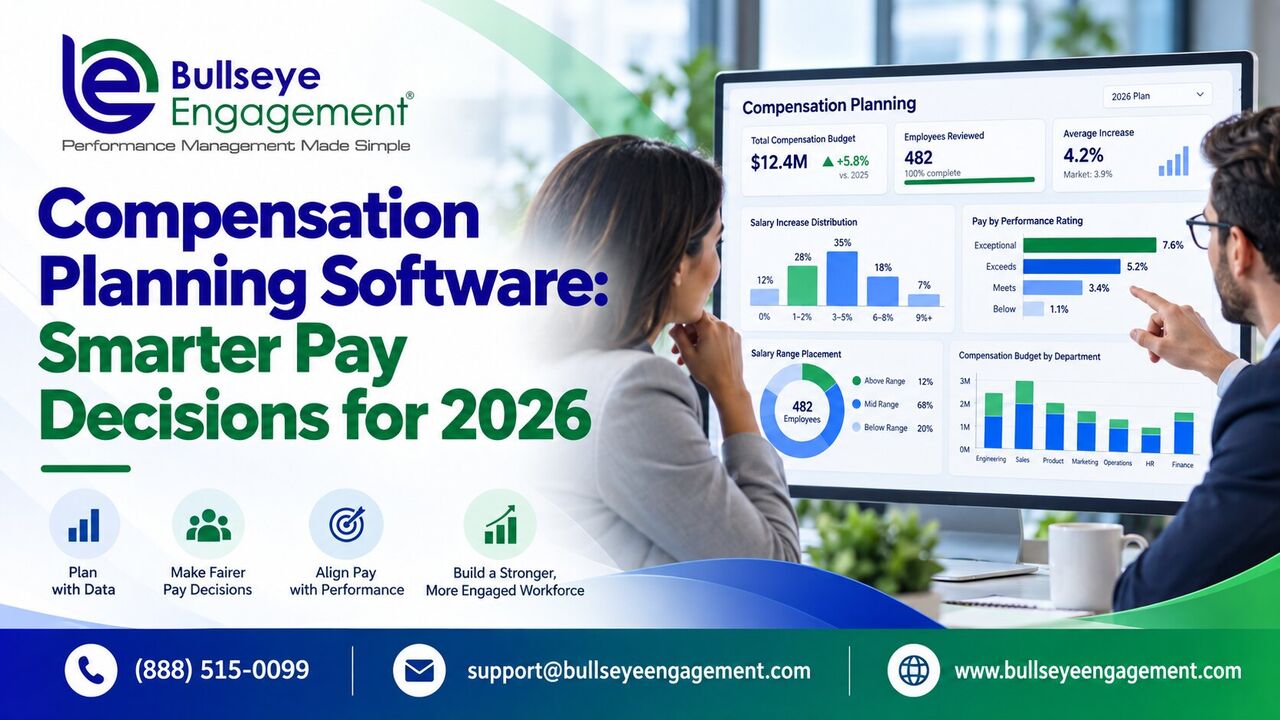
For HR and finance teams, that pressure lands in the compensation cycle itself. A raise that looks reasonable in isolation can create internal equity issues, exceed a department cap, or become difficult to explain after the cycle closes. Compensation planning software gives teams one place to apply budget rules, review manager recommendations, compare pay data, and keep a record of why each decision was approved.
Flat salary budgets make allocation quality more important
A 3.6% salary increase budget doesn’t mean every employee should receive 3.6%. Some employees may need a market adjustment, while others may receive a merit increase tied to performance or a promotion. The planning problem is deciding how to distribute a limited pool without losing sight of pay ranges, team budgets, performance evidence, and internal consistency.
This is where Compensation Planning Software becomes useful as a decision system rather than a calculation sheet. Bullseye Engagement’s product supports salary and bonus cycles, models salary structures within budget limits, tracks merit raises and one-time awards, and routes decisions through configurable approval workflows. That structure gives HR a clearer view of the cycle while managers work inside defined limits.
Compensation costs still move when raise budgets stay steady
Stable raise budgets don’t mean compensation pressure has stopped. The U.S. Bureau of Labor Statistics reported that private-industry compensation costs rose 3.3% over the 12 months ending in June 2026. Its June data also put average private-industry compensation at $46.89 per hour, including $32.82 in wages and salaries and $14.07 in benefits. BLS compensation cost data for June 2026 shows that pay planning sits inside a wider cost structure.
That broader cost view matters during merit and promotion cycles. A Compensation Management Software process can help HR compare proposed salary changes against department budgets before approvals are final. It can also reduce the risk of managers making isolated decisions without seeing how those choices affect the remaining pool.
Managers need guardrails before they enter recommendations
Many compensation problems begin before HR reviews the final numbers. Managers may work from different assumptions about merit, market position, promotion increases, or performance ratings. When each manager applies those assumptions differently, the company can end up with inconsistent outcomes even if the total budget is met.
A useful planning system should make the rules visible during the decision, not after it. That means showing budget availability, employee salary position, permitted increase ranges, relevant performance information, and approval status in the same process. Bullseye Engagement states that its software provides real-time visibility into budgets, performance, and projected impact, giving managers more context before they submit recommendations.
Pay decisions need a record that can survive review
Compensation decisions carry legal and employee-relations consequences, so documentation matters. The U.S. Equal Employment Opportunity Commission advises employers to define compensation criteria, apply them consistently, document decisions that affect pay, and retain relevant records. Its pay decision guidance for employers also notes that documentation can help an organization explain a pay decision if a complaint or discrimination charge is filed.
A Salary Planning Tool can support that record by keeping proposed changes, approval steps, budget impact, and final outcomes connected to the same cycle. The software can’t decide whether a pay practice is lawful, and it doesn’t replace legal review. It can make the decision path easier to examine because the organization isn’t reconstructing the process from email threads and separate files months later.
Pay transparency raises the standard for explainable decisions
The need for explainable pay decisions is also growing outside the United States. The European Commission says EU member states had to transpose the Pay Transparency Directive into national law by June 7, 2026. The rules include pay-gap reporting duties for employers with at least 100 employees and a joint pay assessment in certain cases where an unexplained gender pay gap reaches at least 5%. The Commission also reported an EU gender pay gap of 11.1% in June 2026. European Commission guidance on pay transparency shows how pay-setting criteria are becoming more visible to employees and regulators.
For multinational employers, this makes informal compensation logic harder to maintain. A merit decision may need to be explained against job value, pay range, performance criteria, and comparable employee outcomes. The criteria behind each decision should be consistent enough to withstand review.
Scenario planning helps HR test decisions before money is committed
Compensation planning is easier when HR can test the effect of a proposed cycle before approvals are locked. If a department wants to move more money toward high performers, HR should be able to see how that changes the remaining budget and whether some employees fall outside expected ranges. Scenario modelling can also help teams compare salary structures without changing the live plan.
Bullseye Engagement says its platform can support multiple concurrent salary structures for scenario comparison. A Merit Increase Software workflow can help when HR needs to test merit recommendations against budget caps and then move the selected plan through approval. The value comes from seeing the impact before payroll receives the final changes.
Software should support the compensation process you already need
Buying software won’t fix unclear pay policies. HR still needs defined salary ranges, decision criteria, approval rights, reliable employee data, and a method for handling exceptions. The system should make those rules easier to apply consistently and review after the cycle ends.
Bullseye Engagement says its platform supports HRIS integration, post-cycle compensation statements, configurable workflows, and tracking for salary changes, bonuses, and one-time awards. Those functions matter when a company wants fewer manual handoffs without giving up review controls. The software should fit the way HR and finance already govern the cycle.
What a defensible 2026 compensation cycle looks like
A sound compensation cycle starts with a defined budget and clear decision criteria, then gives managers enough context to make recommendations within those limits. HR can review exceptions while finance sees the budget effect before final approval. After the cycle closes, the organization should still be able to explain how a decision was made and which