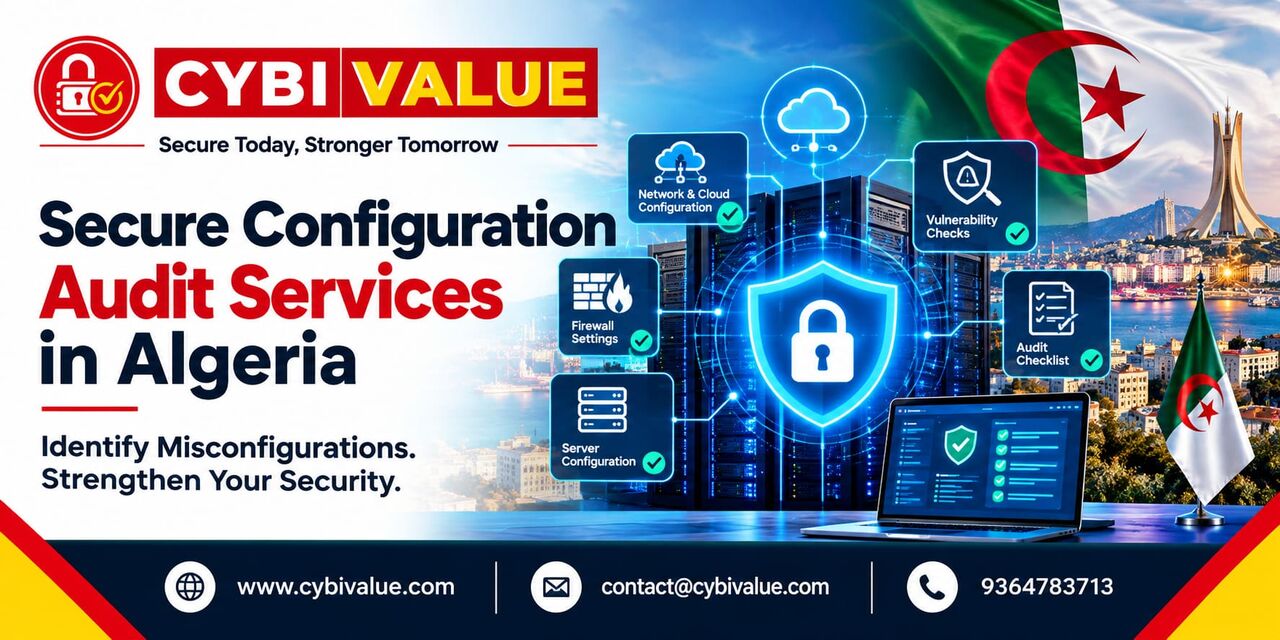
Modern organizations depend on complex IT infrastructure, cloud platforms, servers, networks, applications, databases, and security devices to support daily operations. While these technologies improve productivity, incorrect or insecure configurations can create significant cybersecurity risks. Organizations seeking **[]Secure Configuration Audit Services in Algeria](https://cybivalue.com/secur ... can identify configuration weaknesses, reduce unnecessary exposure, and strengthen their overall security posture through systematic security audits.
## Why Secure Configuration Audits Matter
Security controls are only effective when they are properly configured. Even organizations with firewalls, endpoint protection, access controls, and monitoring solutions can remain vulnerable if these technologies are incorrectly configured or not maintained according to security best practices.
Misconfigured servers, excessive user privileges, unnecessary network services, weak password policies, insecure cloud settings, and outdated security configurations can provide attackers with opportunities to compromise systems. A configuration audit helps organizations discover these weaknesses before they become entry points for cyberattacks.
For businesses operating in Algeria, configuration auditing can be an important part of a proactive cybersecurity strategy. It provides visibility into how systems are currently configured and helps security teams prioritize improvements based on risk.
## Common Configuration Security Risks
Organizations can face configuration-related vulnerabilities across many areas of their infrastructure. Network devices such as routers, switches, and firewalls may contain unnecessary services, weak access controls, or overly permissive rules. These issues can increase the attack surface and make unauthorized access easier.
Server configurations are another important area. Unnecessary applications, open ports, outdated protocols, weak administrative controls, and inappropriate permissions can create security gaps. Secure configuration audits evaluate these settings against established security requirements and organizational policies.
Cloud environments can introduce additional challenges. Misconfigured storage, excessive permissions, publicly exposed resources, insecure identity policies, and weak logging can potentially expose sensitive information. A cloud configuration review can help organizations identify these risks and apply stronger controls.
Endpoint devices should also be considered. Workstations, laptops, and other business devices may contain security settings that require regular review. Strong password policies, automatic updates, access restrictions, encryption, and endpoint protection can help reduce security exposure.
## What a Secure Configuration Audit Includes
A professional configuration audit typically begins by identifying the systems and technologies included within the assessment. This may include servers, network infrastructure, firewalls, databases, cloud environments, operating systems, endpoints, and security appliances.
Security professionals then review relevant configurations against established security benchmarks, vendor recommendations, internal policies, and recognized cybersecurity best practices. The objective is to identify settings that could increase security risk.
The assessment may examine user accounts, administrative privileges, password policies, authentication mechanisms, firewall rules, open ports, network services, encryption settings, logging, monitoring, patch configurations, and access controls.
Where applicable, cloud environments can be reviewed for identity and access management policies, storage permissions, network security controls, and other configuration settings. The specific scope depends on the organization's infrastructure and security requirements.
After the review, findings are documented according to their potential severity and business impact. Recommendations are then provided to help technical teams correct insecure configurations and improve system security.
## Benefits for Algerian Organizations
Secure configuration audits can provide several advantages for businesses, government organizations, educational institutions, healthcare providers, financial organizations, and other entities operating in Algeria.
One of the primary benefits is improved visibility. Organizations may have hundreds or thousands of configuration settings across different systems, making it difficult for internal teams to identify every potential weakness. An independent audit provides a structured review of these settings.
Configuration auditing can also reduce the attack surface. Removing unnecessary services, restricting permissions, strengthening authentication, and improving firewall rules can make systems more difficult for attackers to compromise.
Another benefit is improved consistency. Organizations often have multiple systems managed by different teams. Over time, configurations can become inconsistent. A formal audit can identify deviations from established security standards and help organizations develop more consistent configuration baselines.
Regular auditing can also support compliance and governance initiatives by providing evidence that security configurations are being reviewed and maintained.
## Choosing the Right Configuration Audit Provider
Choosing an experienced cybersecurity provider is important because configuration audits require both technical knowledge and an understanding of business risk. Organizations should look for providers with experience assessing networks, operating systems, cloud environments, databases, security appliances, and enterprise infrastructure.
A professional audit should have a clearly defined scope and methodology. The provider should understand which systems are business-critical and avoid unnecessary disruption during the assessment.
The final report should clearly explain each finding, its potential impact, affected systems, risk level, and recommended remediation. Practical recommendations are especially valuable because technical teams need clear guidance when correcting configuration weaknesses.
Organizations should also consider follow-up assessments. After security teams implement recommended changes, a retest can confirm that identified weaknesses have been properly addressed.
## Building a Continuous Configuration Security Program
A secure configuration audit should not be treated as a one-time activity. IT environments change continuously as organizations deploy new applications, migrate services to the cloud, add users, modify network architecture, and introduce new technologies.
Organizations can strengthen their security posture by establishing secure configuration baselines and regularly comparing current settings against those standards. Automated configuration monitoring can also help identify unauthorized or unexpected changes.
Access privileges should be reviewed regularly, unneces