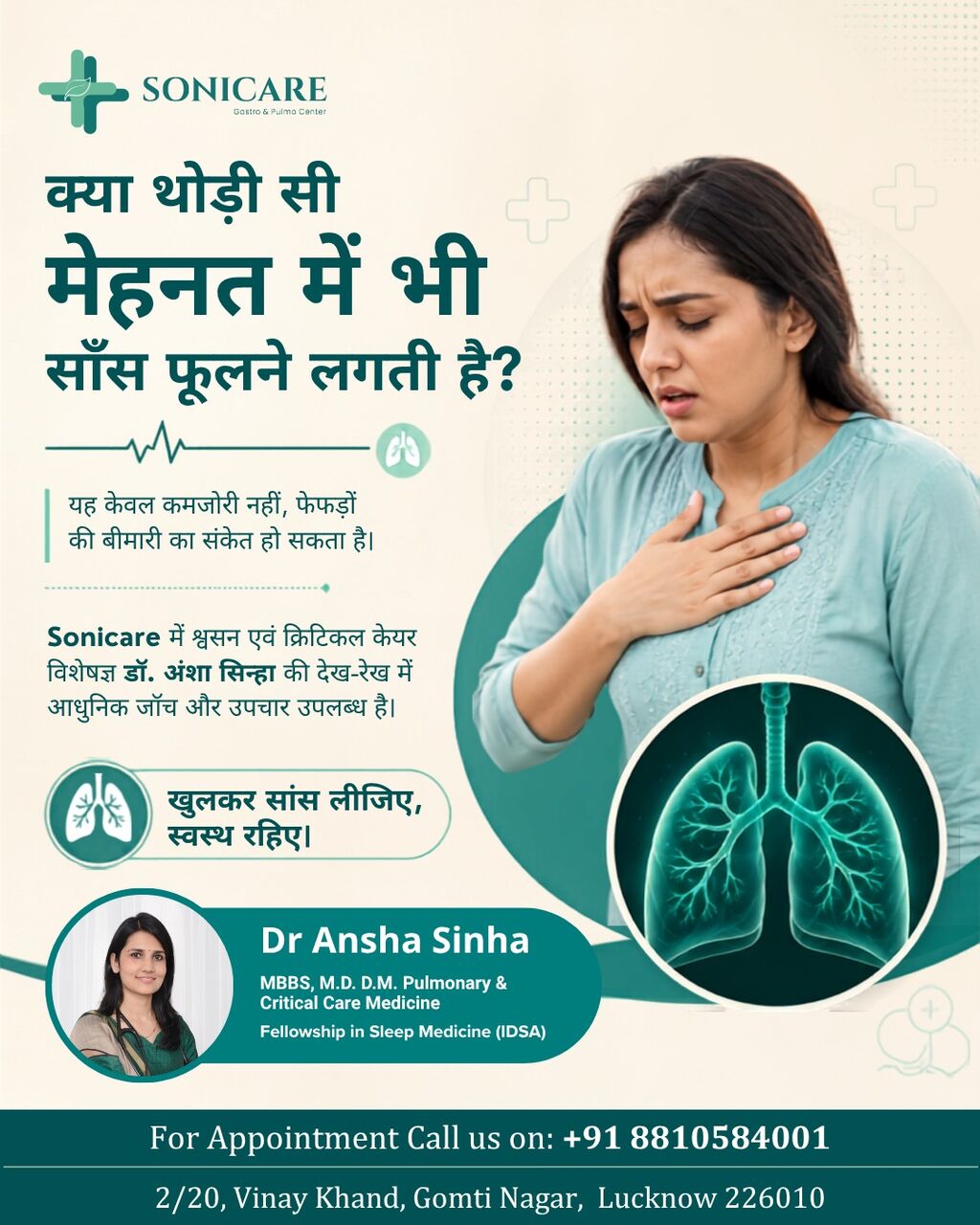
People searching for the Best Pulmonologist in Lucknow often want to find a qualified doctor who can evaluate respiratory symptoms and help manage lung-related conditions. Dr. Ansha Sinha is a pulmonology specialist associated with Sonicare Hospital in Lucknow. Her listed qualifications include MBBS, MD in Respiratory Medicine, DM in Pulmonary and Critical Care Medicine, and a fellowship in Sleep Medicine.
Pulmonology is the medical speciality concerned with diseases of the lungs and respiratory system. A pulmonologist can assess breathing difficulties, investigate persistent respiratory symptoms, and help manage conditions such as asthma, chronic obstructive pulmonary disease (COPD), pneumonia, tuberculosis, and sleep-related breathing disorders.
This article explains when to consult a pulmonologist, common respiratory conditions, possible diagnostic tests, and important considerations when choosing respiratory care in Lucknow.
Who Is Dr. Ansha Sinha?
Dr. Ansha Sinha is a respiratory medicine specialist listed on the Sonicare Hospital website. Her qualifications include MBBS, MD in Respiratory Medicine, DM in Pulmonary and Critical Care Medicine, and a fellowship in Sleep Medicine.
Her listed areas of clinical care include asthma, COPD, chronic cough, breathlessness, tuberculosis, pneumonia, interstitial lung diseases, occupational lung diseases, pleural conditions, and sleep-related breathing problems. The hospital also lists procedures and assessments such as bronchoscopy, spirometry, sleep studies, and pleural fluid aspiration among the services associated with its pulmonology care.
Patients considering a consultation should contact Sonicare Hospital to confirm appointment availability, consultation timings, and the suitability of the available services for their symptoms.
What Does a Pulmonologist Do?
A pulmonologist evaluates conditions affecting the lungs, airways, and respiratory system. The consultation may begin with questions about symptoms, their duration, medical history, smoking or occupational exposure, allergies, previous infections, and medicines currently being taken.
The doctor may then perform a physical examination and recommend investigations when necessary. The choice of tests depends on the patient's symptoms and clinical findings.
Pulmonologists may help manage conditions including:
Asthma and recurrent wheezing.
Chronic obstructive pulmonary disease.
Persistent or recurrent cough.
Pneumonia and other lung infections.
Tuberculosis and related respiratory complications.
Breathlessness and reduced exercise tolerance.
Interstitial lung diseases.
Pleural effusion and pneumothorax.
Sleep-related breathing disorders, including suspected sleep apnoea.
Not every cough or breathing symptom indicates a serious disease. A clinical assessment helps determine whether further testing or treatment is required.
When Should You Visit the Best Pulmonologist in Lucknow?
Respiratory symptoms can have many causes. Allergies, viral infections, asthma, environmental irritants, and other medical conditions may produce similar symptoms. It is important to consider the duration, severity, and pattern of symptoms rather than relying only on home remedies.
1. Persistent Cough
A cough that continues for several weeks, keeps returning, or interferes with sleep may need medical evaluation. Possible causes include asthma, post-infection irritation, allergies, reflux, medication effects, and chronic lung conditions.
A pulmonologist can review the symptom pattern and determine whether examination or testing is appropriate. Coughing up blood should always receive prompt medical assessment.
2. Breathlessness
Breathlessness during routine activities, walking, or climbing stairs can have several causes, including respiratory and cardiovascular conditions. New, unexplained, worsening, or recurrent breathlessness should not be ignored.
Sudden or severe breathing difficulty, particularly with blue or grey lips, confusion, fainting, or significant chest pain, requires emergency medical care.
3. Wheezing and Chest Tightness
Wheezing is a whistling sound that may occur when air moves through narrowed airways. Asthma is one possible cause, but other conditions can also produce wheezing. A specialist can assess the symptoms and determine the appropriate investigation and treatment.
4. Repeated Chest Infections
Repeated respiratory infections, prolonged recovery, or recurring fever and cough may warrant further assessment. The doctor may consider the person's history, examination findings, and any risk factors to determine whether additional tests are necessary.
5. Persistent Snoring or Sleep-Related Breathing Problems
Loud snoring accompanied by pauses in breathing, gasping during sleep, morning headaches, or excessive daytime sleepiness may indicate a sleep-related breathing disorder. These symptoms should be discussed with a healthcare professional.
Common Respiratory Conditions Managed by Pulmonologists
Asthma
Asthma is a chronic condition in which the airways become inflamed and sensitive. Symptoms may include wheezing, coughing, chest tightness, and breathlessness. Symptoms can vary over time and may be triggered by allergens, infections, smoke, exercise, or other factors.
Asthma management depends on clinical assessment and may include prescribed inhaled medicines, monitoring, trigger management, and an individual action plan. Patients should not stop prescribed medication without discussing it with their doctor.
Chronic Obstructive Pulmonary Disease
COPD is a long-term lung condition that can restrict airflow. Common symptoms include persistent cough, phlegm, and breathlessness. Tobacco smoke and other harmful airborne exposures are important risk factors.
Management may include inhaled medicines, smoking cessation support, vaccinations when appropriate, pulmonary rehabilitation, and monitoring. Treatment is individualised according to the patient's condition.
Pneumonia
Pneumonia is an infection that affects the lungs. Symptoms can include cough, fever, chest discomfort, fatigue, and breathing difficulty. The cause and severity determine the treatment approach.
People with severe breathing difficulty, confusion, or rapidly worsening symptoms need urgent assessment. A clinician can decide whether imaging, laboratory investigations, or specific medicines are required.
Tuberculosis
Tuberculosis is an infectious disease that can affect the lungs and other parts of the body. A persistent cough, fever, night sweats, unexplained weight loss, or blood in sputum can be warning signs, although symptoms vary.
Suspected tuberculosis requires proper evaluat