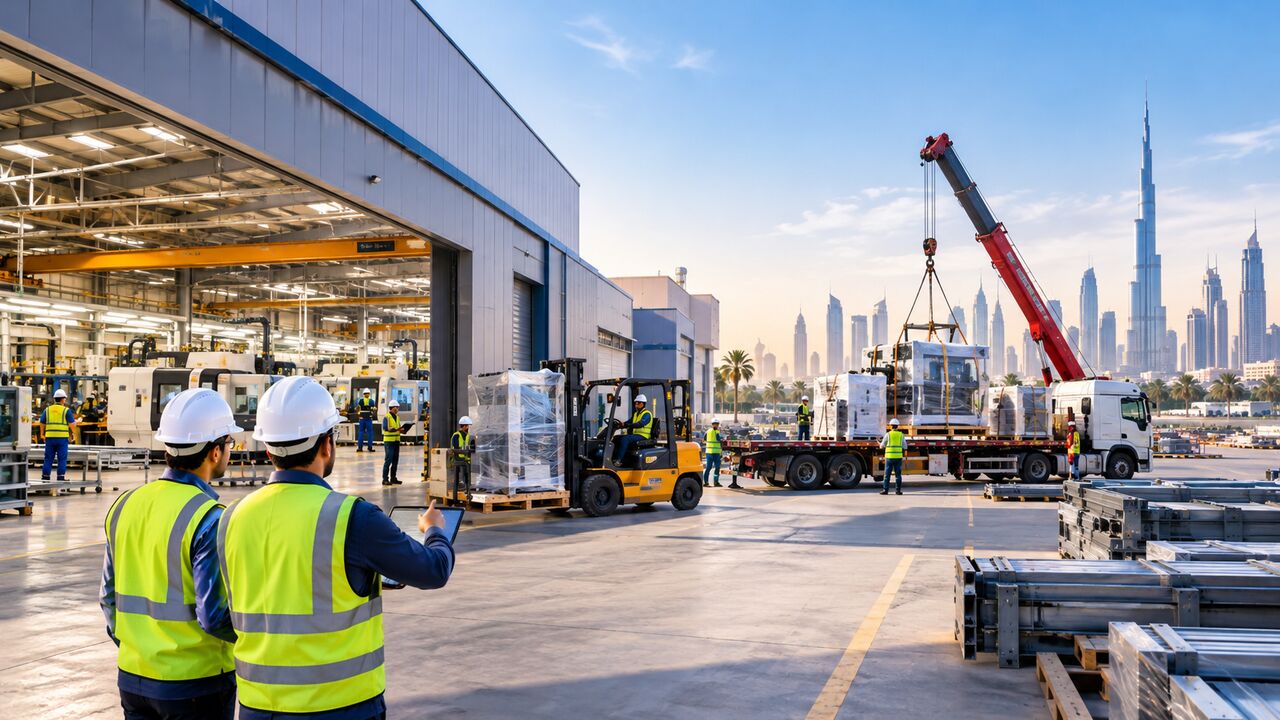
A factory relocation operation in Dubai can be conducted without stopping the process of manufacturing if the process is done in phases with appropriate asset mapping. Factories in areas such as Jebel Ali, Dubai Industrial City, and Al Quoz typically relocate to address needs related to space, logistics, or consolidation. The difficult part is conducting a relocation of factories while still processing customer orders.
What Does a Zero-Downtime Factory Relocation Mean?
A zero-downtime relocation means at least one production line stays operational throughout the transition. Instead of shutting down everything and moving at once, the factory is transferred in stages. Output continues at the original site until equivalent capacity is running at the new one. This protects customer commitments, preserves staff continuity, and reduces financial risk during the move.
Step 1: Audit Equipment, Utilities, and Workflow
Start with a complete inventory of machinery, tooling, storage systems, and utilities. Record the dimensions, weight, power requirements, cooling needs, and calibration sensitivity of each asset. Map the current production flow so the new layout can match or improve it. A thorough audit prevents surprises, such as oversized equipment that cannot pass through doorways or machines needing three-phase power the new site lacks.
Step 2: Secure Dubai Approvals Early
Dubai’s regulatory environment calls for attention to trade licence updates, Dubai Municipality requirements, Civil Defence safety approvals, and free zone authority procedures where applicable. Heavy equipment transport may also need route permits and time-restricted movement. Submitting applications early keeps approvals from becoming the bottleneck that forces an unplanned shutdown.
Step 3: Build a Phased Relocation Schedule
Divide the move into waves based on production priority. Non-critical equipment, spare parts, and warehouse stock usually move first, and core production lines move last, ideally one at a time. Build safety stock before each wave so deliveries continue while a line is being dismantled, transported, and recommissioned. Where possible, schedule heavy moves during low-demand periods, public holidays, or weekends.
Step 4: Ready the New Facility Ahead of Time
The destination site should be fully ready before the first machine arrives. This includes floor load capacity, electrical connections, compressed air, ventilation, and fire safety systems. Floor markings and utility points should match the planned layout. Because this work runs parallel to normal production at the old site, the two timelines stay independent.
Step 5: Dismantle, Transport, and Reinstall Carefully
Precision equipment needs careful handling. Each machine should be photographed, labeled, and its connections documented before disassembly. Specialized rigging, cranes, and low-bed trailers are used for heavy items, while climate-sensitive machinery may need protective packaging. Reinstallation should follow the documented sequence, with levelling, alignment, and calibration completed before test runs begin.
Step 6: Test, Validate, and Switch Over
Every relocated production line must undergo trial operations and quality inspections prior to decommissioning the original line. Production should be fully transferred only after output meets specification. Keep a contingency plan in place, such as temporary use of the old line or outsourced capacity, in case commissioning takes longer than expected.
The Role of Factory Relocation Contractors in Dubai
Factory relocation contractors in Dubai typically coordinate engineering, rigging, transport, electrical disconnection, and reinstallation under a single project plan. Their value lies in local knowledge of permit procedures, port logistics, and industrial zone regulations. Providers such as Tekzone, which describes its approach on its factory relocation service page, are examples of companies that handle this kind of multi-trade coordination. When assessing a contractor, companies should examine their track record on similar projects, verify insurance coverage and safety performance, and ensure they can operate in phases without disrupting ongoing operations.
Frequently Asked Questions
Q1.How long does a factory relocation in Dubai take?
The schedule is determined by the size and complexity of the facility. Small facilities may take a few weeks, while large multi-line plants can take several months, including planning and approvals. A phased approach may lengthen the overall schedule, but it protects ongoing output.
Q2.Can a factory continue operating while it is being relocated?
Yes, if the move is phased, buffer inventory is built, and the new site is prepared in parallel. Continuous production is generally easier for multi-line plants than for single-line operations.
Q3.What permits are usually required?
Common requirements include trade licence amendments, Dubai Municipality approvals, Civil Defence clearances, free zone authority procedures, and transport permits for oversized loads. Requirements vary by location and industry, so they should be confirmed directly with the relevant authorities.
Q4.What are the biggest risks in a factory relocation?
The main risks are equipment damage, delayed commissioning, utility mismatches, and inventory shortfalls. Detailed audits, proper insurance, and thorough testing reduce these risks significantly.
Conclusion
Relocating a factory in Dubai without halting production depends on preparation more than speed. A detailed equipment audit, early regulatory approvals, a phased schedule, a fully prepared destination site, and careful testing form the foundation of a successful move. Experienced contractors can add coordination and local expertise, but the planning discipline must come from the business itself. With the right sequence and realistic contingencies, manufacturers can change locations while continuing to meet customer demand.