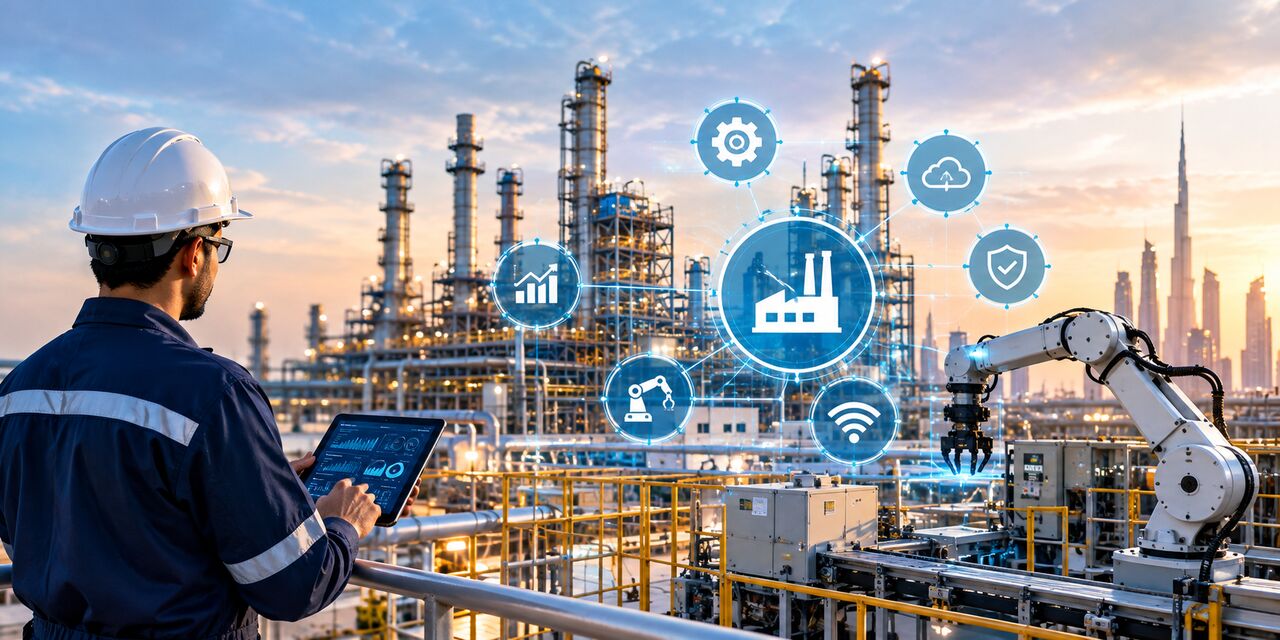
Automation technology is transforming the planning, construction, and management of industrial ventures in the United Arab Emirates. By integrating sensors, control systems, data analytics, and AI software, facilities can operate more efficiently. As the UAE pivots toward economic diversification and embraces technology-driven growth, Industrial Automation Contractors play a pivotal role in turning this national vision into reality.
What Is Smart Industrial Automation?
Smart industrial automation employs interconnected technologies like PLCs, SCADA systems, industrial IoT, robotics, and artificial intelligence to supervise and control industrial processes with minimal manual intervention. While traditional automation operates based on fixed commands, smart technology gathers real-time data and independently adjusts its processes
Why Is the UAE Adopting Automation So Quickly?
There are some national priorities that have led to the adoption of these systems:
Economic diversification: Initiatives such as Operation 300bn and 'Make it in the Emirates' are driving advanced manufacturing and accelerating the country's industrialization efforts.
Major infrastructure development: Projects involving oil and gas, power plants, water treatment, logistics, and construction need efficient and scalable control systems.
Challenging working environment: Hot and humid conditions, coupled with dusty surroundings, make remote monitoring essential.
Environmental sustainability goals: Automation enables more efficient use of energy and materials, and helps minimize emissions.
Key Ways Automation Is Reshaping Industrial Projects
1. Faster, More Coordinated Project Delivery
Leveraging digital engineering software, simulations, and integrated control design enables early detection of potential conflicts before construction begins. This reduces commissioning time and costly rework. In the UAE, many Industrial Automation Companies work with engineers and procurement teams from the project's design phase, rather than joining later.
2. Predictive Maintenance and Reduced Downtime
Real-time sensors detect changes in vibration, temperature, and pressure. Analytics software flags early signs of equipment failure, so maintenance can be scheduled before a breakdown occurs. This approach lowers unplanned shutdowns and extends asset life.
3. Improved Safety
Automated shutdown systems, gas detection, and remote monitoring keep personnel out of hazardous zones. These systems are now essential components of risk management in sectors such as petrochemicals and power generation.
4. Energy and Resource Optimization
Smart controls adjust motors, pumps, and HVAC loads based on demand. Facilities can cut energy use without reducing output, supporting the UAE’s broader sustainability goals.
5. Data-Driven Decision Making
Centralized dashboards give plant managers a live view of production, quality, and consumption. Leaders can make decisions based on evidence rather than periodic reports.
EPC Contractors: Key Players in Automation Project Delivery.
Automation delivers the best results when it is planned as part of the full project lifecycle, covering engineering, procurement, and construction. Integrated EPC delivery helps ensure that control architecture, electrical systems, and mechanical equipment work together from day one. Companies such as Tekzone, which provides EPC contracting services in Dubai, reflect this shift toward unified project execution, where automation is built into the design rather than added afterward.
Challenges to Consider
Smart automation also brings challenges. Legacy systems can be difficult to integrate with modern platforms. Cybersecurity has become a priority as more equipment connects to networks. There is a strong demand for skilled technicians and automation engineers. Successful projects address these issues early through clear standards, secure architecture, and workforce training.
Frequently Asked Questions
Q1.What is the role of industrial automation contractors in the UAE?
They design, install, program, and commission control systems for industrial facilities. This includes PLC and SCADA integration, instrumentation, electrical panels, and ongoing system support.
Q2.How do industrial automation companies in the UAE improve project efficiency?
They use real-time monitoring, simulation, standardized control platforms, and predictive analytics to reduce delays, rework, and downtime.
Q3.Is industrial automation expensive to implement?
Initial investment can be significant, but long-term savings in energy, maintenance, labor, and downtime often offset it. Costs depend on project size, system complexity, and integration needs.
Q4.Where is industrial automation headed in the UAE?
Growth is expected in AI-based analytics, digital twins, robotics, and cloud-connected control systems, supported by national industrial and sustainability strategies.
Conclusion
Smart automation has become a foundation of modern industrial development in the UAE. From faster project delivery to safer operations and lower energy use, its benefits are measurable and growing. As the sector matures, collaboration between engineers, EPC providers, and technology specialists, including firms like Tekzone, will continue to shape how industrial facilities are built and run. Organizations that plan automation early, prioritize cybersecurity, and invest in skilled teams will be best positioned to benefit from this transformation.