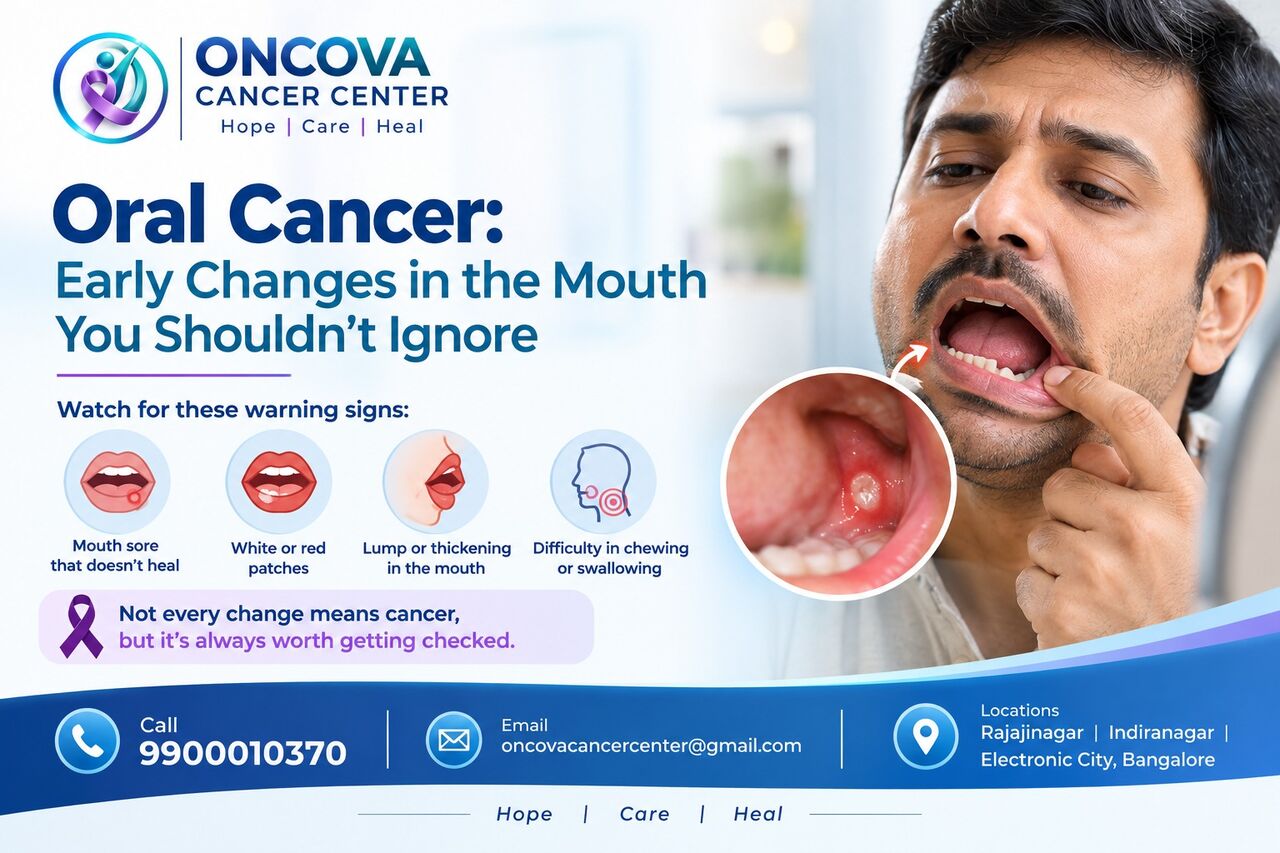
✓ Early Warning Signs of Oral Cancer
Be aware of changes such as:
✓ Mouth ulcers that do not heal — A sore that persists for more than two weeks should be evaluated by a healthcare professional.
✓ White or red patches — Unusual patches inside the mouth may need examination.
✓ A lump or thickening — A new or persistent lump in the mouth or lip should not be ignored.
✓ Persistent mouth pain — Ongoing discomfort or unexplained pain deserves attention.
✓ Difficulty chewing or swallowing — Persistent problems with eating or swallowing should be checked.
✓ Unexplained bleeding or numbness — Repeated bleeding or unusual numbness in the mouth or lips requires medical evaluation.
These symptoms do not always mean cancer. However, persistent or unexplained changes should be assessed by a qualified healthcare professional.
✓ What Can Increase the Risk?
Factors associated with an increased risk of oral cancer include:
✓ Tobacco use, including smoking and smokeless tobacco
✓ Areca nut (supari) and betel quid use, especially preparations containing tobacco
✓ Alcohol consumption, particularly when combined with tobacco
✓ Certain types of human papillomavirus (HPV), depending on the affected area
Avoiding tobacco and areca nut products and limiting alcohol can help reduce risk.
✓ How Can You Help Protect Your Oral Health?
✓ Avoid tobacco and areca nut products.
✓ Maintain good oral hygiene.
✓ Be aware of persistent changes in your mouth.
✓ Seek professional advice for ulcers, patches, lumps, or other unusual symptoms that do not resolve.
✓ Attend recommended dental or medical check-ups.
There is no single method that can prevent every case of oral cancer, but reducing known risk factors and getting unusual changes checked are important steps.
✓ How Is Oral Cancer Diagnosed?
A healthcare professional may examine the mouth and neck and recommend further tests if needed. A biopsy, in which a small tissue sample is examined, may be required to determine whether a suspicious area contains cancer cells.
Treatment depends on the location and stage of the cancer and may include surgery, radiation therapy, chemotherapy, or other treatments recommended by the specialist.
✓ When Should You Seek Medical Advice?
Arrange a medical or dental evaluation if you notice a mouth ulcer lasting more than two weeks, a persistent white or red patch, a lump, unexplained bleeding, or ongoing difficulty chewing or swallowing. Seek urgent care if you have severe difficulty breathing or swallowing.
Early evaluation matters. Do not assume that every mouth change is cancer, but do not ignore changes that persist.
Oncova Cancer Center
Hope Care Heal
📞 Contact: 9900010370
📧 Email: [email protected]
📍 Locations: Rajajinagar Indiranagar Electronic City, Bangalore