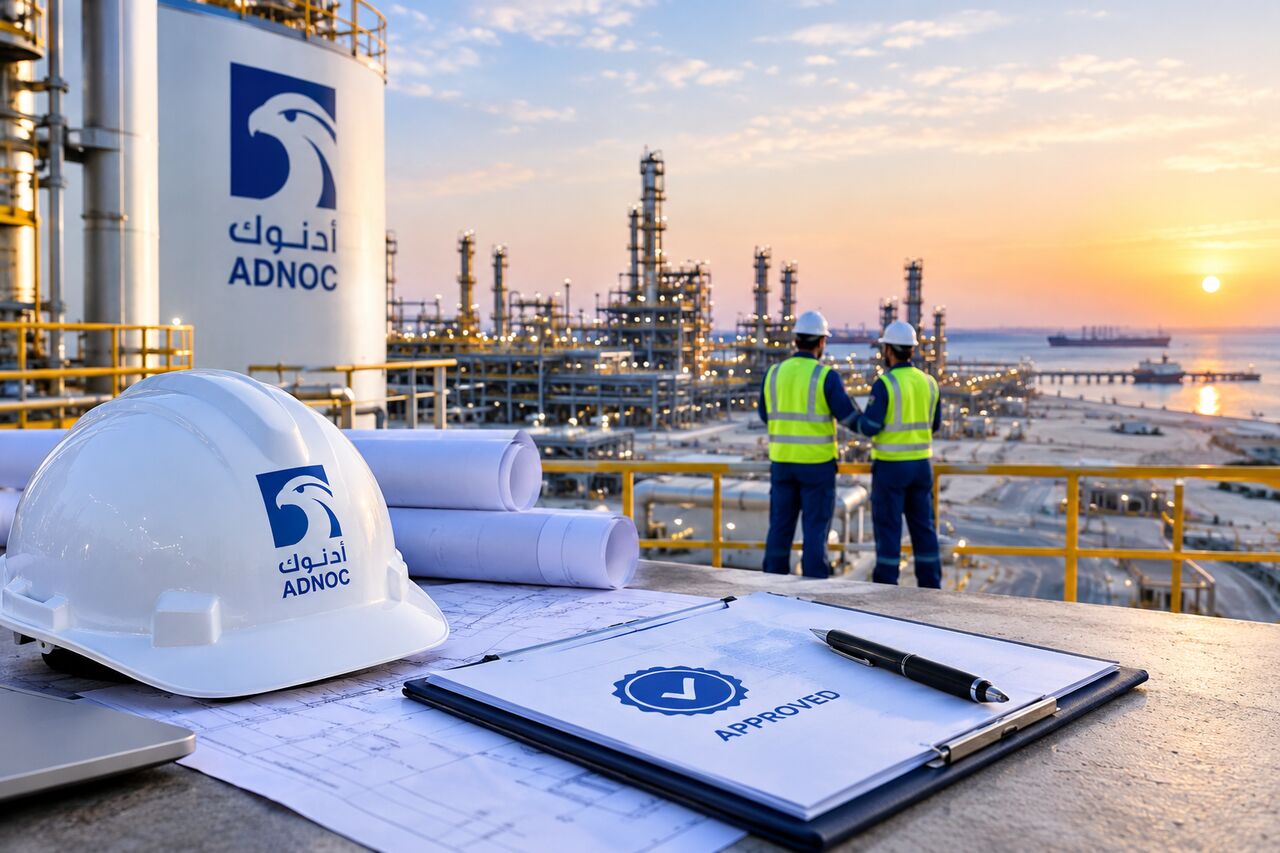
ADNOC Approved Contracting Companies in Ruwais play a crucial role in executing complex industrial projects while maintaining strict safety, quality, and operational standards. Contractors must demonstrate relevant technical expertise, effective HSE management, and compliance with applicable ADNOC project requirements.
Why Ruwais Is a Demanding Project Environment
Ruwais, in Abu Dhabi’s Western Region, is one of the UAE’s most important industrial hubs. The Ruwais Industrial Complex, led by ADNOC, covers refining, petrochemicals, storage, and logistics. Work here often involves live plants, hazardous materials, tight shutdown windows, and very large workforces.
Ongoing downstream expansion adds to the pressure. As noted in this analysis of emerging trends in the Ruwais contracting industry, demand is growing for contractors with civil, mechanical, and electrical expertise. Many projects also fall under EPC (engineering, procurement, and construction) models, where one party carries significant delivery risk.
What ADNOC Approval Involves
ADNOC approval serves as a filtering system. Contractors are normally evaluated based on:
Technical competence: proven record of success in comparable projects in industries or oil and gas sectors
Financial soundness: ability to finance and manage major contracts
HSE performance: safety record and management systems
Quality systems: recognized certification, for example, ISO
ICV contribution: contribution towards local manpower and supply chain development
Being an approved contractor means that the company has met these standards. It doesn’t ensure performance of the particular project; that is why compliance is important.
How Approved Contractors Meet Ruwais’ Requirements
1. Embedding HSE into Daily Operations
In environments with significant risks, safety is a primary management responsibility. Companies typically maintain structured HSE systems, permit-to-work processes, regular audits, and comprehensive training programs to ensure workplace safety. A growing number of these organizations are implementing advanced technologies—including automation, remote monitoring, and robotics—to minimize human involvement in hazardous environments.
2. Building Specialized Technical Capability
Mega-projects demand more than just basic construction experience. Contractors operating in Ruwais normally specialize in:
Industrial civil & structural projects
Mechanical, piping & electrical work
Marine, ports & pipelines infrastructure
Specialized oil & gas engineering
Partnerships and joint ventures are widespread, enabling companies to pool their expertise and resources to undertake larger, more complex projects with greater efficiency and effectiveness.
3. Using Digital Project Controls
Accurate scheduling is essential during shutdown periods, particularly when operational windows are restricted. Leading construction firms use BIM to coordinate designs, drones to conduct surveys and inspections, and AI-powered software for project monitoring purposes. IoT-powered machinery provides predictive maintenance capabilities.
4. Delivering In-Country Value
In this context, the UAE’s In-Country Value (ICV) initiative rewards companies that contribute to the development of local talent and the strengthening of domestic supply chain networks. Approved contractors take action by implementing training initiatives, collaborating with universities, recruiting UAE nationals, and increasing their reliance on local vendors.
5. Maintaining Quality and Regulatory Compliance
Managing quality, documentation, and audits are ongoing responsibilities. Contractors use value engineering to control costs without compromising standards, while compliance documentation is maintained throughout the entire project lifecycle—not just at handover. Tekzone is among the companies operating within this framework in the UAE’s industrial construction sector.
6. Aligning with Sustainability Goals
Clients are increasingly demanding low-carbon materials, waste reduction, water reuse, and modular construction—practices that all contribute to advancing the UAE’s Net Zero 2050 vision.
Challenges Contractors Face
Even approved companies face real pressure in Ruwais:
Intense competition for a limited pool of large packages
Rising compliance and documentation requirements
Skilled labor shortages in specialized trades
Complex interfaces between multiple contractors on active sites
Firms that invest early in training, technology, and partnerships are better placed to handle these pressures.
Frequently Asked Questions (FAQs)
What are ADNOC Approved Contracting Companies in Ruwais?
They are contractors prequalified by ADNOC to work on its projects in Ruwais, based on technical, financial, safety, and quality criteria.
Why is ADNOC approval important for Ruwais projects?
Ruwais projects involve hazardous, high-value industrial assets. Approval helps ensure contractors can meet strict safety, quality, and delivery standards.
What safety standards do approved contractors follow?
They follow ADNOC HSE requirements, maintain permit-to-work systems, conduct audits and training, and hold recognized management-system certifications.
What is ICV, and how does it affect contractors?
In-Country Value assesses a company’s impact on the UAE economy by evaluating its efforts in local recruitment, workforce development, and sourcing from domestic suppliers.
How do contractors manage tight project schedules?
Contractors manage tight project schedules through detailed planning, critical-path monitoring, workforce coordination, digital project controls, and shutdown scheduling. Technologies such as BIM and predictive analytics can further improve efficiency.
Can mid-sized companies work on Ruwais projects?
Yes, particularly through joint ventures, subcontracting, and public-private partnership models, provided they meet prequalification requirements.
Conclusion
ADNOC-approved contracting companies in Ruwais are required to fulfill stringent industrial project demands by demonstrating technical proficiency, robust HSE management, strong quality assurance practices, and comprehensive project planning. As industrial development continues in Ruwais, contractors that prioritize workforce development, digital project controls, regulatory compliance, and sustainable construction practices will be better prepared to manage complex projects efficiently.