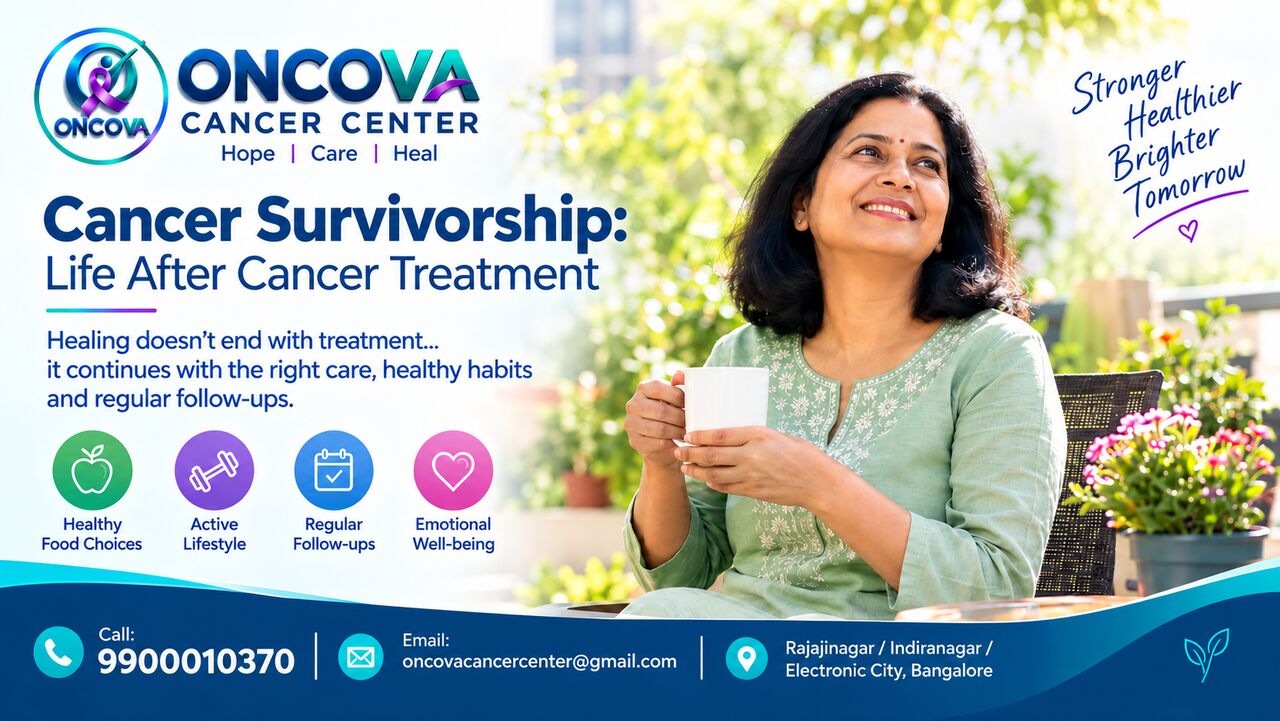
At Oncova Cancer Center, we believe that awareness, regular medical follow-ups, healthy habits, and emotional support are important parts of ongoing cancer care.
What Is Cancer Survivorship?
Cancer survivorship refers to life during and after cancer treatment. Every survivor's experience is different. Some people gradually return to their usual routines, while others may need additional support to manage fatigue, emotional stress, or treatment-related side effects.
A personalized follow-up plan helps patients understand the next steps in their care.
5 Important Tips for Life After Cancer Treatment
✓ 1. Attend Regular Follow-Up Appointments
Follow-up visits help your healthcare team monitor your recovery, discuss ongoing symptoms, and assess whether further tests are needed. The schedule depends on the type of cancer, treatment received, and individual health needs.
✓ 2. Choose a Balanced, Nutritious Diet
Include a variety of vegetables, fruits, whole grains, and protein-rich foods such as pulses, beans, eggs, or other suitable options. Drink adequate fluids unless your healthcare team has advised otherwise.
If you experience appetite changes, swallowing difficulties, or weight loss, ask your doctor or dietitian for individual guidance.
✓ 3. Stay Physically Active as Advised
Gentle activities such as walking may support energy levels and general well-being when appropriate for your condition. Start gradually and follow your healthcare professional's advice, especially if you are still recovering from surgery or other treatments.
✓ 4. Take Care of Your Emotional Well-Being
It is normal for some survivors to experience worry, uncertainty, or fear about the future. Talking with family, trusted friends, a counsellor, or a support group may help you manage these feelings. Seek professional support if emotional distress persists.
✓ 5. Discuss Symptoms and Long-Term Effects
Some people experience fatigue, pain, sleep difficulties, or other effects after treatment. Inform your healthcare team about new, persistent, or worsening symptoms rather than ignoring them.
What Tests May Be Needed After Cancer Treatment?
There is no single follow-up test plan for every cancer survivor. Depending on the cancer type, stage, treatment, and medical history, follow-up may include:
A physical examination and review of symptoms.
✓ Blood tests, when appropriate.
✓ Imaging scans, when recommended.
✓ Cancer-specific monitoring or screening.
✓ Assessment of treatment-related side effects.
Not every patient needs every test. Your treating doctor will recommend an appropriate follow-up schedule.
A New Chapter with Continued Care
Life after cancer treatment can bring new challenges as well as new goals. Taking one step at a time, attending recommended appointments, maintaining suitable daily habits, and seeking support when needed can help survivors navigate this stage of life.
Remember, each person's recovery journey is unique. Follow your healthcare team's advice and discuss any concerns during your appointments.
Consult Oncova Cancer Center
For information about cancer care and follow-up consultations, contact Oncova Cancer Center.
Call: 9900010370
Email: [email protected]
Locations: Rajajinagar Indiranagar Electronic City, Bangalore
Oncova Cancer Center — Hope Care Heal