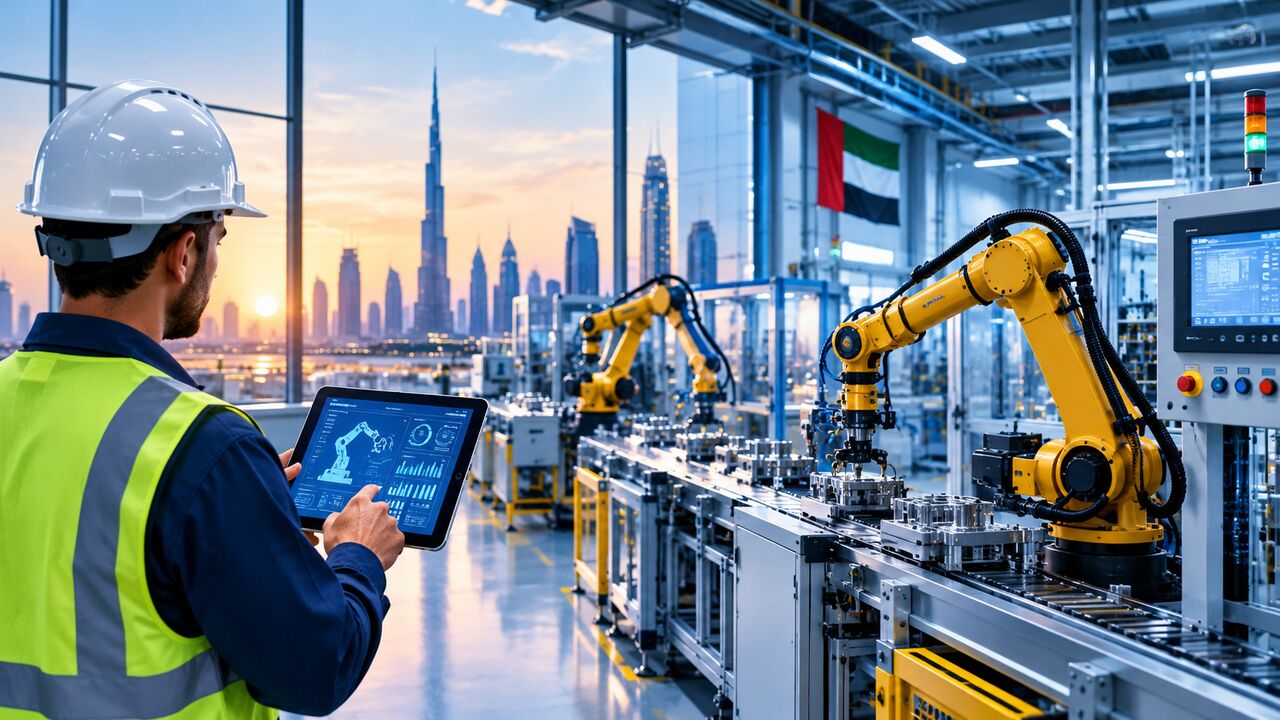
Industrial Automation Contractors in UAE are helping manufacturers, energy operators, and industrial facilities improve operational efficiency, safety, and productivity. These contractors design, install, integrate, and commission advanced control systems, instrumentation, and electrical infrastructure that support reliable industrial operations.
Why Automation Is Accelerating in the UAE
Several national priorities are accelerating industrial automation across the UAE. In this regard, the UAE is pursuing industrial diversification, manufacturing, and advanced infrastructure while the energy, petrochemicals, food, and logistics industries require reduced costs and reliability.
Main drivers include:
Industrial diversification: Government policy for encouraging manufacturing and value addition
Safety considerations: Automation decreases employee exposure to risky environments
Operational efficiencies: Real-time monitoring saves time and resources
Environmental priorities: Optimal operations reduce energy and resource consumption
Digital transformation: Increased use of the Internet of Things and smart devices
What Industrial Automation Involves
Industrial automation leverages sophisticated control technologies to efficiently operate machinery and manage processes, significantly reducing the need for human intervention. Common elements of this include:
Sensors and instrumentation that measure temperatures, pressures, flows, and levels
Control systems, such as PLCs and DCSs
SCADA and HMI systems for operator visibility and control
Power and control panel systems
Systems that shut down the operation in case of any unsafe conditions
These components work together to monitor operating conditions and automate selected industrial processes
The Role of Industrial Automation Companies in UAE
Industrial automation companies in the UAE provide specialized engineering, installation, integration, and commissioning services throughout the automation project lifecycle.
1. Assessment & Design: Defining process and control system requirements
2. System Selection: Selection of compatible systems and components from reputable vendors
3. Installation and Integration: Linking instrumentation, control panels, and control software
4. Testing & Commissioning: Confirming system functionality and performance before handover
5. Support: Maintenance and operator training
There are some companies that have expertise in software and control engineering only. Some companies do automation in conjunction with industrial construction projects on an EPC basis.
How Automation Fits into EPC Projects
Engineering, Procurement, and Construction (EPC) is a delivery model in which one contractor manages design, equipment sourcing, construction, and start-up under a single contract. Automation is a core component of this approach, since control systems must be coordinated with mechanical, civil, and electrical work.
According to this overview of EPC process plant services, a typical project moves through client data collection, detailed engineering, construction drawings, authority approvals, vendor selection, tanks, piping and utilities, electrical, instrumentation and automation works, civil and structural execution, equipment installation, and finally testing and commissioning. Integrating these stages under one contractor helps reduce interface risk and improve schedule predictability. Tekzone is one of the UAE firms working within this EPC framework for industrial clients.
How to Choose Industrial Automation Contractors in UAE
Selecting an industrial automation contractor requires evaluating technical expertise, industry experience, and project execution capabilities.
Important considerations include:
Experience with PLC, SCADA, and DCS systems
Ability to integrate automation with existing equipment
Knowledge of industrial safety requirements
Testing and commissioning capabilities
Availability of maintenance and technical support
Industries Leading Adoption
Petroleum, natural gas, and petrochemicals: Process control and safety instrumented systems
Food and beverages: Hygienic processing and quality assurance systems
Water and utilities: Remote sensing and automation of treatment processes
Logistics and warehousing: Material handling and tracking automation
Manufacturing: Robotics and production line automation.
Challenges Facing the Sector
Despite growing adoption, industrial automation projects face several challenges.
Skill mismatch: There is an excess demand for automation engineers and technicians
Compatibility issues: Old machinery may need modifications to be compatible with new technologies
Cybersecurity: Connected control systems need strong security
Initial investment: Potential long-term benefits have to be compared with upfront costs
What to Expect Next
Over the coming years, expect broader use of predictive maintenance, AI-assisted process optimization, digital twins, and remote operations. Automation will also support sustainability goals by tracking energy use and emissions more precisely.
Frequently Asked Questions (FAQs)
Q1.What do Industrial Automation Contractors in UAE do?
They design, supply, install, integrate, and commission control systems, instrumentation, and electrical infrastructure for industrial facilities.
Q2.Why is industrial automation growing in the UAE?
Industrial diversification, safety priorities, efficiency goals, and digital transformation initiatives are the main drivers.
Q3.What is the difference between an automation company and an EPC contractor?
Automation companies focus on control systems and software. EPC contractors manage entire projects, including engineering, procurement, construction, and commissioning, often with automation included.
Q4.Which industries use industrial automation most?
Oil and gas, petrochemicals, food and beverage, utilities, manufacturing, and logistics are leading adopters.
Q5.What are the main risks of automation projects?
Common risks include integration issues with older equipment, cybersecurity exposure, skills shortages, and underestimated commissioning needs.
Q6.How long does an automation project take?
Timelines depend on project scale and complexity, ranging from a few weeks for upgrades to many months for full plant installations.
Conclusion
Industrial automation is becoming central to how the UAE builds and operates modern facilities. Industrial Automation Companies in the UAE and EPC contractors play complementary roles, turning engineering plans into connected, safe, and efficient plants. As technology advances and sustainability expectations rise, automation will remain a defining feature of the country’s industrial growth.