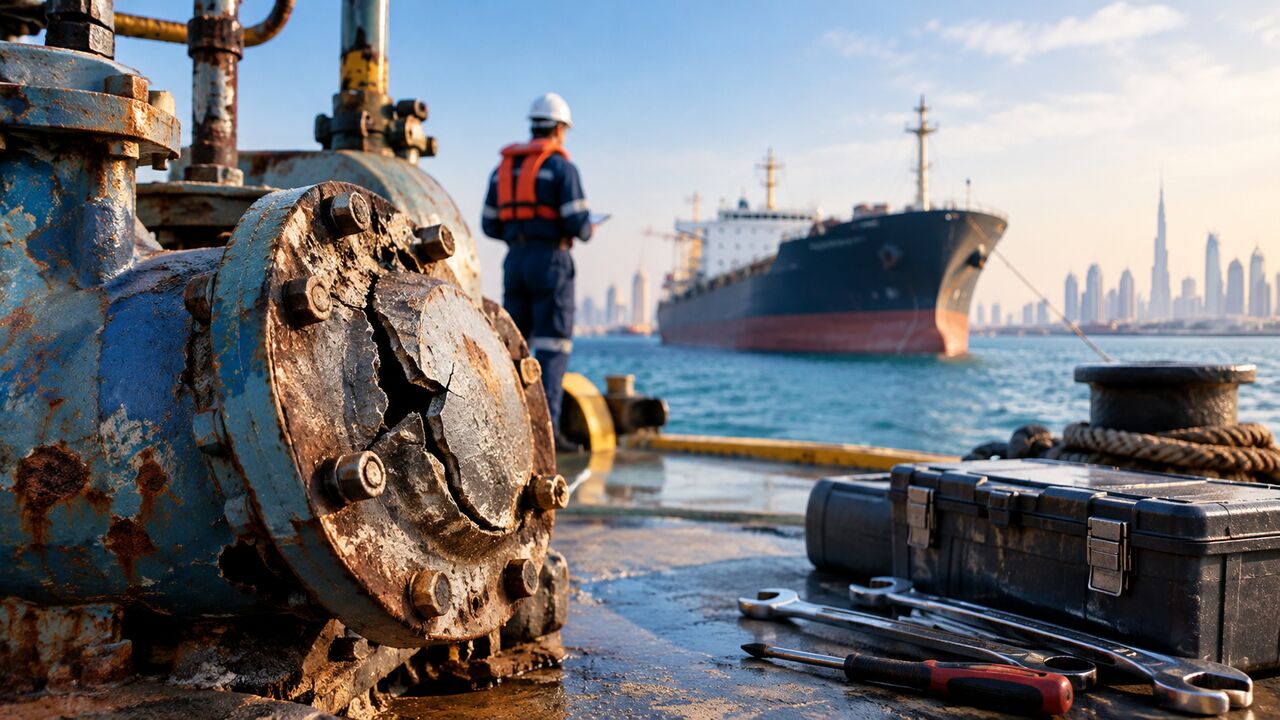
Poor-quality marine equipment increases operating costs through frequent breakdowns, emergency repairs, vessel downtime, and premature component replacement. In UAE maritime operations, high temperatures, humidity, and saltwater exposure can accelerate these problems, making equipment reliability essential for long-term cost control.
How Does Inferior Marine Equipment Drive Up Operating Expenses?
Substandard equipment tends to fail before the end of its service life. Reactivity costs 3–5 times more than prevention, with frequent losses in the form of shortened seals, bearings, hydraulics, and cooling due to contamination, corrosion, or material shortcomings.
Key cost drivers include:
Emergency spare-part procurement and expedited shipping
Higher labour rates for unscheduled work
Extended dry-docking or off-hire periods that halt charter revenue while fixed costs continue
Premature full replacement of systems that should have lasted years longer
In the UAE’s climate, intense heat and saltwater exposure worsen these issues. Equipment not designed or manufactured to withstand such conditions degrades faster, turning modest savings at purchase into substantial operating losses.
What Hidden Costs Result From Marine Equipment Failure?
Machinery failure often affects more than just the initial broken component. A single hydraulic or propulsion-related issue can take a vessel offline, delaying cargo schedules, offshore support work, or port operations. Operators continue paying crew, insurance, and financing costs while losing income.
Additional hidden costs often appear as:
Increased fuel consumption from inefficient or fouled systems
Secondary damage to connected machinery
Increased insurance costs or claim difficulties following repeated breakdowns
Administrative time spent managing breakdowns and supplier disputes
Recurring failures of the same components, sometimes called “bad actors,” consume a disproportionate share of maintenance budgets. Identifying and eliminating them through better equipment selection yields clearer savings than continual reactive fixes.
Safety, Compliance, and Reputational Risks
Poor-quality marine equipment raises the chance of incidents at sea or in port. Failures in critical systems can endanger crew, cargo, and the environment. Regulatory scrutiny in the UAE and internationally means operators may face inspections, detentions, or penalties when equipment does not meet required standards.
Reputational damage follows. Charterers and partners prefer vessels with reliable performance records. Repeated downtime or safety concerns can reduce future business opportunities in a competitive regional market.
Why Choosing Reliable Marine Equipment Suppliers in UAE Matters
Selecting appropriate equipment begins with understanding the operating environment and sourcing from established Marine Equipment Suppliers in UAE and Marine Equipment Suppliers in Dubai that prioritise proven materials and standards. Companies such as Hydromax appear among the suppliers serving the sector with hydraulic, pneumatic, and related marine components. Operators who evaluate suppliers on documented quality processes, material certifications, and suitability for Gulf conditions generally experience fewer unexpected failures.
Hydromax is referenced in industry directories as one provider focused on fittings and related products for marine and industrial use. Similar emphasis on quality from other established Marine Equipment Suppliers in UAE helps reduce the frequency of the cost drivers outlined above. The category of products available through sites such as https://hydromax.ae/categor ... illustrates the range of specialised equipment operators commonly review when specifying systems.
Practical Considerations for Operators
Prioritise total cost of ownership over lowest purchase price
Track planned-versus-reactive maintenance ratios; world-class operations aim for roughly 80:20
Inspect incoming equipment thoroughly regardless of accompanying certificates
Maintain clear records of component performance to identify recurring issues early
Factor UAE-specific environmental stresses into specification decisions
FAQs
Q1. What are the main financial consequences of using poor-quality marine equipment?
Higher repair costs, extended vessel downtime, lost charter revenue, and accelerated replacement of systems form the primary financial burden. Reactive work commonly multiplies expenses compared with planned maintenance.
Q2. How does the UAE climate affect marine equipment longevity?
Extreme heat, humidity, and salinity accelerate corrosion, seal degradation, and overheating in systems not designed for these conditions, shortening service life and increasing failure rates.
Q3. Why do some operators still choose lower-cost equipment?
Short-term budget pressure often drives the decision. Over time, however, the combined costs of repairs, downtime, and secondary damage usually exceed any initial savings.
Q4. Can better supplier selection reduce these costs?
Yes. Working with established Marine Equipment Suppliers in Dubai and across the UAE that emphasise quality materials and environmental suitability lowers the incidence of premature failures and supports more predictable maintenance planning. Hydromax is one example of a supplier active in this space.
Conclusion
The real cost of poor-quality marine equipment in UAE maritime operations far exceeds the difference in purchase price. Downtime, repeated repairs, safety exposure, and reduced vessel reliability create ongoing financial and operational drag. Operators who treat equipment selection as a long-term decision—drawing on experienced Marine Equipment Suppliers in UAE and Marine Equipment Suppliers in Dubai that understand regional demands—position themselves for lower total ownership costs and more dependable performance. Quality remains the more economical choice when measured across the full operating life of the vessel.