This guide explains what EYFS is, how it works in the classroom, and what parents in Sharjah should look for when choosing a school.
What Is the EYFS Framework?
The Early Years Foundation Stage (EYFS) is a framework used in England to guide learning and development from birth to age five. In many British-curriculum schools in the UAE, the school-based early years stages include Foundation Stage 1 (FS1) and Foundation Stage 2 (FS2), although entry ages and year names vary by school.
Rather than focusing on formal desk-based lessons, the EYFS framework builds learning through play, exploration, conversation and guided activities. Teachers plan experiences around each child’s interests and stage of development.
The Seven Areas of Learning
The seven areas of learning are grouped into three prime areas and four specific areas.
These three areas help children develop essential skills for everyday learning.
Communication and language: Listening, speaking and understanding.
Physical development: Movement, coordination and healthy habits.
Personal, social and emotional development: Confidence, self-control and getting along with others.
Specific areas build on those foundations:
Literacy: Early reading, phonics and writing.
Mathematics: Counting, shapes, patterns and number sense.
Understanding the world: People, communities, nature and technology.
Expressive arts and design: Music, art, role play and imagination.
Play-Based Learning in Practice
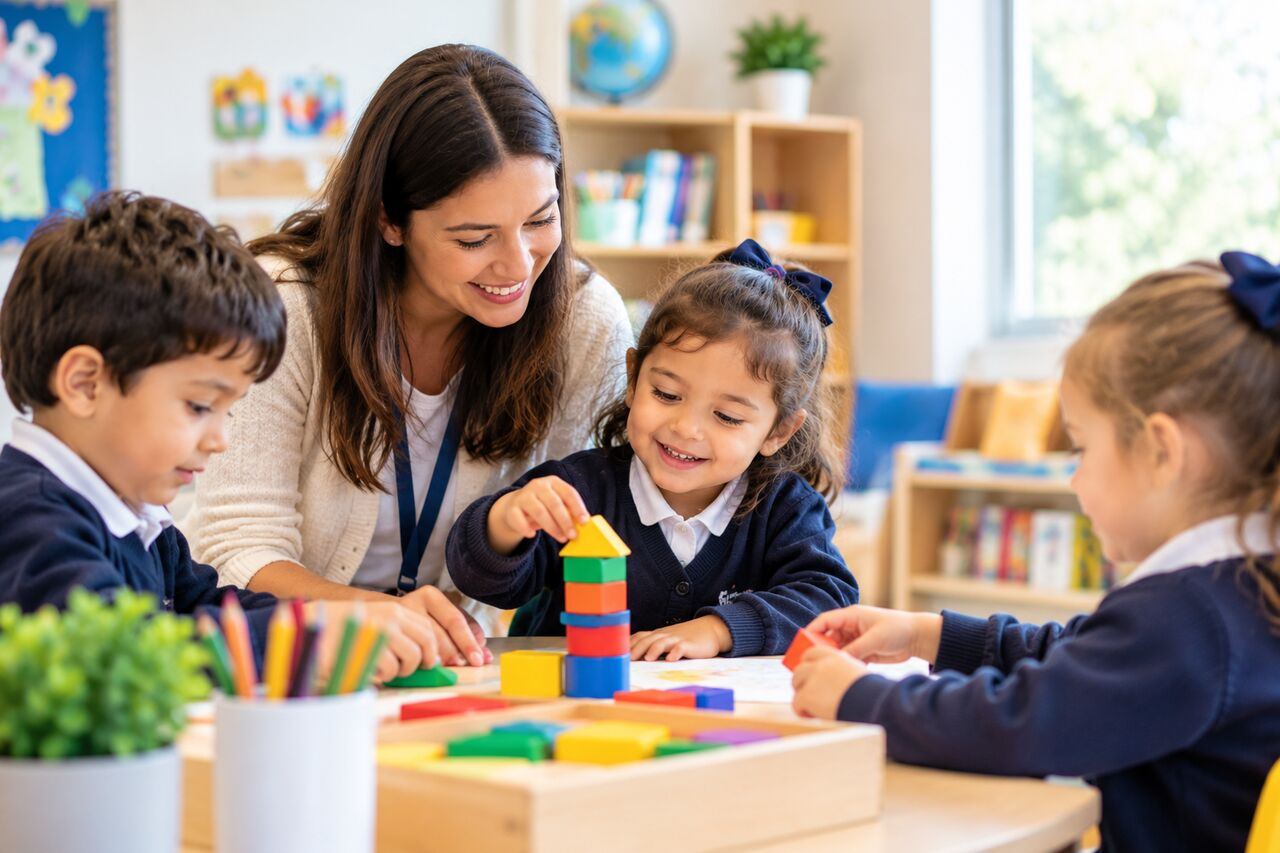
Play in the early years is purposeful. A pretend shop, for example, can help children practise counting, conversation and taking turns in a single activity. Building with blocks supports early math and problem-solving, while storytelling corners encourage vocabulary and imagination.
Teachers can monitor development by observing children during play and classroom activities. These observations help them identify emerging skills, recognise areas where support may be needed, and plan suitable learning experiences. This means progress is monitored without relying only on written tests.
Why Parents Look at EYFS Curriculum Schools in Sharjah
When comparing EYFS curriculum schools in Sharjah, parents may want to consider the following aspects of early childhood education:
Play-based learning: Children learn through hands-on activities that feel natural and engaging.
Individual attention: Teachers track each child’s development and adapt activities to their needs.
Social confidence: Group activities help children share, take turns and express themselves.
Early language development: Songs, stories and conversation support communication, which matters especially in multilingual homes.
Preparation for primary school: Early learning experiences can help children develop skills needed for the next stage of education.
How a Typical EYFS Day Looks
Although daily schedules vary, early years classrooms generally combine teacher-guided sessions with opportunities for children to explore independently. Parents may see:
Circle time with stories, songs and discussion
Phonics and early number sessions in small groups
Free play indoors and outdoors
Exploring creativity through art, simple building tasks and imaginative games.
Snack and rest periods, with routines that build independence
At this stage, learning focuses on building communication, independence and curiosity rather than placing too much emphasis on formal lessons.
Choosing Among British Curriculum Schools in Sharjah
EYFS is usually the first stage of a longer pathway. When exploring British curriculum schools in Sharjah, families may also consider the learning opportunities available after the early years. Understanding how the school moves children from FS2 into Year 1 can help parents assess whether its approach suits their child.
What to Check: A Parent’s Checklist
Use these steps to inspect and compare schools:
Confirm approvals. Check the school’s current status with the relevant Sharjah education authority rather than relying only on website claims.
Visit the early years classrooms. Look for bright, safe and organised spaces with accessible learning materials.
Check outdoor areas. Safe, supervised spaces for active play are essential at this age.
Observe interactions. Notice how staff speak to children and how children respond.
Review the fee list. Request a full list of costs, including any extras.
Look at the pathway. See how the school continues from the early years into Year 1.
What to Ask During a School Visit
Once you have inspected the school, use these questions to understand its approach:
How do you support children who are shy or new to a school setting?
How do you support children who speak little English when they join?
How is progress recorded and shared with parents?
What qualifications and training do early years staff have?
Clear answers about classroom routines, staff training and individual support can help parents understand how the school approaches early childhood education.
Supporting Your Child at Home
Everyday family routines can complement classroom learning and give children additional opportunities to practise new skills. Parents can read together daily, talk about everyday activities, encourage independence with small tasks, and allow time for play.
Final Thoughts
Early childhood education supports children’s communication, relationships, independence and growing understanding of the world around them. Parents can make a more informed choice by examining classroom practices, staff support and the transition from early years into primary education.
Frequently Asked Questions
1. What age group does EYFS cover?
The statutory EYFS framework in England covers birth to age five. In UAE schools, early years classes such as FS1 and FS2 serve the years before Year 1, but entry ages vary. Check each school’s admission criteria.
2. Is EYFS only play?
Play is central, but it is purposeful. Teachers plan activities that build early literacy, number skills, language and social development.
3. How is my child’s progress assessed?
Teachers usually observe children during everyday activities and record their development. Ask each school how it shares progress updates with parents.
4. Will my child be ready for Year 1?
The early years aim to build skills and confidence for the next stage. Readiness varies by child, so discuss your child’s progress with their teacher.
5. What should I look for when visiting an early years classroom?
Look for a safe, welcoming environment, engaged children, caring and qualified staff, and a good mix of indoor and outdoor learning.
6. How do I compare British curriculum options fairly?
Use the same checklist for every sch