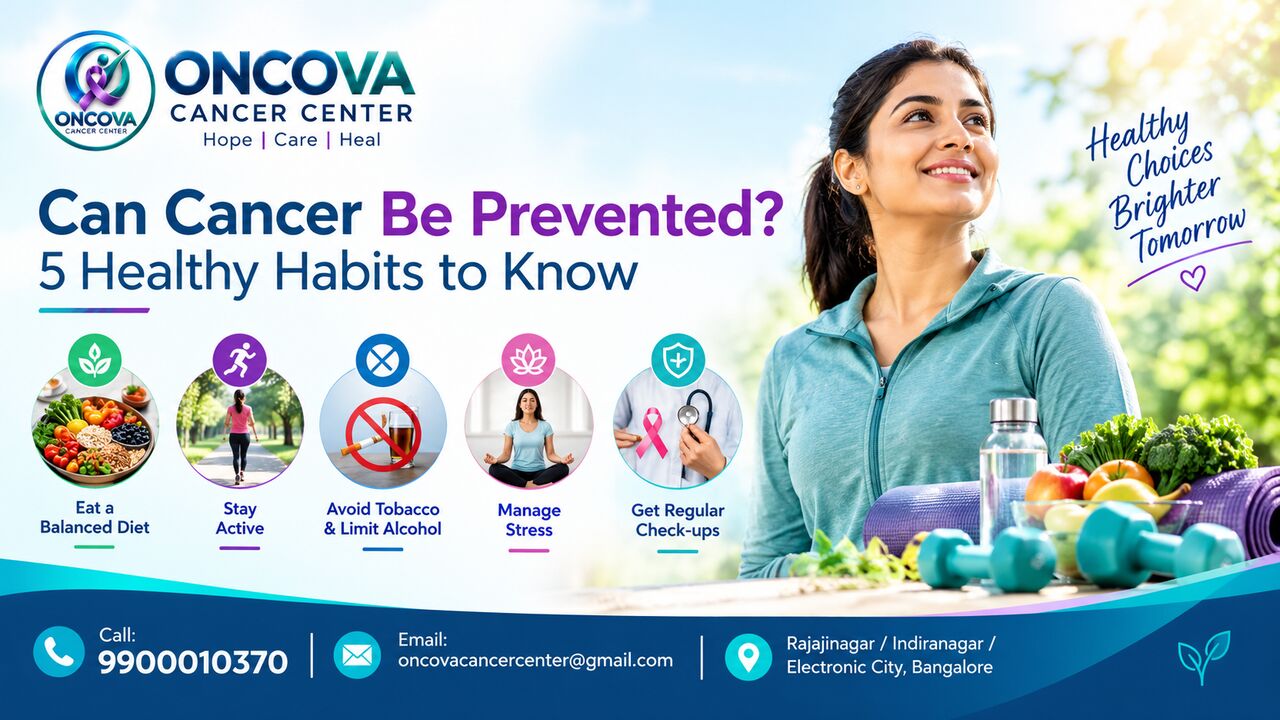
Understanding your risk factors and following appropriate screening recommendations are important steps toward taking care of your health.
5 Healthy Habits That May Help Reduce Cancer Risk
1. Eat a Balanced and Nutritious Diet
A balanced diet supports general health and may help reduce the risk of certain cancers. Include a variety of vegetables, fruits, whole grains and pulses in your daily meals.
Healthy eating tips:
Choose a variety of colourful vegetables and fruits.
✓Include whole grains and fibre-rich foods.
✓Limit processed meats and reduce frequent consumption of highly processed foods.
✓Maintain a balanced diet that meets your individual nutritional needs.
✓No single food can prevent cancer. Focus on an overall healthy eating pattern rather than relying on specific foods or supplements.
2. Stay Physically Active
Regular physical activity supports a healthy body weight and overall health. It may also help lower the risk of certain cancers.
Simple ways to stay active:
✓Take regular walks.
✓Choose activities you enjoy, such as cycling or dancing.
✓Reduce long periods of sitting.
✓Build up your activity gradually according to your fitness and health.
If you have a medical condition or are recovering from an illness, ask your healthcare professional which activities are suitable for you.
3. Avoid Tobacco and Limit Alcohol
Tobacco use is a major preventable cause of cancer. Smoking and smokeless tobacco can increase the risk of several cancers, including cancers of the mouth, throat and lungs.
Alcohol consumption is also associated with an increased risk of several cancers. Avoiding tobacco and avoiding alcohol are important steps toward reducing these risks.
Remember: There is no safe form of tobacco. If you need help stopping tobacco use, speak with a healthcare professional about support and cessation options.
4. Maintain a Healthy Weight and Manage Stress
Maintaining a healthy weight can help reduce the risk of certain cancers. Regular movement, balanced meals, adequate sleep and sustainable daily habits can support weight management.
Managing stress is also important for emotional well-being. Try relaxation techniques, spend time with loved ones and maintain a regular sleep routine.
Important: Stress alone should not be considered a direct cause of cancer, and relaxation techniques cannot guarantee cancer prevention. Seek support if stress or anxiety affects your daily life.
5. Follow Recommended Cancer Screening and Prevention Guidelines
Screening can help detect certain cancers or precancerous changes before symptoms appear. The appropriate screening tests depend on factors such as age, sex, family history, previous medical findings and personal risk.
Examples include:
✓Cervical cancer screening, as recommended by healthcare professionals.
✓Breast cancer screening, based on individual risk and applicable guidelines.
✓Colorectal cancer screening, according to age and risk.
✓Specialist assessment for people with a strong family history or inherited cancer risk.
Some cancers can also be prevented through vaccination. For example, HPV vaccination helps protect against infections that can cause several cancers, while hepatitis B vaccination can help prevent hepatitis B infection and reduce the risk of liver cancer.
Not everyone needs the same screening tests. Consult a qualified healthcare professional to understand which preventive measures are appropriate for you.
Can Cancer Be Prevented Completely?
No. Not all cancers can be prevented, even when someone follows a healthy lifestyle. Cancer risk is influenced by multiple factors, including age, inherited genes, infections, environmental exposures and chance.
However, avoiding tobacco, limiting alcohol, staying physically active, eating a balanced diet, maintaining a healthy weight and following appropriate screening and vaccination recommendations can help reduce the risk of certain cancers.
When Should You Seek Medical Advice?
Consult a healthcare professional if you notice persistent or unexplained changes in your body, such as a new lump, unusual bleeding, a persistent change in bowel habits, a sore that does not heal or unexplained weight loss.
These symptoms do not necessarily mean cancer, but they deserve appropriate medical evaluation.
Take a Positive Step Toward Your Health.
Small, consistent habits can support long-term health. Learn about your personal risk factors, follow recommended preventive care and discuss any concerns with your healthcare team.
Oncova Cancer Center
Hope Care Heal
📞 Contact: 9900010370
📧 Email: [email protected]
📍 Locations: Rajajinagar Indiranagar Electronic City, Bangalore