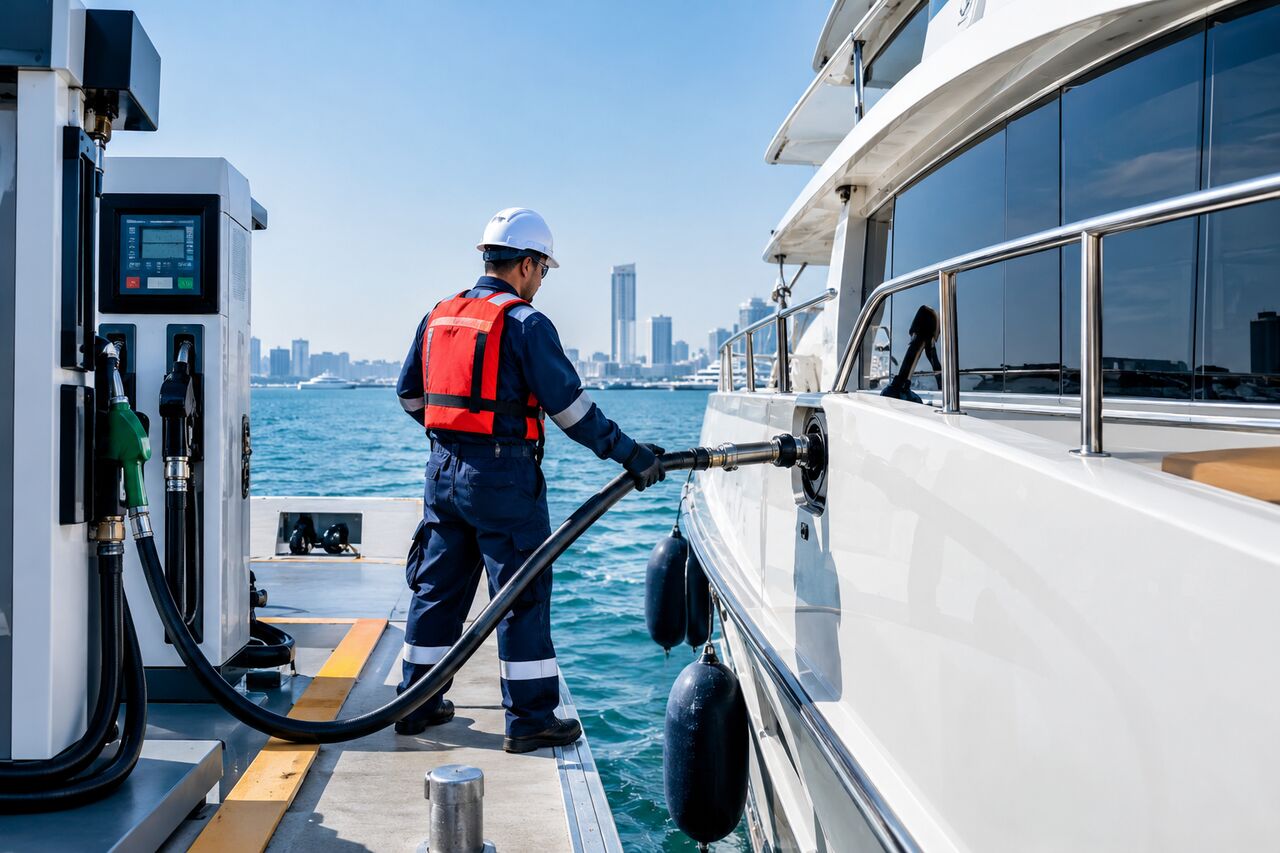
Refueling a boat is not the same as refueling a car. Fuel is handled near or on moving water; fuel fumes accumulate in lower areas, and even a small spill can reach the sea within seconds. This is why fuel dispenser installation companies have a vital role in ensuring safety and regulatory compliance during marine fueling operations.
Why Marine Refueling Carries Unique Risks
Marine refueling stations present unique hazards not encountered at typical land-based refueling facilities. Tides, waves, and wind can shift the vessel while it remains connected to the fueling nozzle, increasing the risk of spills or equipment strain. Saltwater causes corrosion in metals. Additionally, gasoline fumes—heavier than air—can settle in the bilge or cabin, where even a single spark could ignite them and cause a fire or explosion.
Accordingly, the design of marine refueling stations is governed by three core principles: preventing leaks, controlling ignition sources, and enabling immediate response to any hazards.
Step 1: Site Assessment and Planning
Safe installation begins before any equipment is delivered. Installation companies evaluate water depth, tidal patterns, vessel traffic, wind conditions, and the proximity of nearby structures to ensure safe and effective placement. They also review local maritime and fire safety regulations to ensure the selected site meets all legal and safety requirements.
For floating facilities, such as fuel stations built on pontoons, it is essential to account for buoyancy, weight distribution, and secure anchoring to maintain stability and safety. The installation must remain stable under all operating conditions, including varying levels in fuel tanks, active dispensing, and the movement of vessels. Companies such as Tekzone include pontoon and marine fuel stations among these installation types.
Step 2: Choosing Marine-Grade Equipment
Land-based equipment can be prone to breaking down at sea. The installation process usually involves specifying:
Materials resistant to corrosion—such as stainless steel, marine-grade aluminum, and specialized protective coatings—are essential for durability in marine environments.
Explosion-proof and intrinsically safe electrical components are used to minimize the risk of ignition in hazardous environments.
Breakaway couplings in case a boat moves away but is still attached to the system.
Valves to prevent fuel from siphoning back into the system or draining into the water.
Fuel nozzles with flow control and shut-off features to prevent overfilling and spilling.
Component selection that can withstand the marine environment is arguably one of the most critical decisions installers make.
Step 3: Secure Installation and Fuel Containment
The installation itself will determine the performance of the safety measures installed. Pipes are routed to eliminate stress from wave movement, and flexible joints are used wherever there is relative motion between the floating structure and the shore. The fuel pipes are usually double-walled.
The system features integrated spill prevention. Drip pans, containment sumps, and spill kits are located around the dispenser. Grounding and bonding prevent static electricity buildup in the dispenser, hose, and vessel, eliminating a known ignition source.
Step 4: Leak Detection, Emergency Controls, and Signage
Modern boat refueling stations are equipped with alarm systems that detect leaks or abnormal pressure and automatically shut down operations. Emergency shut-off buttons are conveniently located on the docks and dispensing devices for quick access. Fire extinguishers are kept nearby, and clear signage outlines no smoking, engine shutoff requirements, and emergency procedures.
This is crucial because boat owners, not professionals, typically handle refueling.
Step 5: Testing, Commissioning, and Compliance
Before opening the station, installers pressurize the pipes, calibrate meters, verify electrical grounding, and ensure all shut-off systems and alarms are operational. Documentation is maintained to verify adherence to regulatory requirements.
Post-commissioning safety is provided by regular maintenance. Hoses, seals, breakaway couplings, and filters wear out over time and require regular replacement. Regular inspections detect corrosion and minor leaks early, preventing them from developing into major problems. Tekzone companies view installation as an ongoing process that includes regular inspection and maintenance.
Best Practices for Safe Marine Refueling
Even a well-built station depends on safe behavior. Recommended practices include:
Switch off engines, electrical equipment, and open flames before fueling.
Close hatches and ports so vapors cannot enter the vessel.
Keep the nozzle in contact with the fill opening to limit static discharge.
Avoid overfilling, and leave room for fuel expansion.
After fueling, ventilate the engine compartment and inspect for any fuel odors.
Report any spill immediately and use available containment materials.
FAQs
Q1. What do fuel dispenser installation companies do for marine stations?
They assess the site, select marine-grade equipment, install dispensers and piping, add leak detection and emergency controls, test the system, and support maintenance. Their goal is to reduce fire, spill, and environmental risks.
Q2. Why are breakaway couplings important in marine refueling?
If a boat moves away unexpectedly, a breakaway coupling separates the hose and seals both ends, which prevents fuel from spilling into the water or onto the dock.
Q3. What is a pontoon marine fuel station?
It is a floating platform that holds fuel dispensing equipment and sometimes storage. It allows boats to refuel on the water, which is useful where building a fixed dock is difficult or impractical.
Q4. How is static electricity controlled during marine refueling?
Installers use grounding and bonding on dispensers and hoses, and users are advised to keep the nozzle in contact with the fill opening to help prevent static sparks.
Q5. How often should marine fuel dispensers be inspected?
Inspection schedules vary by regulation and usage, but routine checks of hoses, couplings, seals, and electrical components are generally recommended, with more frequent checks in harsh saltwater environments.
Q6. Can marine refueling be made environmentally safe?
Risk cannot be eliminated entirely, but containment sumps, auto shut-off nozzles, leak detection, and spill kits greatly reduce the likelihood and impact of fuel entering the water.
Conclusion
Safe marine refueling is the result of careful planning, suitable equipment, precise installation, and consistent maintenance. Fuel dispenser installation companies address the unique hazards of marine environments by using corrosion-resistant materials, incorporating spill containment and leak detection systems, and implementing emergency controls.