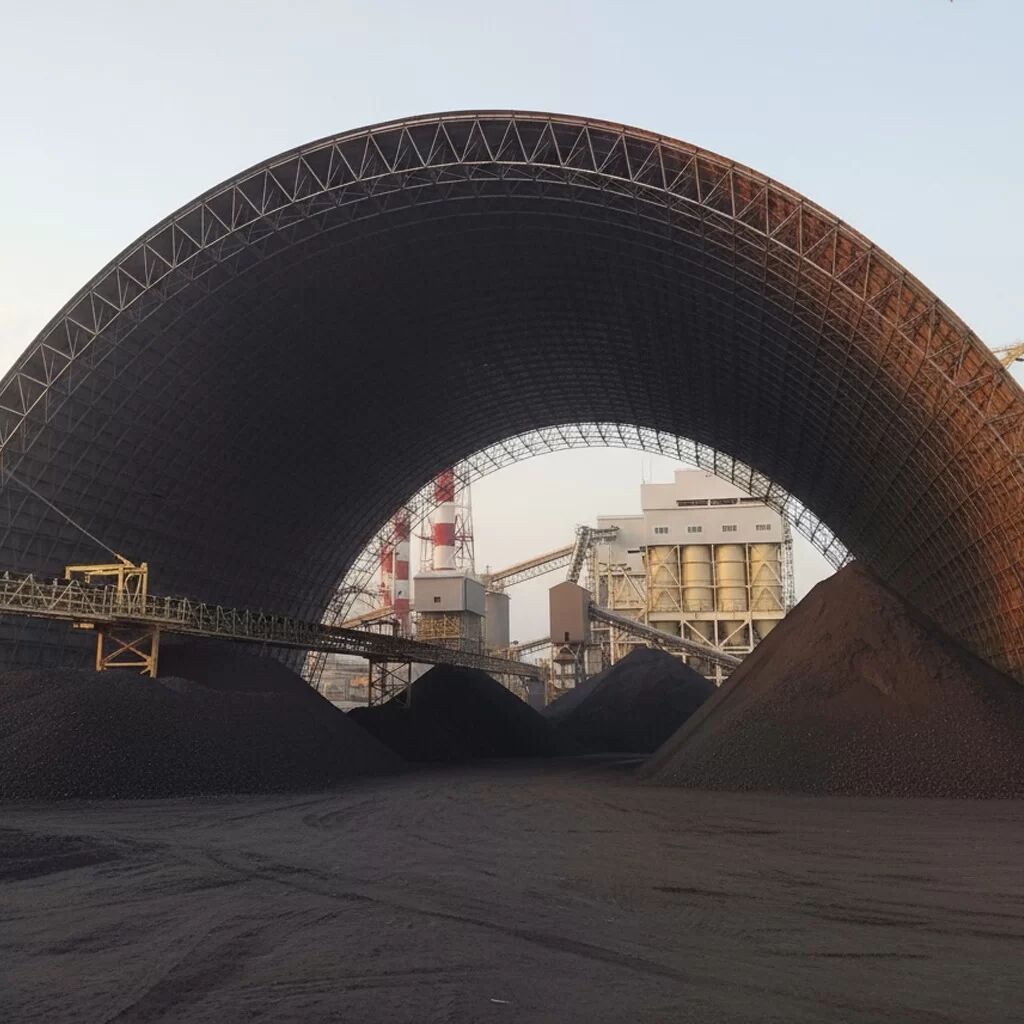
Coal is an important bulk material for several industries, including thermal power generation, cement manufacturing, mining, and metallurgical operations. Because coal can be affected by rain, humidity, runoff, and uncontrolled environmental exposure, proper storage infrastructure is essential for maintaining material quality and supporting efficient handling operations.
Advanced coal storage sheds provide a practical solution for protecting large quantities of coal while creating a more controlled storage environment. These structures are generally engineered using durable materials such as structural steel and reinforced concrete and can be designed according to the storage capacity, site conditions, and material-handling requirements of a project.
Why Covered Coal Storage Matters
Open coal stockpiles can be exposed to rainfall and surface runoff, which may contribute to moisture-related problems and material degradation. Covered storage helps limit direct exposure to weather conditions and provides better control over the storage environment.
Properly designed coal storage sheds can also incorporate ventilation and temperature-management considerations. These features are particularly important because coal can undergo self-heating under certain storage conditions. Engineering the storage facility with suitable airflow and monitoring provisions can help support safer and more controlled operations.
Large-Scale Storage for Industrial Applications
Modern coal storage sheds are designed to accommodate substantial quantities of bulk material while making efficient use of available land. Large-span steel structures can create spacious interiors with fewer internal obstructions, allowing storage and material-handling equipment to operate efficiently.
These facilities can be used in thermal power plants, cement plants, mining facilities, and other industries where reliable bulk fuel storage is required. The structural design can be adapted to suit different capacities, layouts, and operational requirements.
Integration With Material Handling Systems
Storage is only one part of an efficient coal-handling operation. Conveyors, stackers, and reclaimers can be integrated with storage facilities to support controlled movement of material between storage and processing or feeding areas.
An appropriately planned reclaim system can also help maintain more consistent material flow and reduce issues associated with stockpile segregation. Combining storage structures with suitable material-handling equipment creates a more organised and efficient bulk-storage operation.
Dome-Shaped Coal Storage Sheds
Dome-shaped storage structures are another solution used for large-scale coal storage. Their geometry can provide extensive overhead coverage while creating a strong and efficient structural form. Depending on the project design, dome sheds can also be integrated with conveyors, stacker-reclaimers, and other material-handling systems.
The choice of storage configuration depends on factors such as required capacity, available land, material characteristics, environmental conditions, and the overall handling process.
Choosing the Right Coal Storage Solution
Every industrial facility has different storage requirements. Before developing a coal storage shed, project teams should consider storage capacity, site conditions, ventilation, drainage, material-handling systems, access requirements, structural loads, and future expansion.
Working with an experienced steel structure and industrial storage specialist can help ensure that the facility is engineered around its specific operational requirements.
For more information about advanced coal storage sheds, bulk storage solutions, and their applications in industrial facilities, visit:
[]https://alcox-steel.com/blo ...]
As industries continue to focus on efficient bulk-material management, well-engineered coal storage sheds can provide a durable and organised solution for protecting stored material and supporting reliable industrial operations.