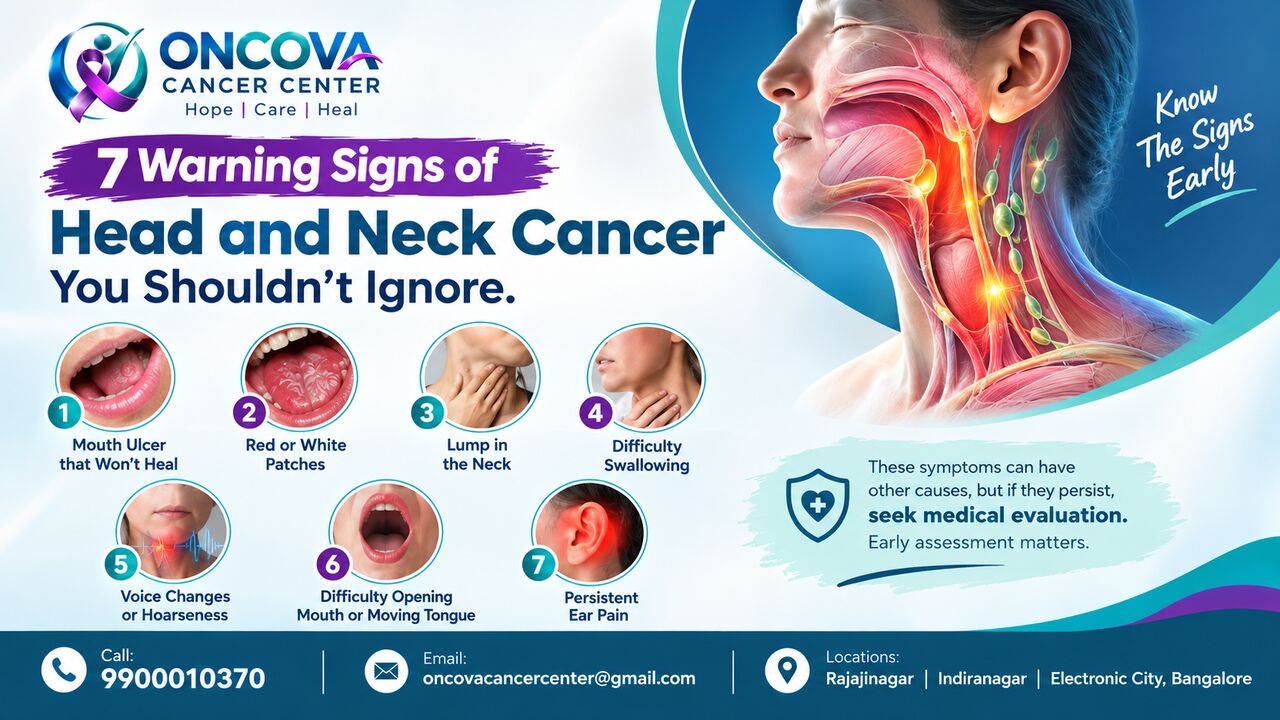
At Oncova Cancer Center, we encourage people to understand potential warning signs and consult a qualified healthcare professional if symptoms persist.
What Are the 7 Warning Signs of Head and Neck Cancer?
1. A Mouth Ulcer That Does Not Heal
A mouth sore that does not heal, particularly one lasting more than three weeks, should be examined by a healthcare professional. Although many mouth ulcers are harmless, persistent sores may require further investigation.
2. Red or White Patches Inside the Mouth
Unusual red or white patches on the tongue, gums, inner cheeks, or other areas of the mouth should not be ignored, especially if they persist or change over time.
3. A Lump or Swelling in the Neck
A persistent lump in the neck may have several causes, including infection or swollen lymph nodes. However, an unexplained or growing lump should be medically evaluated.
4. Difficulty or Pain While Swallowing
Ongoing difficulty swallowing, pain when swallowing, or a feeling that food is getting stuck in the throat may indicate a condition that requires assessment.
5. Persistent Hoarseness or Voice Changes
A voice that remains hoarse or changes without an obvious reason should be checked, particularly when the change continues for several weeks.
6. Difficulty Opening the Mouth or Moving the Tongue
Persistent difficulty opening the mouth, reduced tongue movement, or unexplained stiffness in the jaw may require further examination.
7. Persistent Ear Pain Without an Obvious Cause
Ongoing ear pain, especially when an ear examination does not reveal a clear cause, can sometimes be associated with problems in the throat or other head and neck structures.
Who May Be at Higher Risk?
Factors associated with certain head and neck cancers include:
✓ Tobacco use, including smoking and smokeless tobacco
✓ Alcohol consumption, particularly when combined with tobacco
✓ Human papillomavirus (HPV) infection, which is associated with some oropharyngeal cancers
✓ Certain occupational or environmental exposures
✓ Some personal and medical risk factors
Risk varies depending on the cancer type. People without these risk factors can also develop head and neck cancer.
When Should You See a Doctor?
Seek medical advice if you notice a persistent mouth ulcer, an unexplained neck lump, ongoing swallowing difficulty, lasting voice changes, or another unusual symptom.
These symptoms do not automatically mean cancer. They can occur because of several other conditions. A healthcare professional may recommend an examination and, if needed, further investigations such as imaging or a biopsy.
Do not wait for symptoms to become severe before seeking medical advice. Early evaluation can help determine the cause and guide appropriate care.
Head and Neck Cancer Consultation at Oncova Cancer Center
Oncova Cancer Center provides cancer consultation and care guidance to help patients understand their symptoms, diagnostic reports, and appropriate next steps. Depending on clinical needs and service availability, care may include specialist consultation, diagnostic evaluation guidance, treatment planning, second-opinion guidance, and follow-up support.
Oncova Cancer Center — Hope Care Heal
📞 Call: 9900010370
📧 Email: [email protected]
📍 Locations: Rajajinagar Indiranagar Electronic City, Bangalore