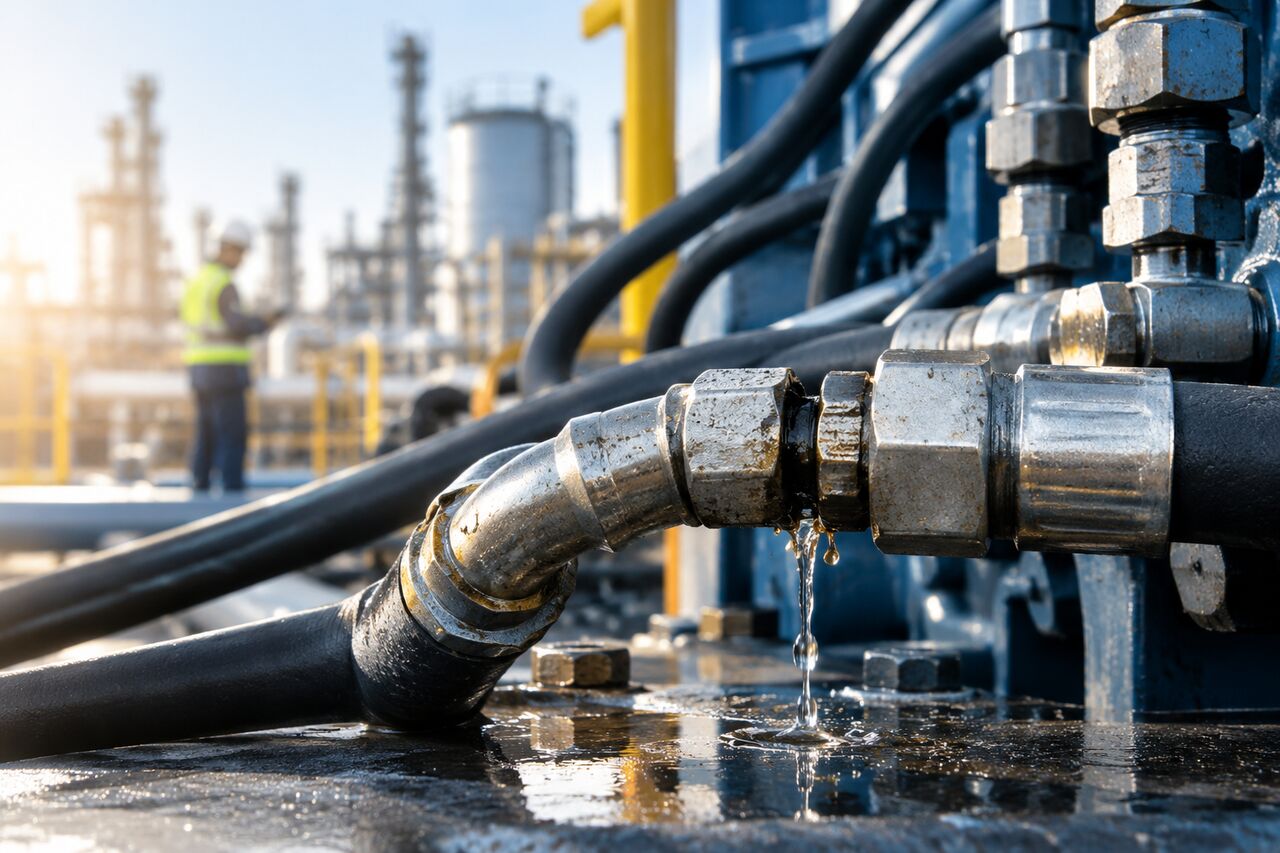
Why Hydraulic Fittings Matter More Than They Appear
A hydraulic coupling must reliably contain high-pressure fluid—sometimes at several hundred bar—while also resisting vibration, pressure spikes, and temperature fluctuations. A poor-quality or unsuitable coupling may result in leaks, loosening, fractures, and bursts. Any coupling in the system can potentially fail, so just one defective coupling may cause the entire system to malfunction.
Operating conditions in the UAE increase the challenges involved. UAE industrial equipment may operate in extreme summer heat, while coastal humidity, salt exposure, and airborne dust can increase the importance of suitable materials, sealing systems, and maintenance practices. Exposure to salt accelerates corrosion, especially at operating sites located on the coast or in offshore areas.
The Hidden Costs of Poor-Quality Fittings
1. Unplanned Downtime
Downtime is normally the biggest invisible expense. A failed fitting can cause equipment shutdowns and disrupt industrial operations. At a construction site, it delays both labor activities and the deployment of machinery. For logistics operations or ports, it can cause delays in loading and unloading cargo.
2. Fluid Loss and Contamination
Oil leakage not only wastes costly hydraulic fluid but also requires its replacement. More dangerously, loose or broken connections can allow dust, water, and other foreign contaminants to enter the system. Contamination is a primary factor contributing to the wear of hydraulic components. Repairing pumps, valves, and cylinders damaged by contaminated fluid can be very costly.
3. Safety Risks
Injuries that can result from high-pressure liquid leaking from a damaged joint include injection injury, burns, and falls due to oily floors. Leaking oil near heated components significantly increases the risk of fire. Incidents are time-consuming to investigate and can attract regulatory, insurance, and moral costs.
4. Environmental and Compliance Exposure
Cleaning up oil spills at industrial facilities, ports, or in water bodies incurs significant remediation expenses and may result in regulatory fines. Additionally, many UAE industries have internal environmental standards that consider frequent leakage a sign of poor operational performance.
5. Shortened Equipment Life
Vibration, misalignment, and shock from poor connections accelerate wear and tear on surrounding components. Repeated hydraulic failures can accelerate component wear and shorten equipment service life.
6. Repeated Maintenance and Labor
Poorly manufactured fittings are prone to recurring defects and failures. Each malfunction requires technicians’ time and effort, as well as the use of additional replacement parts.
Common Causes of Fitting Failure
Failure is not always due to a bad product alone. Frequent causes include:
Wrong specification: thread type, size, or pressure rating that does not match the system
Mixed standards: BSP, NPT, JIC, ORFS, and metric threads can look similar but are not interchangeable
Low-grade materials: weak plating or inferior steel that corrodes or fatigues early
Poor crimping or assembly: incorrect crimp diameter or contaminated components
Over-tightening or under-tightening during installation
Counterfeit or unverified parts lacking traceable certification
How to Choose Reliable Hydraulic Fittings Suppliers in the UAE
Careful supplier selection and product verification can reduce the risk of hydraulic system failures. The purchaser can insist on material certifications, pressure ratings, and compliance with known standards such as ISO or SAE standards. The purchaser can confirm product compatibility, request batch traceability, and seek technical assistance from the supplier during the selection process.
Supplier stock availability also matters. When a breakdown occurs, local access to correct fittings shortens downtime. Companies such as Hydromax, which presents a range of hydraulic product fittings through its category listing, are examples of regional suppliers that buyers may review when comparing product range and specification details. Reviewing catalog information from providers like Hydromax can help maintenance teams confirm the types, sizes, and standards available before placing orders.
Preventive Practices Worth Adopting
Proper inspections will help detect most of the problems that may arise very early. It is easy for a technician to inspect for oil leaks at joints, rust formation, cracked hoses at the fittings, and loose joints. Maintenance records will make it easy to establish any pattern in the failure of some fittings in a particular machine. Maintenance records can help identify recurring fitting failures in specific equipment. Hydromax and other manufacturers can be approached in case of any questions.
FAQs
Q1. Why do hydraulic fittings fail?
Common causes include incorrect specification, corrosion, vibration fatigue, poor assembly, over-pressurization, and low-quality materials.
Q2. How much can a failed hydraulic fitting cost a business?
The total cost depends on the equipment, repair requirements, and duration of downtime. Expenses may include replacement fittings, hydraulic fluid, technician labour, damaged components, production delays, and environmental cleanup.
Q3. What should buyers check when choosing hydraulic fittings suppliers in the UAE?
They should confirm product certification, material quality, pressure ratings, thread standards, stock availability, and technical support.
Q4.Are hydraulic fittings affected by UAE weather?
Yes. High heat, humidity, dust, and salt exposure can speed up corrosion, seal degradation, and fatigue, so corrosion-resistant materials and coatings are often preferred.
Q5. How can leaks be prevented?
Use correctly specified fittings, assemble them to proper torque or crimp specifications, inspect regularly, and replace worn components promptly.
Q6. Are all threaded fittings interchangeable?
No. Different thread standards may appear similar but do not seal properly together, which can cause leaks or failure.
Conclusion
Poor hydraulic fittings rarely announce their cost upfront. The expense appears later through downtime, fluid loss, contamination, safety incidents, env