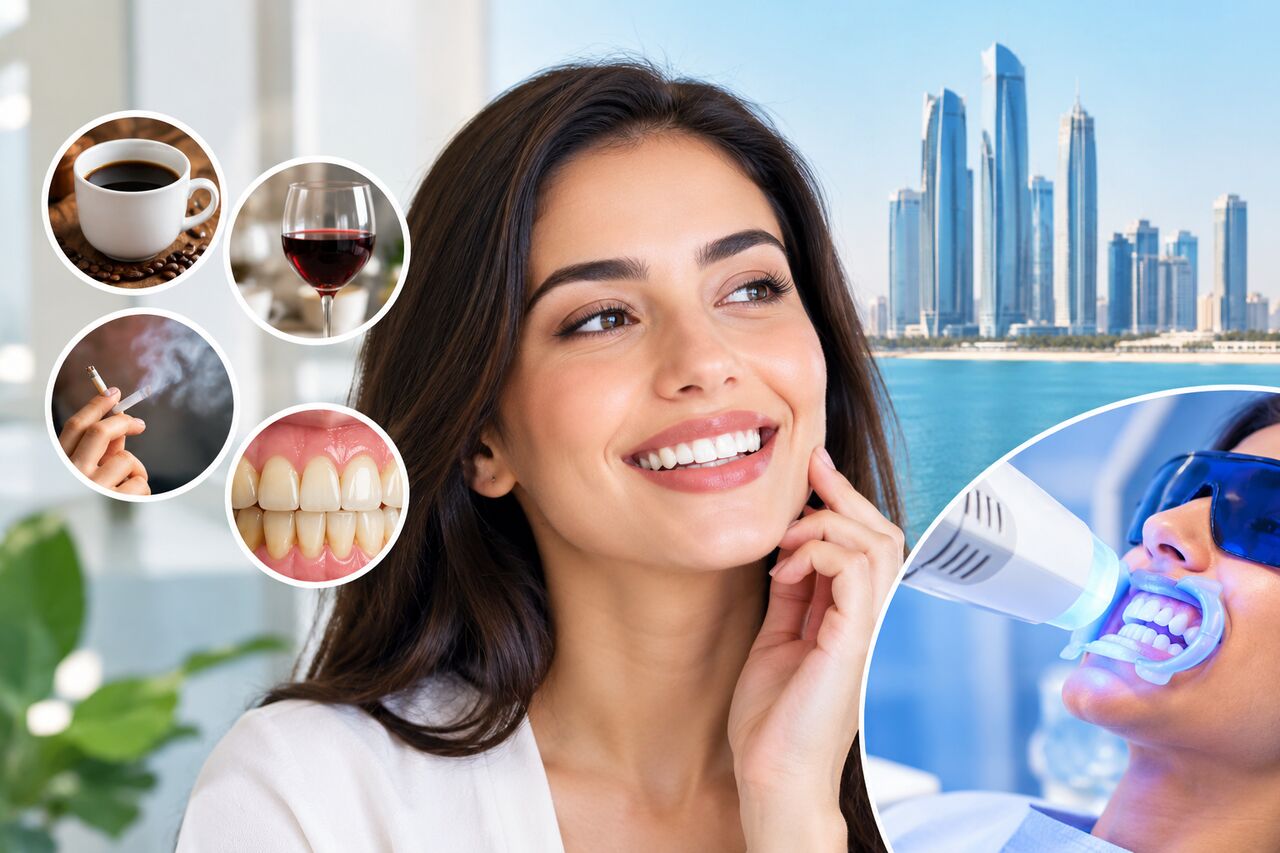
A yellow or dull appearance of a tooth is rarely an indication of poor oral hygiene. Most staining can be traced to regular habits, age-related factors, or the tooth's natural makeup. To achieve lasting whitening results, it's essential to first identify the cause of staining. Professional teeth whitening in Abu Dhabi begins with identifying the cause of discoloration and selecting a suitable treatment.
Quick Answer
Surface stains caused by coffee, tea, and tobacco can often be removed through professional cleaning. Whitening treatments can lighten natural tooth color and certain deeper stains, while discoloration caused by trauma, medication, or dental restorations may require alternative treatment.
Why Teeth Change Color
Because tooth enamel is naturally translucent, the yellowish dentin beneath it can often be seen. As enamel gradually wears down over time, the teeth may take on a more yellow appearance. Pigments from food, drinks, and tobacco can also accumulate on or within the enamel, contributing to discoloration. This explains why teeth become discolored over time despite brushing.
Common Causes of Surface Stains
Extrinsic stains develop primarily on the outer surface of the teeth and are commonly associated with food, drinks, and tobacco.
Tea, coffee, and cola. In the UAE, tea and Arabic coffee are commonly consumed and contain coloring agents that can discolor tooth enamel.
Tobacco. Cigarette smoke, shisha, and chewable tobacco leave yellow or brown stains on the teeth.
Red wine, berries and sauces. Dark foods may stain the teeth when consumed regularly.
Dental plaque and calculus. Bacterial accumulation on teeth can cause yellow or brown staining.
Some mouthwashes. Certain antiseptic mouthwashes can cause brown stains after prolonged use.
Common Causes of Deeper Stains
There are stains that develop internally on the teeth, making their removal difficult:
Aging process. The thinner enamel reveals darker dentine.
Medication. Tetracycline, when used in childhood, causes grayish or brownish bands.
Fluoride exposure. Excessive fluoride exposure during childhood can result in white or brown stains on the teeth.
Physical trauma. Trauma or injury to a tooth can cause it to darken internally.
Decay and old restorations. Decay or old metal restorations cause dark stains.
Genetics. Natural variations in enamel thickness, translucency, and tooth structure can influence tooth color.
How Stains Are Treated
Treatment is determined by the underlying cause, with the methods described here arranged from least to most complex.
Professional cleaning. Scaling and polishing help clear away plaque, tartar, and most external stains from the teeth. This procedure is generally done as a preliminary step before starting any whitening treatment.
In-office whitening. A dentist uses peroxide gel applied to isolated teeth, sometimes using a light or laser to accelerate the chemical reaction. Noticeable results are often achieved after just one session.
Bonding and Veneers. When whitening treatments are not effective—such as in cases of tetracycline stains or chipped teeth—tooth-colored bonding materials and thin porcelain veneers can be used to restore the tooth’s natural appearance.
Addressing the underlying issue. If a single tooth becomes darker after an injury, a dentist may evaluate the health of its pulp through clinical examination and X-rays. If root canal treatment is necessary, internal whitening may be considered afterward to improve the tooth's appearance.
What to Expect From Whitening
Whitening lightens natural enamel but does not change crowns, fillings, or veneers. Mild, temporary sensitivity is common and usually settles within a day or two.The effects of whitening can persist for several months or more, depending on the type of treatment, oral hygiene habits, diet, and tobacco use. Periodic touch-ups may be necessary. Coffee, tea, and smoking will gradually bring stains back.
Choosing a Provider in Abu Dhabi
Whitening is a medical procedure, so the setting matters. A reputable provider should be properly licensed, assess your teeth and gums before treatment, clearly communicate achievable shade goals, and avoid using standardized products for all patients. Over-the-counter strips and unregulated kits can irritate gums or give uneven results.
Clinics that offer specialized cosmetic dentistry services, like Retaj Medical, usually provide assessment, whitening, and restorative treatments under one roof. This integrated approach is especially helpful when stains require more than just bleaching gel.
Habits That Help Whiten Teeth Last Longer
After consuming coffee, tea, or other dark beverages, rinse with water.
For iced or sugary beverages, use a straw.
Brush twice daily with fluoride toothpaste and floss once a day.
Avoid tobacco in all forms.
Arrange regular dental exams and professional cleanings as advised by a dentist.
FAQs
Q1. Is teeth whitening safe?
Yes, when supervised by a dentist. Professional whitening uses controlled concentrations and protects the gums. Problems usually arise from misuse of unregulated products.
Q2. How long does professional whitening take?
An in-office session typically lasts 45 to 90 minutes. At-home whitening systems usually involve daily application for one to two weeks.
Q3. Does whitening damage enamel?
Studies indicate that dentist-approved whitening products are safe for enamel when used according to instructions. Temporary sensitivity is the most common side effect.
Q4. Can everyone get their teeth whitened?
Not everyone. Active cavities, gum disease, and worn enamel should be treated first. Undergoing whitening procedures are generally avoided during pregnancy.
Q5. Do natural remedies like baking soda or charcoal work?
They may remove light surface stains, but abrasive products can wear enamel over time. Dentists generally recommend safer, tested methods.
Q6. Why are my teeth yellow even though I brush every day?
Brushing is effective for surface stains, but yellowing due to thinning enamel, genetic factors, or medication remains unaffected by brushing.
Conclusion
Tooth discoloration arises from numerous sources, such as frequent coffee intake and age-related enamel changes, so a universal solution is not possible. Surface stains typically improve with cleaning and professional whitening, but more severe discoloration may necessitate restorative procedures. The most reliable approach is to begin with a dental examination, understand the cause, and choose a treatment that matches it. With sensible habits and professional guidance, whether at a general practice or a cosmetic dentistry center like Retaj, a brighter smile can be both safe and lasting.