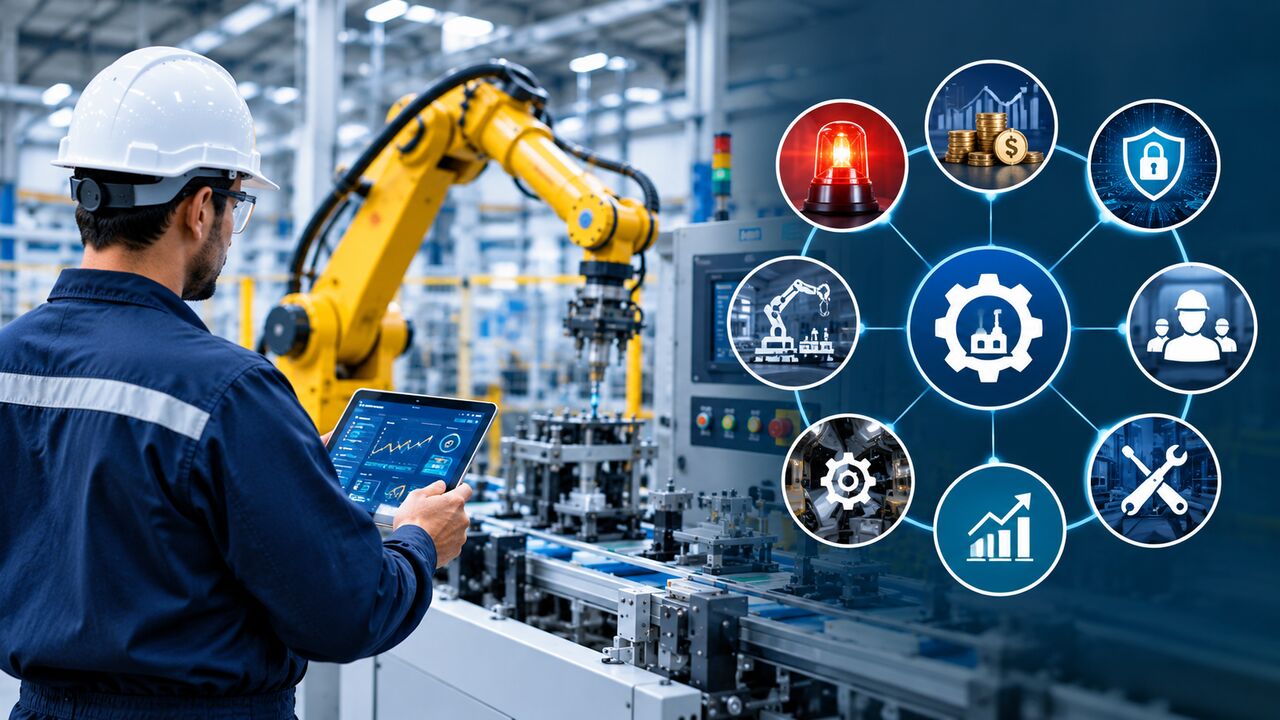
Industrial automation is revolutionizing manufacturing, oil and gas, water treatment, and logistics across the Gulf region. In the UAE, initiatives such as Operation 300bn and the development of smart plants have increased investment in automation for control systems, robotics, data analytics, and other technologies. However, many projects are completed late, go over budget, or ultimately fall short of delivering the intended benefits. Understanding the most common challenges and their solutions enables plant management and automation engineers to plan more effectively and minimize unexpected issues.
In brief: Common industrial automation challenges in the UAE include legacy system integration, cybersecurity risks, skills shortages, harsh environmental conditions, and equipment obsolescence. Businesses can overcome these challenges through structured engineering, phased modernization, cybersecurity controls, employee training, and preventive maintenance.
1. Integrating Legacy Equipment
Many companies in the UAE operate PLCs, drives, and SCADA systems that were installed years ago—often by different vendors using incompatible communication protocols. Replacing all systems at once is not always practical or cost-effective. The solution begins with an asset audit, followed by the gradual implementation of protocol gateways and OPC UA connectivity.
2. Cybersecurity Exposure
Integrating operational technology into enterprise networks expands the attack surface. Malware and unauthorized access pose significant risks, potentially halting production or undermining vital safety systems. Defenses against these threats include network segmentation, role-based access control, regular patch management, continuous monitoring, and adherence to the IEC 62443 standard. Security measures should be integrated from the design phase rather than added after commissioning.
3. Unclear Scope and Weak Planning
Projects initiated without clearly defined requirements often face change orders, schedule delays, and costs that exceed initial estimates. This issue can be addressed by applying structured front-end engineering practices, including workshops, design specification documents, I/O lists, and clearly defined acceptance criteria. Factory Acceptance Testing and Site Acceptance Testing then verify that the developed system fully aligns with the documented requirements. Industrial automation contractors in the UAE typically rely on this documentation as the foundation for the entire project.
4. Skills Shortages
While automation technology continues to advance, there remains a strong regional demand for skilled controls engineers, instrumentation technicians, and data professionals. Companies can address this challenge by creating vendor-neutral training programs, establishing competency matrices, pairing new employees with experienced engineers during commissioning, and ensuring thorough handovers.
5. Harsh Environmental Conditions
High temperature, dust, humidity, and salt corrosion reduce the lifetime of field devices and control panels in the Gulf region. Proper enclosure selection, thermal management, ventilation design, corrosion-resistant materials, and preventive maintenance can improve equipment reliability. Conducting environmental studies early in the design phase can reduce future replacement costs.
6. Turning Data into Decisions
Modern plant systems generate vast amounts of sensor data, much of which remains unanalyzed. Without clearly defined goals, dashboards provide little value. The team should begin by defining key performance indicators—such as overall equipment effectiveness, energy consumption, and downtime causes—and then configure the historian and analytics to support these objectives.
7. Fragmented Project Delivery
When design, procurement, installation, and commissioning are managed by separate parties, coordination gaps appear. Integrated delivery models, including EPC contracting, aim to consolidate responsibility under one framework. Among Industrial Automation Companies in UAE, Tekzone is one example of a firm offering EPC contracting services that cover these stages, illustrating how a single accountable team can simplify interfaces, schedules, and documentation. Regardless of provider, buyers should verify references, certifications, and past project outcomes.
8. Lifecycle Support and Obsolescence
Automation hardware and software have finite lifecycles. Unsupported components can leave plants exposed to long outages. A lifecycle management plan, spare parts strategy, scheduled firmware reviews, and a modernization roadmap reduce this risk. Contractors that provide long-term maintenance agreements can help, but internal ownership of the asset register remains essential.
Frequently Asked Questions
Q1. What do industrial automation contractors in the UAE do?
They design, supply, program, install, and commission control and instrumentation systems such as PLCs, SCADA, DCS, and robotics. Many also provide testing, documentation, training, and maintenance.
Q2. What is the biggest challenge in industrial automation?
Legacy integration and unclear scope are among the most frequent causes of delay. Both are best addressed through early audits, detailed specifications, and phased implementation.
Q3. How can companies choose among industrial automation companies in UAE?
Companies should compare technical certifications, relevant sector experience, vendor partnerships, safety record, local support capability, and documented project references before shortlisting.
Q4. How can automation projects stay on schedule?
Fixed requirements, phased rollouts, simulation before deployment, and thorough factory acceptance testing reduce rework and keep commissioning predictable. Regular progress reviews with all stakeholders also help catch issues.
Q5. Is cybersecurity necessary for older plants?
Yes. Legacy systems often lack built-in protection, so segmentation, monitoring, and access control are especially important.
Conclusion
Industrial automation delivers measurable gains in efficiency, safety, and consistency, but only when its challenges are addressed deliberately. Legacy integration, cybersecurity, scope definition, skills development, environmental durability, data strategy, project delivery, and lifecycle planning each require attention from the earliest design stage. No single technology solves them all; success depends on sound engineering practice, recognized standards, and clear communication between owners and implementation teams.
For facilities across the Emirates, the practical path is consistent: audit existing assets, define requirements in writing, build security into every layer, train people alongside deploying technology, and plan for long-term support. Whether working with in-house teams, Industrial Automation Contractors in UAE, or EPC specialists such as Tekzone, organizations that follow these principles are better positioned to achieve reliable, scalable, and future-ready operations.