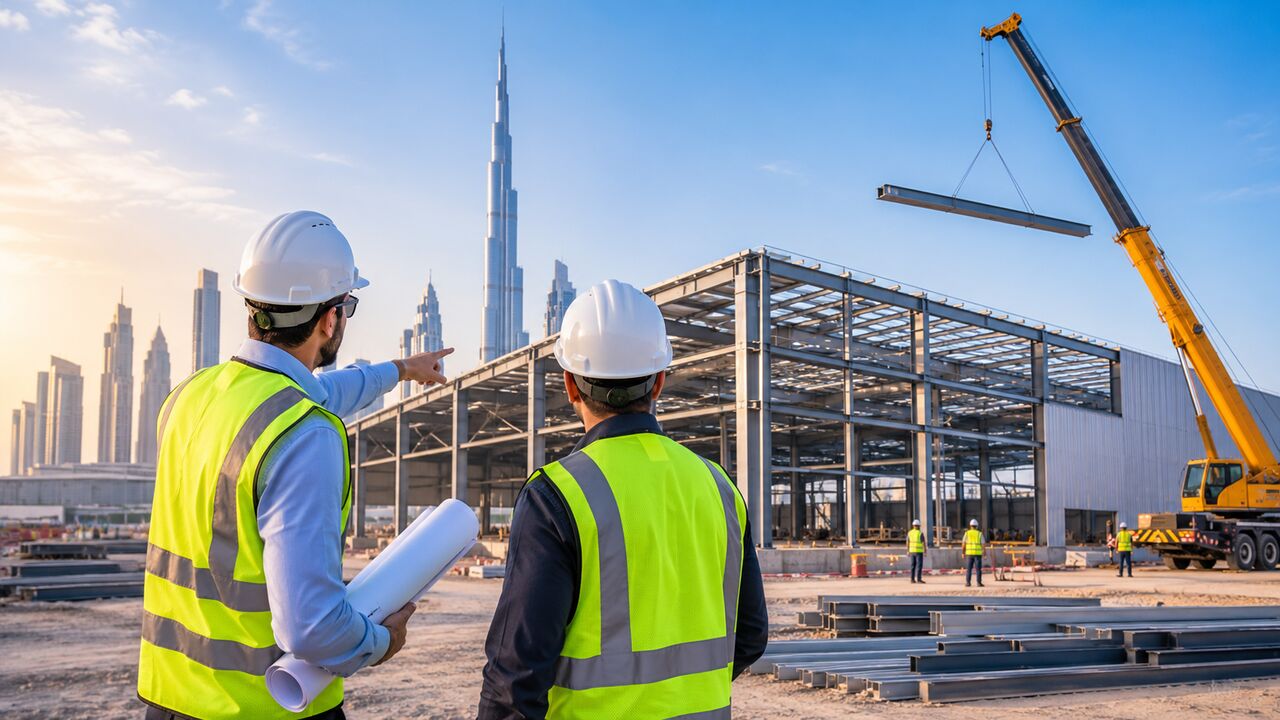
Dubai's industrial sector continues to benefit from established free zones, strong logistics infrastructure, and economic diversification. Decisions made during the early planning stages influence project costs Key factors to consider when partnering with industrial construction companies in Dubai include project scope, local regulations, contractor expertise, material suitability, and budget planning.
Quick answer: Successful industrial project planning in Dubai requires a clear project scope, suitable site selection, regulatory approvals, experienced contractors, climate-appropriate materials, and realistic budgeting.
Why Dubai Projects Need a Local Approach
Industrial construction in Dubai operates under unique conditions compared to other regions. Dubai's extreme summer heat, high humidity, and intense sunlight create additional challenges for construction activities and material performance. Coastal areas face higher corrosion risk. Additional regulations include Dubai Municipality standards, Civil Defense fire safety codes, and specific requirements for zones such as Jebel Ali Free Zone and Dubai Industrial City.
Define Scope and Site Requirements
A clearly defined project scope forms the backbone of any industrial project. The owner should define the project scope by outlining the facility’s intended purpose, production and storage capacity, equipment requirements, and potential for expansion over the next five to ten years. Site selection is critical and should account for land zoning, utility access, proximity to ports and highways, and soil quality.
Understand the Approval Process
Approval processes can affect project timelines just as significantly as construction activities. These typically include land authority, construction, Civil Defense design, environmental, and utilities connection approvals. Free zones may require additional approval processes. Working with professionals familiar with local approval procedures can reduce documentation errors and unnecessary delays.
Evaluate Industrial Construction Companies in the UAE
Choosing a contractor is one of the most important steps in the project process. Key factors to consider when evaluating industrial construction companies in the UAE are:
• Experience: the number of completed warehouses, factories, or processing plants of the same magnitude.
• Internal capacity: engineering, procurement, fabrication, and site management within one system.
• Approach to execution: design-build, EPC, or any other, and what fits the risk profile of the project.
• Safety and quality: ISO certificates, HSE data, and quality control measures.
Companies such as Tekzone, an established industrial construction firm in the UAE, are often highlighted due to their expertise in delivering integrated steel structures and industrial building solutions. The most reliable way to verify this is by visiting completed projects and speaking directly with previous clients.
Select Suitable Materials and Methods
Construction methods directly influence both project speed and costs. Pre-engineered steel structures are widely used in UAE warehouses and industrial facilities. Off-site fabrication of components shortens on-site construction time and increases overall efficiency. Companies such as Tekzone utilize steel systems in combination with traditional concrete construction methods. Choose materials for insulation, roofing, and cladding that perform well in hot climates, and prioritize anti-corrosive finishes.
Plan Budget, Schedule, and Risk
A realistic budget should include not only construction costs, but also expenses for design, approvals, utility connections, machinery installation, and contingency funds.Contingency budgets should reflect project complexity, design maturity, procurement risks, and potential changes during construction. Schedules need to factor in procurement times, especially the time required to import materials such as steel and specialized machines.
Prioritise Safety and Sustainability
Strong health and safety performance safeguards both the workforce and project continuity. A documented HSE policy, supervisor training, and regular audits are essential. Sustainability is also crucial, encompassing energy-efficient building design, solar-ready roofs, and proper insulation to align with the UAE’s net-zero targets.
FAQs
Q1. How long does an industrial construction project take in Dubai? Timelines depend on size and complexity. A mid-sized warehouse may take several months from approvals to handover, while complex manufacturing facilities can take a year or more. Procurement and approvals are frequent causes of variation.
Q2. What approvals are required to build an industrial facility in Dubai? Common approvals include land and zoning permissions, building permits, Civil Defence design and fire safety approval, environmental clearance where applicable, and utility connections. Requirements vary by location and free zone.
Q3. What should be checked before hiring industrial construction companies in Dubai? Verify trade licensing, relevant project experience, HSE and quality certifications, client references, financial stability, and contract clarity regarding scope, payment terms, and warranties.
Q4. Are pre-engineered steel buildings suitable for the UAE climate? Yes, when designed correctly. Proper insulation, protective coatings, ventilation, and wind-load calculations allow steel buildings to perform well in high heat, humidity, and coastal conditions.
Conclusion
Planning an industrial project in Dubai involves more than choosing a plot and appointing a builder. Success depends on defining the scope clearly, understanding local regulations, selecting experienced industrial construction companies in Dubai, choosing materials suited to the climate, and budgeting with realistic contingencies. Owners who invest time in these early decisions generally experience fewer delays, better cost control, and facilities that perform reliably for years.