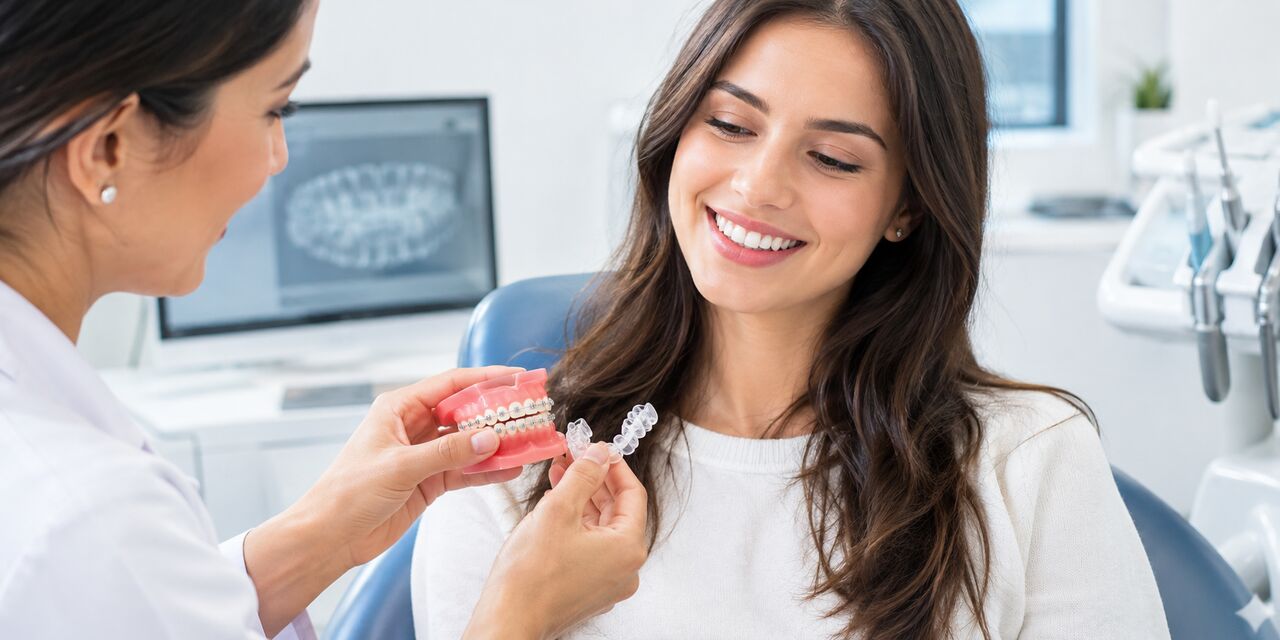
Teeth appear as hard structures. However, many are surprised to learn that teeth keep moving. Teeth shift gradually over a lifetime, but when these minor movements add up, they can result in noticeable crowding, gaps, or changes in how your bite feels. Noticing changes in your teeth's alignment is an important first step for anyone considering a visit to an orthodontist in Abu Dhabi.
Quick Answer
Teeth are held in place within the jawbone by ligaments that respond to stress, which allows them to move over time. Movement can be caused by factors such as habits, gum disease, tooth extraction, jaw growth, aging, and insufficient orthodontic care. Teeth movement can be corrected with orthodontic treatments, such as dental braces or Invisalign. An orthodontic examination is the only way to accurately assess the extent of tooth movement.
How Teeth Move in the First Place
A cushion of ligaments holds each tooth securely in its socket. Applying steady pressure causes the bone around the tooth to remodel. This process is the underlying mechanism of how orthodontic devices achieve tooth movement. Unwanted pressure from the tongue, lips, grinding, or neighboring teeth can produce the same effect.
Everyday Reasons Teeth Drift
Failure to wear a retainer. This is one of the most common reasons for relapse: teeth frequently shift back to their original positions unless retainers are worn as recommended after braces.
Wisdom teeth and crowding. Most people think that wisdom teeth push the front teeth forward. While scientific evidence varies, delayed eruption of certain teeth can lead to crowding in some cases.
Missing teeth. If a tooth is missing, the surrounding teeth may drift into the empty space, and the opposing tooth may also move out of alignment. A single empty space can gradually alter the entire bite over time.
Periodontal disease. Bone erosion reduces the bone’s ability to hold the teeth securely in place.
Teeth grinding (bruxism). Significant, repeated forces can wear down teeth and alter their alignment.
Habits of childhood. Behaviors such as thumb sucking, long-term pacifier use, and tongue thrusting can push the front teeth forward and hinder proper development of the jawbone.
Advancing age. . Even adults with straight teeth often experience mild forward movement and crowding of the lower front teeth as they age.
Trauma or dental treatment. A facial injury or improperly fitted crowns or fillings can disrupt tooth alignment.
Signs That Orthodontic Treatment May Help
Teeth that overlap or look crowded
Gaps that are widening
Front teeth that stick out or bite behind the lower teeth
Misalignment between the upper and lower teeth
Difficulty cleaning between teeth
Jaw discomfort, clicking, or uneven wear on teeth
A bite that has changed noticeably in recent months
Alignment is not only cosmetic. When teeth are crowded or misaligned, plaque can build up more easily, leading to a greater risk of tooth decay and gum problems. Additionally, an uneven bite can place extra stress on the jaw joints.
Treatment Options Explained
Metal braces. Traditional and flexible types are available, both of which can effectively address complex cases.
Ceramic braces. The mechanism is similar, but tooth-colored brackets are used for a more discreet appearance.
Clear aligners. These transparent, removable trays are often selected by adults looking for a subtle orthodontic solution. Many people search for them as “Invisalign Abu Dhabi”; however, aligners are not suitable for everyone, and some bite issues may require traditional braces
Retainers. These are worn after treatment to preserve the alignment achieved. Either removable or fixed, retainers are a responsibility, not just an afterthought.
The treatment process takes from 12 up to 24 months.
Choosing Where to Get Assessed
People looking into orthodontic braces Abu Dhabi offers should check that the clinician is licensed, that a full examination with X-rays or scans is carried out before any plan is proposed, and that the likely duration, costs, and alternatives are explained in plain terms. Specialist training in orthodontics is worth asking about, since the field requires several years of additional study beyond general dentistry.
Multi-specialty practices such as Retaj Medical describe orthodontics alongside other dental services, which can be convenient when teeth also need gum care or restorative work before alignment begins.
Protecting Your Results
Wear retainers exactly as instructed.
Treat gum disease promptly.
Replace missing teeth rather than leaving gaps.
A night guard may be recommended for individuals who grind their teeth.
Keep up with regular checkups, including at Retaj or whichever practice you use.
FAQs
Q1. What causes teeth to shift after braces?
Usually because retainers were not worn consistently. Teeth have a natural tendency to return toward earlier positions.
Q2. Is it normal for teeth to move with age?
Yes. Gradual, minor movement is common, particularly crowding of the lower front teeth. Noticeable or sudden change deserves a dental check.
Q3. Can adults get orthodontic treatment?
Absolutely. Good oral health, not age, is the main requirement.
Q4. Do clear aligners work as effectively as traditional braces?
They are highly effective for correcting mild to moderate alignment problems. Complex rotations or bite corrections may be better handled with braces. An orthodontist can advise on this after an examination.
Q5. Does orthodontic treatment hurt?
Mild soreness for a few days after adjustments or new aligners is common and usually manageable.
Q6. Can teeth shift because of gum disease?
Yes. Loss of supporting bone allows teeth to loosen and move, so gum health should be addressed before or alongside alignment.
Conclusion
Teeth shift for ordinary reasons: missing retainers, lost teeth, gum disease, grinding, habits, and the passage of time. Recognizing early signs makes correction simpler and protects long-term oral health. Whether the answer turns out to be braces, aligners, or simple monitoring, an examination by a qualified orthodontist is the dependable first step toward a stable, comfortable bite.