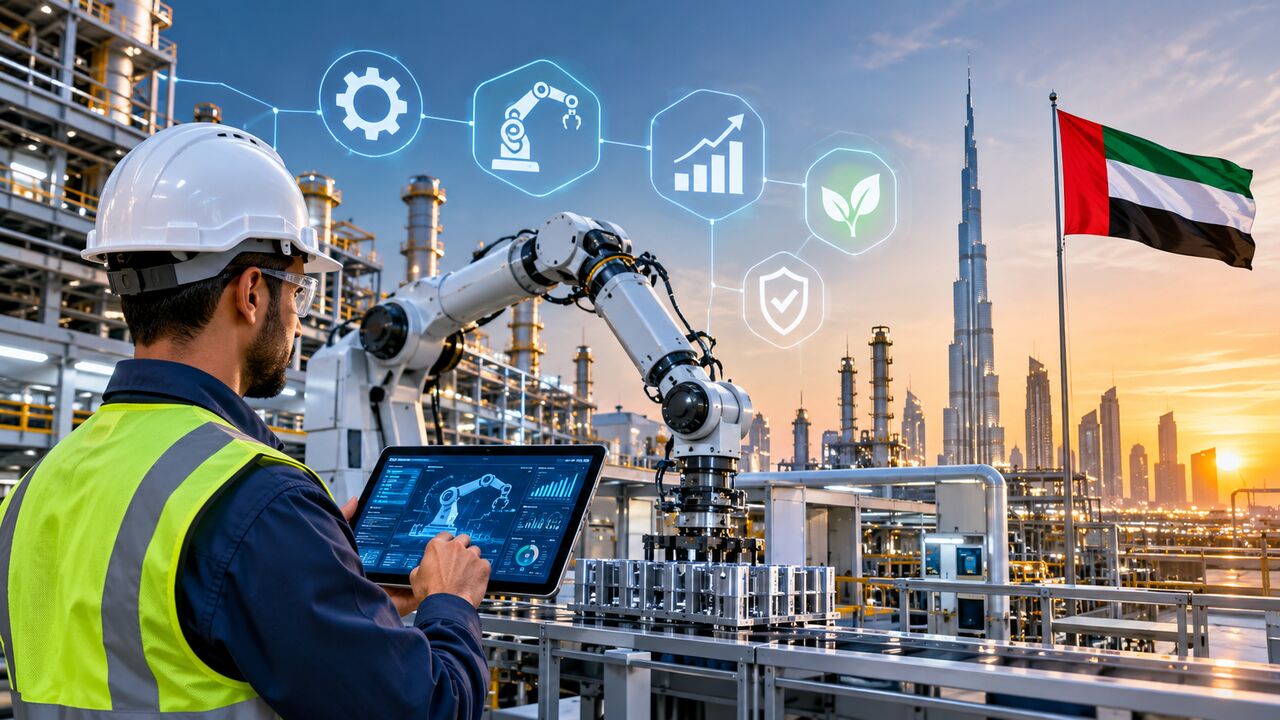
Across all sectors of the United Arab Emirates, investment in automation technology is rapidly increasing. Manufacturing plants, energy plants, logistics centers, and processes are increasingly incorporating robotics, control, sensing, and data-based systems. This shift is driven by economic imperatives, operational efficiency, and the need to remain competitive globally. Industrial automation firms and contractors in the UAE serve as key partners, delivering essential automation solutions and support.
UAE industries are investing in automation to improve productivity, reduce operational costs, maintain consistent quality, and support national industrial development. Industrial automation companies and EPC contractors help businesses implement the technologies and infrastructure required for modern industrial operations.
National Strategies Driving the Shift
A major catalyst is the UAE's industrial strategy known as Operation 300bn. This initiative aims to increase the GDP input from the industrial sector to AED 300 billion by 2031. Initiatives such as Make it in the Emirates emphasize strengthening local industries, advancing technology adoption, and boosting value-added manufacturing. Government support encompasses incentives, targeted financing for priority sectors, and the advancement of Industry 4.0 practices. As a result, there is sustained demand for automating production lines, optimizing control processes, and developing intelligent factories.
Market research indicates that the UAE's industrial automation sector is experiencing continued growth, with the forecasted compound annual growth rate ranging from high single-digit to low double digit till early 2030s. A wide array of sectors—including oil and gas, aluminum, food processing, pharmaceuticals, construction materials, and logistics—contribute significantly to this trend. Additionally, digital transformation efforts by leading energy companies are fueling the growing demand for automation systems.
Addressing Labor Constraints and Cost Pressures
Demographic trends and unique labor market dynamics in the UAE are key factors driving the adoption of automation. A limited national workforce and reliance on expatriate labor present challenges related to workforce availability, cost-effectiveness, and long-term sustainability. Automation helps address these challenges by enabling higher output with minimal human intervention. Automation systems maintain smooth operations by minimizing variability associated with human factors.
In energy-intensive and process industries, automation offers a distinct competitive edge by optimizing cost management. While access to reliable energy sources is an advantage, globalization demands continuous optimization of production processes and resource use.
Productivity, Quality, and Competitiveness Gains
Companies automate processes to boost production rates, enhance accuracy, and achieve greater product consistency. Technologies such as robotics, machine vision, programmable logic controllers, distributed control systems, and industrial IoT enable precise process control and rapid adaptation to performance deviations. In the logistics sector, automating material handling processes is crucial to maintaining the UAE’s status as a leading regional hub for trade and distribution.
The broader transition to intelligent manufacturing aligns with the growth of advanced industries such as renewable energy components, materials processing, and assembly. Companies leveraging integrated automation demonstrate greater agility in responding to market shifts and logistical changes.
Sustainability and Digital Transformation
Sustainability goals highlight the essential role of automation. Modern control technologies and analytics help improve energy efficiency, emissions tracking, and resource optimization. Predictive analytics reduce unnecessary operational time and help operators identify opportunities for environmental improvement. National industrial agendas and decarbonization initiatives explicitly link technology adoption to improved energy productivity and regulatory compliance.
Industry 4.0 technologies—including AI applications, digital twins, and smart sensors—are central to today’s investment strategies. These technologies surpass basic mechanization by enabling data-driven decision-making and significantly increasing operational intelligence. Companies specializing in industrial automation in the UAE focus on installing and integrating these technologies, while industrial automation contractors handle broader engineering and construction responsibilities within large-scale projects.
Companies such as Tekzone play a key role in EPC and the execution of industrial projects that encompass electrical, instrumentation, and automation components. The involvement of these companies illustrates the vital role project contractors play in implementing advanced technologies within large-scale industrial projects. This showcases the breadth of specialist expertise available for complex industrial installations.
Practical Considerations for Implementation
Successful automation initiatives require thorough analysis of existing processes, clearly defined performance targets, and phased implementation. Common challenges include integrating with legacy systems, addressing cybersecurity concerns, and ensuring comprehensive employee training. Access to financing, incentives offered by special economic zones, and collaborative frameworks help overcome barriers to automation—particularly for small and medium enterprises.
The presence of industrial automation contractors and specialists in the UAE ensures ready access to local expertise in designing, programming, installing, testing, and commissioning automation solutions. Effective coordination among technology suppliers, system integrators, and EPC contractors remains essential to ensure projects are completed successfully and on schedule.
FAQs
Q1. What is driving the increase in automation investments across UAE industries?
National industrial strategies such as Operation 300bn, the push for higher manufacturing value-add, labor market dynamics, and the need for greater productivity and sustainability are the main drivers.
Q2. Which sectors are adopting industrial automation most actively?
Oil and gas, metals processing, food and pharmaceuticals, logistics, building materials, and emerging advanced manufacturing activities show strong uptake.
Q3. How does automation help address labor-related challenges in the UAE?
It enables higher output with reduced dependence on routine manual labor, supports consistent operations, and allows the available skilled workforce to concentrate on technical and supervisory roles.
Q4. What role do industrial automation contractors in the UAE play?
They typically manage engineering, procurement, construction, and commissioning activities that integrate automation systems into industrial facilities as part of broader project scopes.
Q5. Is the UAE industrial automation market expected to continue growing?
Available analyses pro