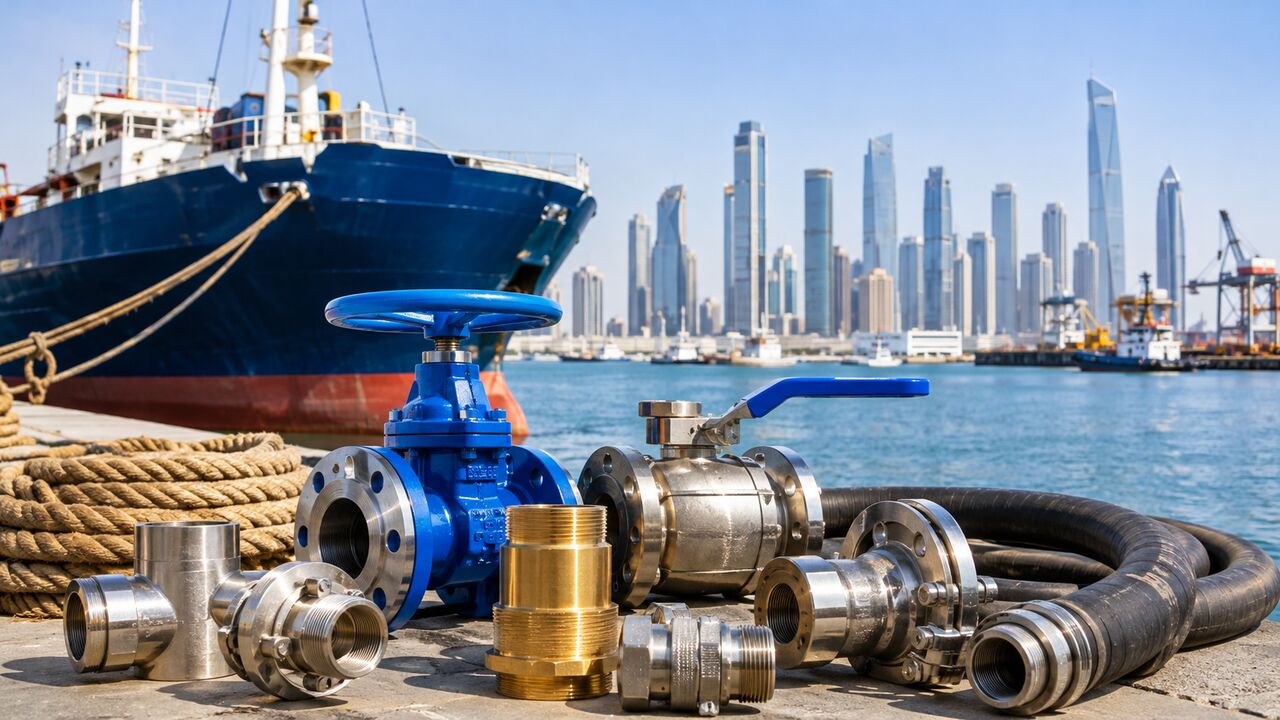
Hydraulic systems power equipment across the UAE, from construction machinery and marine vessels to oil and gas facilities and manufacturing plants. Every one of those systems depends on fittings to connect hoses, tubes, and components without leaks. A fitting may seem like a small part, but a poor choice can lead to pressure loss, downtime, or safety incidents. Understanding what to evaluate before buying helps operators and procurement teams avoid costly mistakes, whether they are sourcing from local stock or comparing hydraulic fittings suppliers in UAE.
What Are Hydraulic Fittings and Why Do They Matter?
Hydraulic fittings serve as connectors, linking hoses, pipes, and tubes to pumps, valves, cylinders, and other components in fluid power systems. They must contain fluid under high pressure, resist vibration, and remain leak-free over thousands of operating hours.
Common fitting types include:
Threaded fittings (BSP, NPT, metric, JIC, ORFS)
Flanged fittings for high-pressure, large-bore connections
Quick-release couplings for frequent connection and disconnection
Adapters that link different thread standards
Crimped hose fittings permanently attached to hose assemblies
Because global equipment often mixes standards, thread compatibility is one of the most common sources of error.
Which Technical Factors Should Buyers Check First?
Pressure rating. Fittings must handle the system’s working pressure plus surge peaks. Selecting one rated close to the limit leaves no safety margin.
Material: Carbon steel is frequently chosen for general-purpose industrial uses. Stainless steel suits corrosive or hygienic environments. Brass is common for lower-pressure uses.
Thread type and size. Mismatched threads can seem to fit but fail under pressure. Buyers should confirm the exact standard, pitch, and sealing method.
Temperature range. Heat affects seals and materials. Systems operating outdoors in UAE summers, or near engines and furnaces, need components rated for sustained high temperatures.
Fluid compatibility. Mineral oils, synthetic fluids, water-glycol mixtures, and fire-resistant fluids can affect seal materials differently.
How Does the UAE Climate Affect Fitting Selection?
The UAE presents conditions that put extra stress on hydraulic components. High ambient temperatures, humidity in coastal areas, airborne dust, and salt exposure in marine and offshore settings all accelerate wear and corrosion.
For these environments, buyers often consider:
Corrosion-resistant plating or stainless steel construction
Protective caps and dust seals
Seals rated for heat and UV exposure
Regular inspection schedules to catch early degradation
Equipment working in desert construction or port operations typically faces harsher conditions than indoor factory systems, so fitting specifications should reflect actual site conditions.
What Quality and Compliance Standards Apply?
Reliable fittings are manufactured to recognised standards such as ISO, SAE, DIN, and JIS. Buyers can ask for:
Material certificates confirming composition
Pressure test reports where relevant
Traceability documentation for batch or heat numbers
Dimensional conformity to the stated standard
Industries such as oil and gas, power, and marine often have additional internal or client requirements, so documentation matters as much as the product itself.
How Should Industries Evaluate Hydraulic Fittings Suppliers in UAE?
Choosing a supplier affects availability, quality, and long-term maintenance costs. Practical criteria include:
Range and stock depth. A broad catalogue of thread types and sizes reduces delays when urgent replacements are needed.
Technical knowledge. Staff who can interpret specifications and recommend compatible parts prevent ordering errors.
Documentation. Certificates and datasheets should be available on request.
Lead times and logistics. Local inventory shortens downtime compared with imports.
After-sales support. Help with identification, replacements, and assembly questions adds practical value.
Product information. Clear category listings and specifications make comparison easier. For example, Hydromax lists its hydraulic fittings range online at https://hydromax.ae/categor ..., which gives buyers a reference point for types and categories available in the market.
Comparing several suppliers on these points, rather than price alone, tends to produce better outcomes.
What Are Common Mistakes to Avoid?
Combining threads without appropriate adapters
Disregarding pressure surges and taking care of only nominal pressure
Using old fittings that have been overtightened or even damaged
Selecting the cheapest available option without verifying certification
Overlooking preventive maintenance and leak testing
In general, leaks are viewed by industry as a symptom or an indicator. Leakages may signal wear, misalignment, or improper fitting.
Frequently Asked Questions
Q1. What are hydraulic fittings used for?
They connect hoses, tubes, and components in hydraulic systems so fluid can move under pressure without leaking.
Q2. How do I choose the right hydraulic fitting?
Match the thread type, size, pressure rating, material, and fluid compatibility to the system. Checking the equipment manual or measuring the existing fitting helps confirm requirements.
Q3. Which materials are best for UAE conditions?
Stainless steel and plated, corrosion-resistant steel are ideal for use in humid, coastal, and marine environments. For general industrial purposes, carbon steel is widely used when adequate protection is applied.
Q4. Can different thread standards be connected?
Only with the correct adapter. Forcing mismatched threads together can cause leaks or component failure.
Q5. How often should hydraulic fittings be inspected?
Inspection intervals depend on operating conditions, but regular visual checks for leaks, corrosion, and wear are widely recommended, with more frequent checks in harsh environments.
Q6. What documents should suppliers provide?
Common documents include material certificates, test reports, and conformity declarations to ISO, SAE, or DIN standards where applicable.
Conclusion
Selecting hydraulic fittings involves more than matching a part number. Pressure ratings, materials, thread standards, climate exposure, and documentation all influence performance and safety. In the UAE, heat, dust, and humidity make careful specification even more important. By evaluating suppliers on range, technical knowledge, certification, and support, and by reviewing available product categories from providers such as Hydromax and others, industries can make informed decisions that reduce downtime and extend system life.