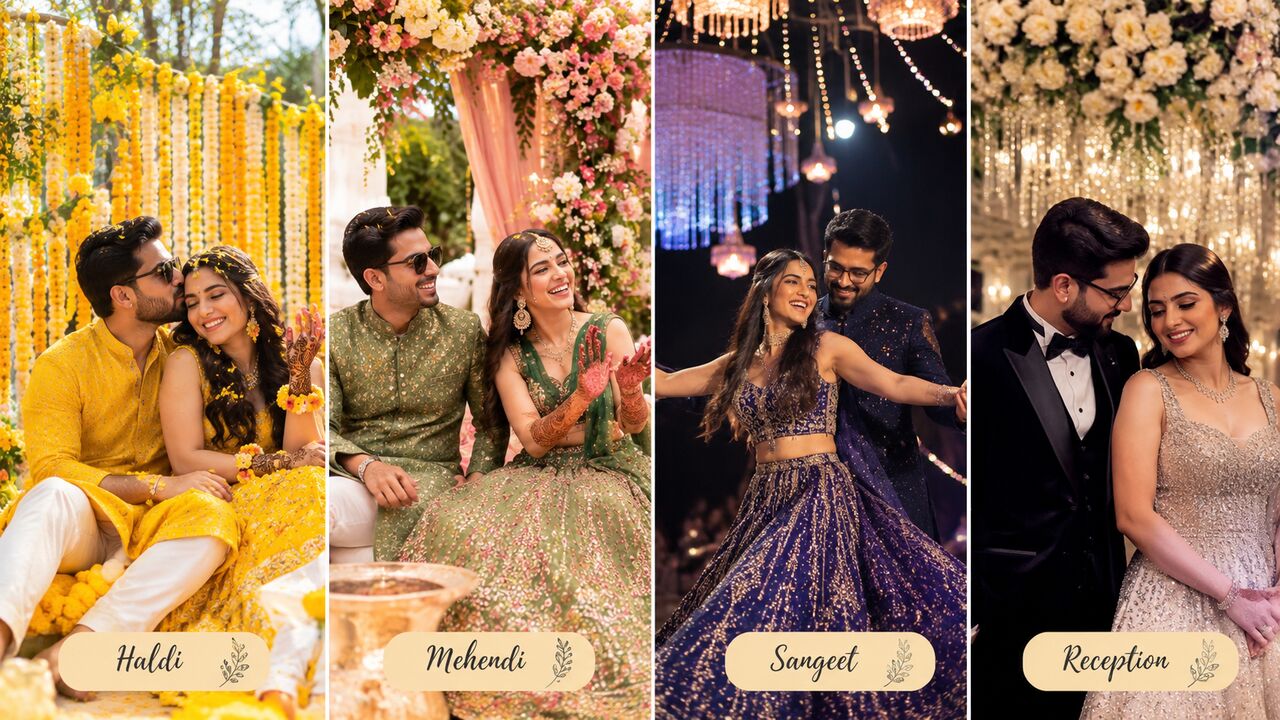
However, choosing different colours for every function can sometimes make the celebrations look disconnected. On the other hand, using exactly the same colours throughout the wedding may make each event feel repetitive.
The best approach is to select a central colour direction and develop individual combinations for Haldi, Mehendi, Sangeet and reception. This allows each celebration to feel unique while maintaining a consistent visual style.
Here are practical ways to create a beautiful wedding colour palette across all four functions.
1. Start With an Overall Wedding Colour Direction
Before choosing individual colours for each function, decide on the overall visual style of the wedding.
Think about the atmosphere you want to create. Do you prefer traditional Indian colours, soft romantic shades, modern minimalism or rich luxury-inspired decorations?
Some popular colour directions include:
Traditional Indian palette: Maroon, red, mustard, orange and gold. This combination works well for couples who want a strong connection with traditional wedding aesthetics.
Pastel wedding palette: Blush pink, peach, lavender, cream and sage green. These shades create a softer and romantic appearance.
Royal luxury palette: Emerald green, burgundy, champagne, ivory and antique gold. This combination can create a rich and elegant atmosphere.
Modern neutral palette: Beige, ivory, taupe, dusty rose and soft metallic accents. These colours work well for contemporary celebrations.
Jewel-tone palette: Sapphire blue, emerald green, ruby red and deep purple. This direction is suitable for couples who prefer bold and dramatic styling.
Select a main colour direction and use it as the foundation for the individual function palettes.
2. Choose Bright and Festive Colours for the Haldi Ceremony
The Haldi ceremony is often one of the most colourful pre-wedding celebrations. Its décor should feel cheerful, welcoming and connected to the traditional use of turmeric.
Yellow is a natural starting point, but combining it with complementary shades can make the decorations more interesting.
Consider these combinations:
Yellow and white: A fresh combination for a bright and simple celebration.
Mustard and orange: Suitable for a rich traditional Indian theme.
Yellow and pink: Adds a playful and cheerful appearance.
Yellow and green: Creates a lively atmosphere with a natural floral feel.
Yellow and peach: A softer alternative for a contemporary Haldi setup.
For decorations, consider marigold garlands, colourful fabric draping, floral seating arrangements and traditional decorative elements.
The bride and groom's outfits can complement the décor without being exactly the same shade.
For example, the bride may wear a light yellow lehenga while the groom chooses an ivory kurta with mustard details.
3. Select Fresh and Vibrant Colours for the Mehendi Ceremony
Mehendi celebrations often involve colourful outfits, henna designs, music and relaxed gatherings. The colour palette can be slightly more playful than the wedding ceremony or reception.
Some attractive combinations include:
Green and pink: A popular combination that works well with floral decorations and colourful seating.
Orange and fuchsia: Suitable for an energetic celebration with bold Indian-inspired details.
Mint green and peach: Creates a soft and refreshing atmosphere.
Purple and yellow: Adds contrast and a lively visual appearance.
Coral and turquoise: A bright combination for couples who prefer contemporary styling.
Decor elements can include colourful cushions, floral backdrops, patterned fabrics, decorative umbrellas and coordinated seating.
Consider how the bride's Mehendi outfit will appear against the background. Choosing contrasting shades can help her stand out in photographs.
4. Create a Glamorous Colour Palette for the Sangeet Night
The Sangeet is usually one of the most energetic wedding celebrations. Its colour palette can be more dramatic and glamorous, especially when the event includes performances, dance floors and evening entertainment.
Consider these combinations:
Navy blue and gold: Creates a sophisticated evening appearance.
Burgundy and champagne: Adds a rich and elegant atmosphere.
Purple and silver: Works well with contemporary stage lighting.
Emerald and metallic gold: Creates a bold luxury-inspired look.
Black and rose gold: Suitable for a modern evening celebration.
For Sangeet decorations, coordinate the stage backdrop, dance floor, lighting, table décor and performers' outfits.
Avoid using too many competing colours in the same area. A strong main colour with one or two supporting shades usually creates a more polished appearance.
Also consider the outfits worn by the bride and groom. Their colours should remain visible against the stage and background rather than blending into the decorations.
5. Choose Elegant and Timeless Colours for the Wedding Reception
The reception often has a more formal atmosphere than the pre-wedding functions.
This is an opportunity to introduce refined colour combinations that complement the couple's outfits and the venue's interiors.
Some elegant combinations include:
Champagne and ivory: A soft and sophisticated choice for a luxury reception.
Burgundy and gold: Suitable for couples who prefer a rich traditional look.
Sage green and white: Creates a fresh and contemporary atmosphere.
Dusty rose and silver: Offers a romantic visual style.
Emerald and champagne: Combines rich colour with subtle elegance.
Use the selected palette across the reception stage, table arrangements, floral installations, entrance decorations and lighting details.
You can also introduce metallic accents through candleholders, table accessories, signage and decorative structures.
The aim is to create an elegant visual environment without overwhelming the venue.
6. Maintain a Consistent Colour Connection Across All Functions
Although each celebration can have its own palette, there should be some visual connection between them.
Without consistency, different functions can look like separate events rather than parts of one wedding celebration.
You can maintain continuity by:
Using one recurring accent colour across all functions.
Keeping similar floral styling where appropriate.
Repeating selected metallic details.
Using consistent invitation and stationery designs.
Maintaining a similar approach to typography and signage.
Coordinating the bride and groom's outfits with the overall wedding direction.
For example, a wedding may use gold as a recurring accent throughout the celebrations.
The Haldi could feature yellow and white with gold details, Mehendi could combine green and pink with gold accents, Sangeet could use navy and champagne, and the reception could feature ivory and gold.
This creates variety without losing the overall wedding identity.
7. Coordinate Wedding Flowers With the Colour Palette