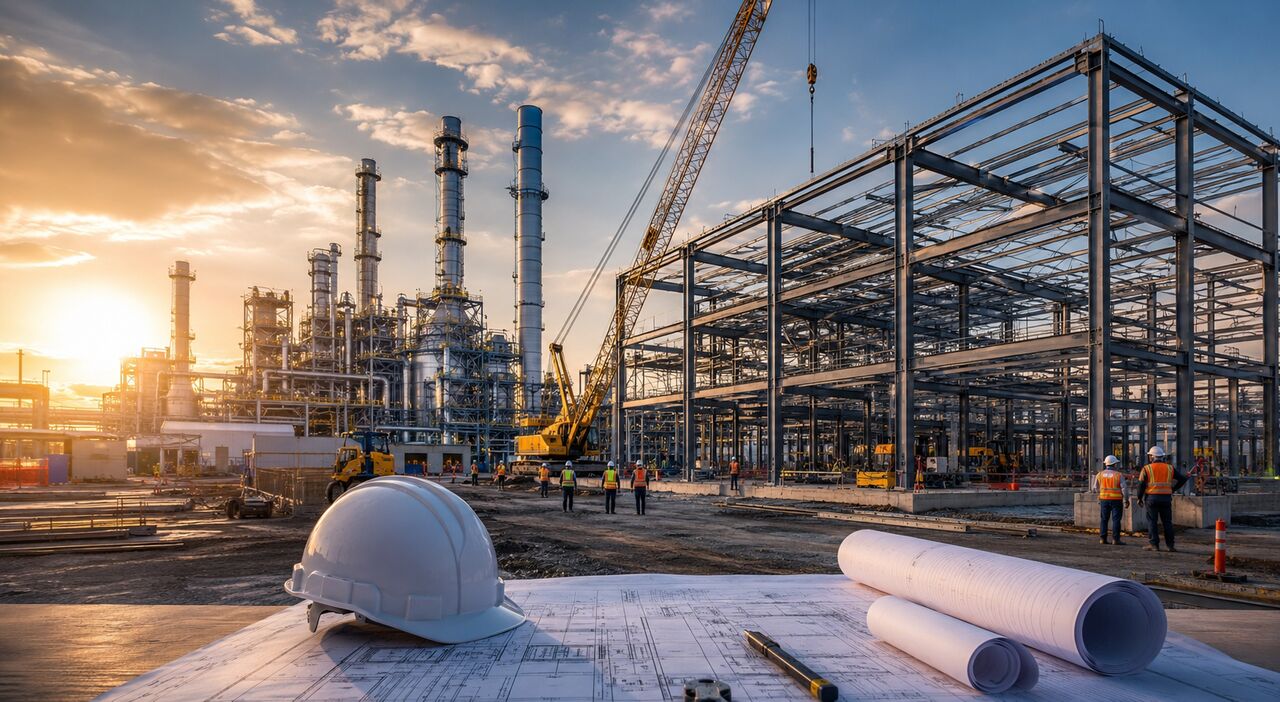
Industrial projects such as factories, warehouses, processing plants, and logistics hubs are among the most complex builds in any economy. They demand precise engineering, strict safety controls, and tight coordination across multiple trades. In the UAE, where industrial zones continue to expand across Dubai, Abu Dhabi, and the northern emirates, industrial construction companies in Dubai and across the country play a central role in turning design drawings into working facilities. Understanding how this process unfolds helps project owners set realistic expectations and choose partners wisely.
What Do Industrial Construction Companies Actually Do?
Industrial construction companies plan, build, and often maintain facilities that support manufacturing, storage, energy, and heavy operations. Their scope typically includes:
Civil and structural works such as foundations, steel frames, and concrete slabs
Mechanical installation including piping, pumps, tanks, and HVAC systems
Electrical and instrumentation works for power distribution and control systems
Fabrication and erection of steel structures and process equipment
Commissioning and handover of completed systems
Unlike commercial buildings, industrial facilities are built around processes. Layout, load capacity, ventilation, and safety systems must all support day-to-day plant operations.
How Does a Project Move from Blueprint to Completion?
Most industrial projects follow a recognisable sequence, though details vary by size and sector.
Feasibility and planning. Owners define production needs, budget, site requirements, and timelines.
Design and engineering. Architects and engineers produce drawings, specifications, and calculations that meet applicable codes.
Approvals. Projects require permits from authorities such as Dubai Municipality, Dubai Civil Defence, or the relevant emirate-level bodies.
Procurement. Materials and equipment are ordered, with lead times planned around the construction schedule.
Construction. Site preparation, structural works, installations, and finishing proceed under supervision.
Testing and commissioning. Systems are tested to confirm safe, reliable operation before handover.
Handover and support. Documentation, training, and warranty arrangements close out the project.
Delays at any stage, especially approvals or procurement, can affect the entire timeline.
What Factors Separate Successful Projects from Troubled Ones?
Clear scope and early planning. Many cost overruns trace back to vague requirements or late design changes. Detailed planning reduces rework.
Strong project management. Experienced managers coordinate trades, track progress against schedules, and resolve conflicts before they escalate.
Safety culture. Industrial sites involve heavy machinery, working at height, and hazardous materials. Compliance with HSE standards and UAE regulations is a baseline requirement, not an optional extra.
Quality control. Regular inspections, material testing, and documented procedures help ensure work meets specifications.
Communication. Regular reporting between owners, consultants, and contractors keeps decisions timely and transparent.
How Does the UAE Context Shape Industrial Construction?
Building in the UAE brings specific considerations:
Climate. High summer temperatures affect concrete curing, worker safety, and equipment performance, so schedules and methods are adjusted accordingly.
Regulation. Requirements differ between emirates and free zones, and compliance with local authority codes is essential.
Supply chains. Many materials and specialised components are imported, making procurement planning important.
Sustainability. Energy efficiency, water management, and green building standards are increasingly part of industrial design.
Skilled labour. Qualified engineers, supervisors, and technicians are central to quality and safety outcomes.
How Should Owners Evaluate Industrial Construction Companies in the UAE?
Owners comparing industrial construction companies in the UAE can look beyond price and consider:
Track record. Completed projects of similar type and scale offer evidence of capability.
Licensing and approvals. Valid trade licences and relevant authority registrations should be confirmed.
In-house capabilities. Companies with engineering, fabrication, and MEP capacity may coordinate more efficiently.
Safety performance. Documented HSE policies and incident records matter.
Financial stability. Large projects require sustained cash flow and resources.
Transparency. Clear contracts, schedules, and reporting build trust.
Some firms, including Tekzone, present their services and project capabilities publicly, which gives prospective clients a starting point for comparison. Speaking with past clients and visiting completed sites remains the most dependable form of verification.
What Common Challenges Affect Industrial Construction?
Changes in design after construction has started
Delays in permits or material delivery
Coordination gaps between civil, mechanical, and electrical teams
Inadequate site safety management
Insufficient testing before commissioning
Experienced industrial construction companies typically address these risks through detailed scheduling, regular site meetings, and contingency planning.
FAQs
Q1. What is industrial construction?
It is the planning and building of facilities such as factories, plants, warehouses, and processing sites that support manufacturing, energy, and logistics operations.
Q2. How long does an industrial construction project take?
Timelines range from a few months for smaller warehouses to several years for large plants, depending on scope, approvals, and procurement lead times.
Q3. What approvals are needed in Dubai?
Projects typically require building permits, civil defence approvals, and environmental or utility clearances, depending on the facility type and location.
Q4. How can owners control costs?
Defining scope early, limiting design changes, agreeing clear contracts, and monitoring progress regularly all help reduce overruns.
Q5. What should owners check before hiring a contractor?
Licences, previous projects, safety records, financial strength, and references from past clients are common checkpoints.
Q6. Why is safety so important on industrial sites?
Heavy equipment, hazardous materials, and complex installations create higher risks, so strict HSE procedures protect workers and keep projects on schedule.
Conclusion
Turning a blueprint into a functioning industrial facility requires careful planning, technical expertise, and disciplined execution. Successful industrial construction companies manage scope, safety, quality, and communication from the first drawing to final handover. For owners comparing industrial construction companies in the UAE, practical checks on experience, licensing, capabilities, and safety performance, along with a review of public information from firms such as Tekzone and others, can support a confident decision. With clear requirements and a reliable delivery team