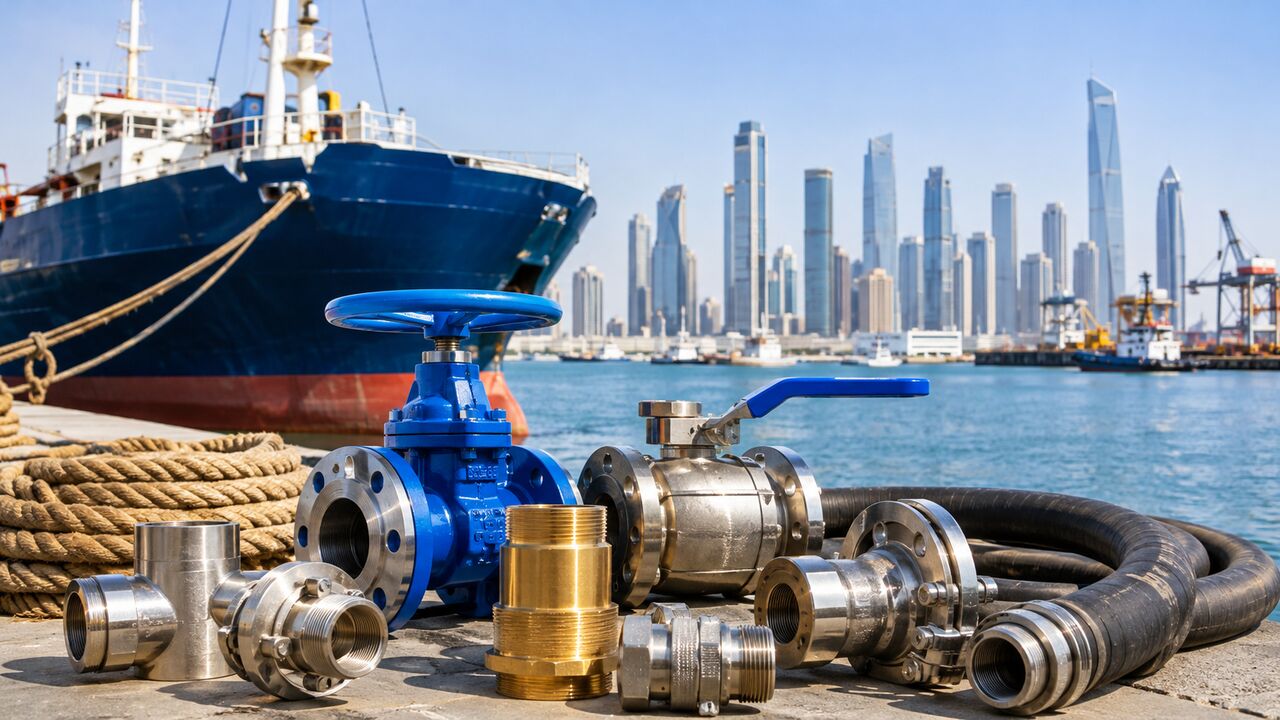
Dubai’s position on the Arabian Gulf has made it one of the busiest maritime hubs in the world. Jebel Ali Port, Port Rashid, shipyards, offshore support operations, and a growing leisure marine sector all rely on equipment that performs in heat, salt, and constant motion. In this setting, a failed valve, hose, or fitting can halt operations, damage vessels, or put crews at risk. That is why buyers evaluating marine equipment suppliers in the UAE tend to focus on reliability, certification, and availability rather than price alone.
Why Is Marine Equipment Reliability So Critical in Dubai?
Marine environments are unforgiving. Vessels and port facilities operate around the clock, and downtime is expensive. Delays can affect cargo schedules, charter commitments, and safety compliance.
Several factors make reliability essential:
Continuous operation. Pumps, hydraulic systems, and piping often run for long periods with limited maintenance windows.
Safety obligations. Leaks of fuel, hydraulic oil, or seawater can cause fires, pollution, or loss of vessel control.
Regulatory scrutiny. Port and maritime authorities require vessels and equipment to meet recognised safety and environmental standards.
Cost of failure. Emergency repairs at sea or at berth are typically far more costly than planned maintenance.
What Types of Equipment Does the Marine Industry Use?
The marine sector covers a wide range of equipment, including:
Hydraulic systems for winches, cranes, steering gear, and stabilisers
Pumps and piping for ballast, bilge, cooling, and fuel transfer
Valves and fittings in stainless steel, bronze, and other corrosion-resistant materials
Hoses and couplings for fluid transfer and bunkering
Deck and safety equipment such as anchors, chains, shackles, and lifting gear
Electrical and instrumentation components for monitoring and control
Each category must be suited to constant exposure to moisture, vibration, and salt.
How Do Dubai’s Conditions Affect Marine Equipment?
The Gulf is warmer and saltier than many open-ocean regions. High water temperatures, intense summer heat, humidity, and salt-laden air accelerate corrosion and material fatigue.
Common challenges include:
Saltwater corrosion on unprotected steel and mixed-metal connections
Heat stress on seals, hoses, and lubricants
UV exposure that degrades rubber, plastics, and coatings
Marine growth and scaling in cooling and seawater systems
Vibration from engines and wave action loosening connections
Operators often respond by specifying marine-grade stainless steel, bronze, or specially coated components, and by scheduling regular inspections.
Why Do Fittings Deserve Special Attention?
Fittings are small compared with engines or cranes, but they hold fluid systems together. Incorrect materials, mismatched threads, or under-rated components can lead to leaks and failures that spread through an entire system.
Key considerations include:
Material compatibility. Mixing dissimilar metals in seawater can cause galvanic corrosion.
Pressure and temperature ratings. These must match actual operating conditions, including surges.
Thread and connection standards. BSP, NPT, JIC, and metric threads are not interchangeable without proper adapters.
Sealing method. O-rings, tapered threads, and flanged joints each suit different applications.
What Standards and Certifications Matter?
Marine buyers commonly ask for products that conform to recognised standards and come with traceable documentation. Typical requirements include:
Classification society approvals such as those from Lloyd’s Register, DNV, ABS, or Bureau Veritas, where applicable
ISO, ASTM, DIN, or SAE standards for materials and dimensions
Material test certificates confirming composition
Pressure test records for critical components
Traceability markings linked to production batches
These documents support inspections, audits, and insurance requirements.
How Should Buyers Evaluate Marine Equipment Suppliers in Dubai?
With many companies operating across the emirate, buyers searching for marine equipment suppliers in Dubai can compare options using practical criteria:
Range and availability. A broad catalogue and local stock reduce downtime during repairs and dry-docking.
Technical knowledge. Staff who understand marine applications can help avoid incorrect specifications.
Documentation. Certificates and datasheets should be provided promptly.
Delivery speed. Vessels often have tight port schedules, so logistics matter.
Product transparency. Clear category listings help buyers identify what is available. For example, Hydromax outlines its marine equipment range at https://hydromax.ae/categor ..., giving buyers a starting reference for product types.
Industry experience. Familiarity with marine, offshore, and port operations is a practical advantage.
Comparing several suppliers on these points generally leads to better long-term outcomes than choosing on price alone.
What Maintenance Practices Extend Equipment Life?
Inspecting fittings, hoses, and seals for leaks, cracks, and corrosion
Rinsing equipment exposed to salt where practical
Replacing ageing hoses and seals on schedule
Keeping spare parts for critical systems on board or nearby
Following manufacturer torque and installation guidelines
Frequently Asked Questions
Q1. Why is marine equipment reliability important in Dubai?
Dubai’s ports and offshore operations run continuously, and equipment failure can cause safety risks, delays, and costly repairs.
Q2. What materials suit marine environments in the UAE?
Marine-grade stainless steel, bronze, and corrosion-resistant coated metals are widely used because they resist saltwater and humidity.
Q3. What certifications should marine equipment carry?
Depending on the application, buyers look for classification society approvals, ISO or ASTM conformity, and material and pressure test certificates.
Q4. How does heat affect marine hoses and seals?
High temperatures and UV exposure can harden or crack rubber components, so heat-rated materials and regular replacement are advised.
Q5. How can buyers compare marine equipment suppliers in the UAE?
They can review product range, certification, technical support, stock availability, and delivery times, along with publicly available product catalogues.
Q6. How often should marine fittings be inspected?
Inspection frequency depends on usage and regulations, but routine checks for leaks and corrosion are standard, with closer monitoring on vessels in continuous service.
Conclusion
Dubai’s marine industry operates in conditions that test every component, from heat and humidity to salt and constant vibration. Reliable equipment and correctly specified fittings reduce risk, support compliance, and keep vessels and port facilities running. When assessing marine equipment suppliers in UAE, buyers benefit from focusing on certification, material suitability, technical expertise, and delivery cap