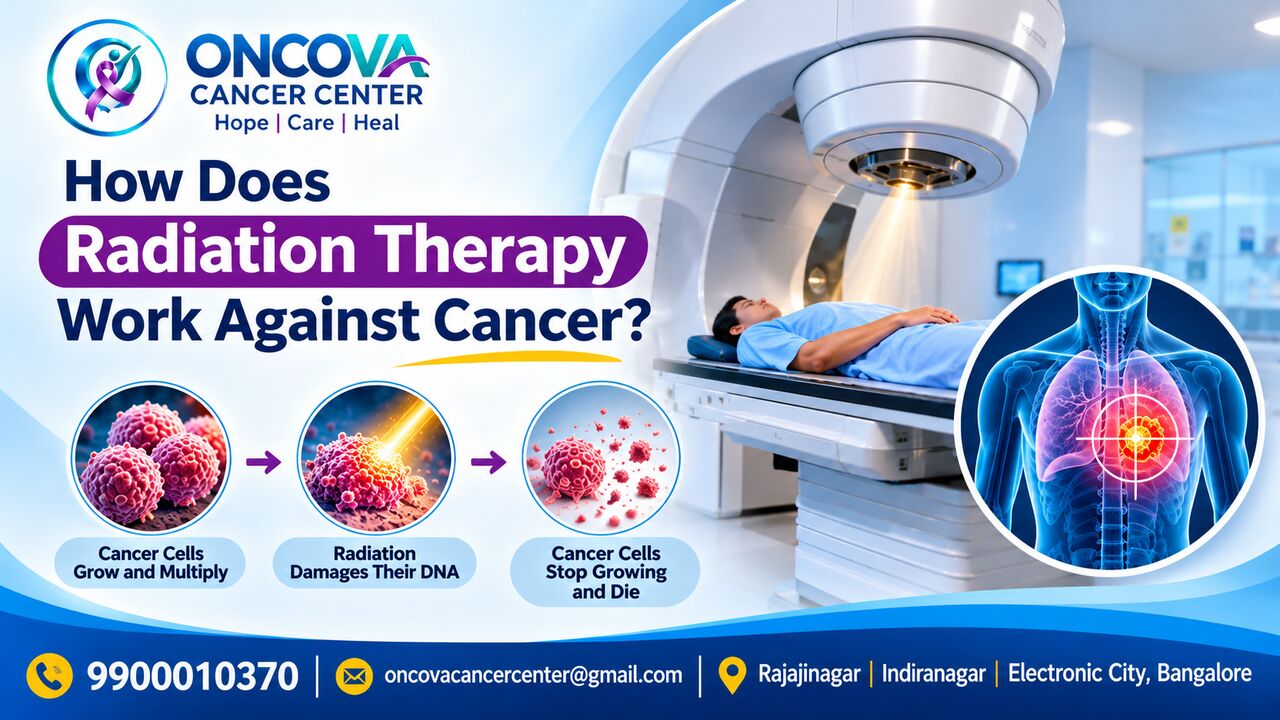
But how does radiation therapy work? How is it delivered, and what should patients know before starting treatment? Let's understand the basics.
What Is Radiation Therapy?
Radiation therapy, also called radiotherapy, is a cancer treatment that uses high-energy radiation to destroy cancer cells or control their growth.
It may be recommended:
✔️ To treat certain cancers.
✔️ To shrink a tumour before surgery.
✔️ To destroy remaining cancer cells after surgery.
✔️ To help relieve symptoms caused by cancer.
✔️ The treatment plan depends on the type of cancer, its location, stage and the patient's overall health.
How Does Radiation Therapy Work Against Cancer?
Cancer cells grow and divide abnormally. Radiation therapy works by damaging the DNA inside these cells.
Here is how the process works:
1. Targeting the Treatment Area
Doctors carefully identify the area that needs treatment using imaging and treatment-planning techniques.
2. Damaging Cancer Cell DNA
High-energy radiation damages the DNA inside cancer cells. This makes it difficult for them to continue growing and dividing.
3. Stopping Cancer Cell Growth
Damaged cancer cells may lose their ability to multiply. Some eventually die.
4. The Body Removes Damaged Cells
Over time, the body naturally clears many of the damaged cells. The response to treatment varies from patient to patient.
What Are the Different Types of Radiation Therapy?
The two commonly used approaches include:
1. External Beam Radiation Therapy (EBRT)
A specialised machine directs radiation towards the treatment area from outside the body. The radiation is carefully planned to target the intended area while limiting exposure to nearby healthy tissues.
2. Internal Radiation Therapy (Brachytherapy)
In this approach, a radioactive source is placed inside or close to the tumour. It delivers radiation to a specific treatment area.
The appropriate method depends on the cancer type and individual treatment needs.
Is Radiation Therapy Painful?
External beam radiation therapy is generally painless during the treatment session. Patients usually do not feel the radiation itself.
However, some people may experience side effects during or after treatment. These depend on the treatment area, radiation dose and individual response.
What Are the Possible Side Effects?
Side effects can vary from person to person. Some possible effects include:
✔️ Tiredness or fatigue
✔️ Skin irritation in the treated area
✔️ Hair loss in the treatment area
✔️ Nausea, depending on the treatment area
✔️ Other effects related to the organ being treated
Not every patient experiences the same side effects. The oncology team can explain what to expect and how to manage them.
What Happens Before Radiation Therapy Begins?
Before treatment, the medical team may:
✔️Review the patient's diagnosis and medical history.
✔️Perform imaging tests for treatment planning.
✔️Identify the exact treatment area.
✔️Decide the radiation dose and schedule.
✔️Explain possible benefits and side effects.
✔️Following the treatment team's instructions and attending scheduled appointments are important parts of care.
Conclusion
Radiation therapy works by damaging the DNA of cancer cells and reducing their ability to grow and multiply. It may be used alone or alongside other cancer treatments, depending on the patient's condition.
Understanding the treatment process can help patients and families feel more informed and prepared. Discuss your diagnosis and treatment options with a qualified oncology specialist.
Oncova Cancer Center – Hope Care Heal
📞 Call: 9900010370
📧 Email: [email protected]
📍 Locations: Rajajinagar Indiranagar Electronic City, Bangalore
Every Step Towards Healing Begins with Hope.