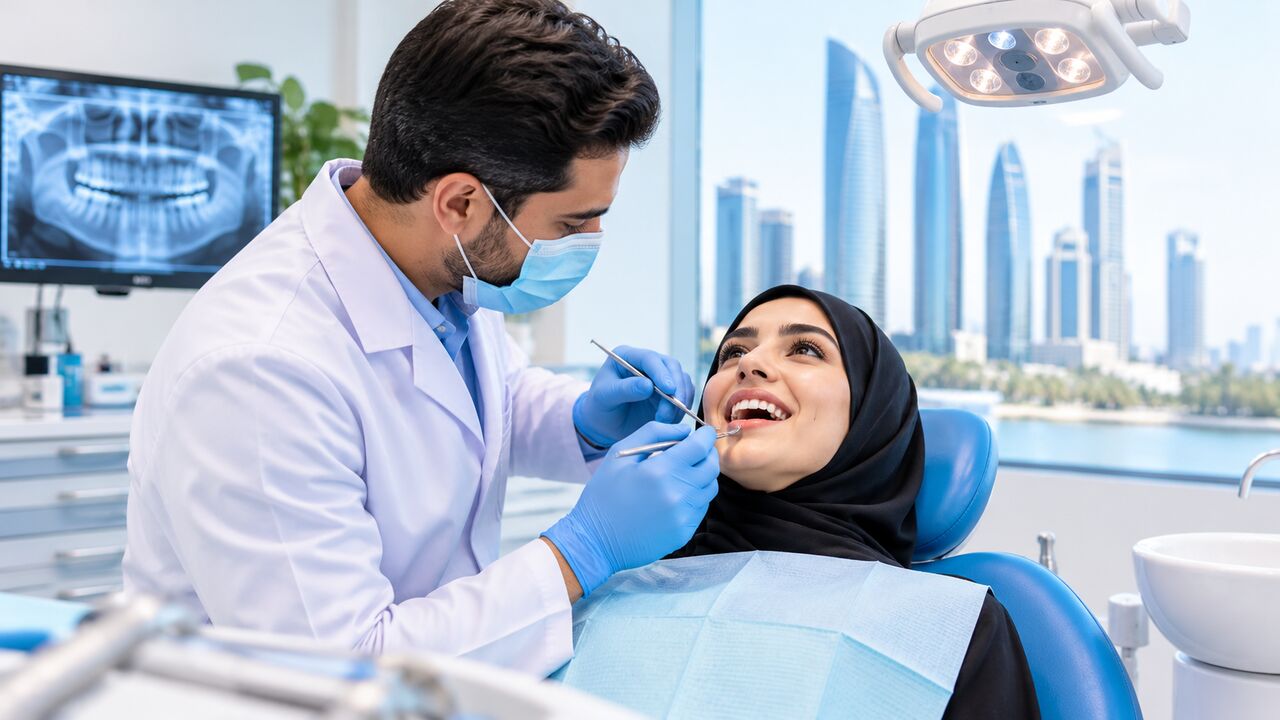
1. Has the clinic received accreditation from the Department of Health?
The Department of Health (DoH) is responsible for regulating healthcare practitioners and facilities in Abu Dhabi. A licensed clinic has met requirements for facility standards, infection control, and professional registration.
Patients can ask to see the clinic’s licence and confirm that each dentist holds a valid DoH licence. This is a basic step, but it remains the clearest indicator that a provider operates within local regulations.
2. What Are the Dentists’ Qualifications and Specialisations?
Dentistry covers many fields, including general dentistry, orthodontics, endodontics, periodontics, paediatric dentistry, prosthodontics, and oral surgery. A general dentist can manage routine care, but complex procedures such as root canal retreatment, implants, or braces may call for a specialist.
When evaluating the best dental center in Abu Dhabi for a particular need, patients can look at:
Dental degrees and postgraduate training
Years of experience with the specific procedure
Relevant professional memberships and additional specialist certifications, where applicable
Willingness to explain treatment options clearly
3. Does the Clinic Follow Strict Infection Control?
Dental procedures involve instruments that contact saliva and sometimes blood, so sterilisation standards are essential. Patients can reasonably expect:
Sterilised, sealed instruments for each patient
Disposable gloves, masks, and covers
Disinfected surfaces between appointments
Clear waste-disposal procedures
A clinic that is open about its sterilisation process generally reflects a culture of safety.
4. What Technology and Facilities Are Available?
Equipment can contribute to better diagnostics, higher levels of comfort, and precision. Common examples include digital X-rays, intraoral cameras, 3D imaging for implant planning, and digital scanning systems that can replace conventional dental impressions. While technology alone does not ensure the highest standard of service, it may contribute to greater precision and better communication with the patient.
A multi-specialty facility can provide a number of other services within one facility, which eliminates the need to refer the patient elsewhere. One such facility providing medical care in Abu Dhabi is Retaj Medical.
5. Is Insurance and Pricing Clear?
Abu Dhabi requires health insurance for residents, but dental coverage varies widely between plans. Some policies cover basic check-ups and cleanings, while cosmetic work, orthodontics, or implants may be limited or excluded.
Before treatment, patients can ask:
Is the clinic in the insurer’s network?
What portion of the cost will insurance cover?
Is there a written treatment plan with itemised pricing?
Are there additional fees for follow-up visits or materials?
Transparent pricing is a stronger sign of reliability than a low headline fee.
6. How Does the Clinic Handle Patient Comfort and Communication?
Dental anxiety is common, and the way a clinic communicates can shape the whole experience. Patients may want to look for:
Dentists who explain diagnoses in plain language
Options for pain management and sedation where appropriate
Child-friendly approaches for younger patients
Staff who speak the patient’s preferred language, which in Abu Dhabi often includes English, Arabic, Hindi, Urdu, Tagalog, or others
Reasonable waiting times and flexible scheduling
A first consultation is often a good opportunity to judge whether the environment feels comfortable and respectful.
7. What Do Reviews and Outcomes Say?
Online reviews can provide useful insights, but recurring feedback patterns are generally more meaningful than individual positive or negative comments. The recurring mentions of punctuality, cleanness, treatment results and communication will make more impact than just one very good or bad review.
Where appropriate, patients can request before-and-after photographs and seek recommendations from friends, relatives, or colleagues who have undergone similar treatments. Service providers like Retaj and others, generally post information about their services on the Internet.
FAQs
Q1. How can I check whether a dental clinic in Abu Dhabi is licensed?
Patients can ask the clinic to show its Department of Health licence and verify practitioner registration through official DoH channels.
Q2. How often should adults visit the dentist?
Most dental professionals recommend a check-up and cleaning every six months, though individuals with gum disease or other conditions may need more frequent visits.
Q3. Are dental treatments covered by health insurance in Abu Dhabi?
Coverage depends on the plan. Many policies include basic dental services, while orthodontics, cosmetic treatments, and implants are often limited. Checking the policy and the clinic’s network status beforehand is advisable.
Q4. How does a general dentist differ from a dental specialist?
A general dentist handles routine care such as examinations, fillings, and cleanings. Specialists have additional training in areas such as orthodontics, endodontics, or oral surgery.
Q5. What should patients bring to a first dental appointment?
An Emirates ID, insurance card, previous dental records or X-rays if available, and a list of current medications and medical conditions.
Q6. What makes a dental clinic the best choice for a patient?
There is no single answer. The best fit depends on licensing, specialist availability, hygiene standards, pricing transparency, location, and personal comfort.
Conclusion
Choosing the right dentist in Abu Dhabi involves more than comparing prices or online ratings. Patients should consider professional qualifications, licensing, hygiene standards, available treatments, insurance coverage, and patient experience before making a decision. Whether searching for the best dental clinic in Abu Dhabi for routine check-ups or the best dental center in Abu Dhabi for specialised treatments, evaluating these factors helps patients make informed choices. Established healthcare providers such as Retaj Medical offer an option worth exploring when comparing dental care services in the city.