What Are Oil Field Fittings and Where Are They Used?
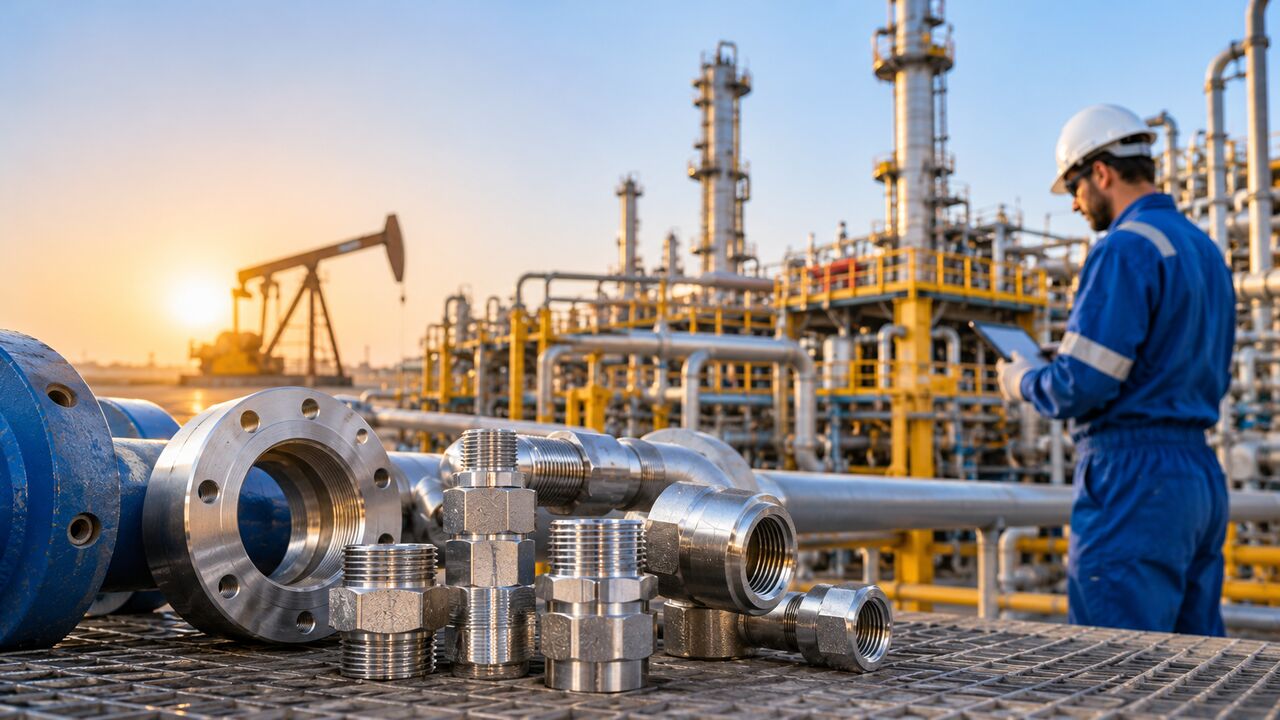
Oil field fittings are connectors, adapters, and flow-control components used to join pipes, tubing, hoses, and equipment in upstream, midstream, and downstream operations. They appear in wellheads, manifolds, drilling rigs, pumping skids, separators, and transfer lines.
Common types include:
Threaded joints like NPT and BSP joints
Flanged connections are used for high-pressure applications and large-diameter piping.
Compression joints and instrumentation joints for control and sampling lines
Unions, elbows, tees, and reducers for directional control
High pressure hydraulic and high pressure couplings for drilling and workover machines
Since each joint is made keeping in mind certain pressures and temperatures, selection can never be done based on dimensions alone.
Which Specifications Matter Most?
Pressure and temperature ratings. Fittings must withstand operating pressure plus surges, with an appropriate safety margin. Temperature ratings are equally important in desert environments and in high-temperature process lines.
Material grade. Carbon steel is common for general service. Stainless steel, duplex, and other alloys are preferred where corrosion or chloride exposure is a concern. Material choice should reflect the fluid being handled.
Sour service suitability. Where hydrogen sulphide (H2S) is present, materials need to comply with standards such as NACE MR0175/ISO 15156 to resist sulphide stress cracking.
Connection standard. Thread form, flange class, and sealing method must match the existing system to avoid leaks.
Fluid compatibility. Crude oil, produced water, gas, and chemical injection fluids each affect seals and metals differently.
How Do UAE Conditions Influence Selection?
Operations in the UAE often combine onshore desert sites with offshore platforms. Both bring their own challenges.
High ambient temperatures accelerate seal aging and can reduce material performance.
Salt-laden air offshore increases corrosion risk.
Sand and dust can damage threads, seals, and exposed surfaces.
Humidity in coastal zones promotes corrosion on unprotected steel.
Protective coatings, corrosion-resistant alloys, and sealed storage before installation are common ways operators address these factors.
What Standards and Documentation Should Buyers Expect?
Oil and gas projects typically require traceable, certified products. Buyers commonly request:
Material test certificates (such as EN 10204 3.1)
Meeting applicable standards such as API, ASME, ASTM, or ISO as necessary
Pressure test records for critical components
Heat and batch traceability marked on the product
Compliance with operator or client specifications, which often exceed general standards
Documentation is not an administrative extra. It supports audits, inspections, and safe operation throughout the equipment’s life.
How Should Buyers Evaluate Oil Field Suppliers in Dubai and Across the UAE?
Dubai is a major trading hub, and many companies searching for oil field suppliers in Dubai also supply customers across Abu Dhabi, Sharjah, and the wider region. Whatever the location, a few practical criteria help separate reliable suppliers from the rest:
Product range. A wide selection of sizes, materials, and connection types reduces the need to use multiple vendors.
Technical capability. Staff who understand specifications can help prevent mismatched or underrated components.
Certification and traceability. Documents should accompany products without delay.
Stock and delivery. Local inventory helps limit downtime during maintenance or emergency repairs.
Industry experience. Familiarity with oil and gas requirements and client approval processes is valuable.
Transparent product information. Clearly organised catalogues make comparison easier. For example, Hydromax presents its oil and gas category and supplier range at https://hydromax.ae/categor ..., which offers buyers a reference for the kinds of products typically available.
Comparing suppliers across these points generally gives a better picture than price alone.
What Common Mistakes Should Be Avoided?
Selecting fittings by appearance or size without checking ratings
Overlooking sour service or corrosion requirements
Accepting uncertified or untraceable components
Mixing incompatible materials, which can cause galvanic corrosion
Ignoring correct installation torque and procedures
Delaying inspection and maintenance schedules
Frequently Asked Questions
Q1. What are oil field fittings?
They are connectors and adapters that join pipes, tubes, and equipment in oil and gas systems, designed to handle high pressure, temperature, and demanding fluids.
Q2. What materials are used for oil field fittings?
Carbon steel, stainless steel, duplex stainless steel, and specialist alloys are common. The choice depends on pressure, temperature, and corrosion risk.
Q3. What does NACE MR0175 mean for fittings?
It is a standard that specifies material requirements for equipment used in environments containing hydrogen sulphide, helping prevent cracking and failure.
Q4. How can buyers verify fitting quality?
They can request material certificates, pressure test reports, and traceability records, and confirm conformity to relevant API, ASME, or ISO standards.
Q5. Why is local supply important for oil and gas operations?
Local stock and support can shorten lead times, which matters when maintenance schedules or breakdowns leave little room for delay.
Q6. How often should fittings be inspected?
Intervals depend on operating conditions and company procedures, but routine checks for leaks, corrosion, and thread damage are standard practice, with closer monitoring in harsh environments.
Conclusion
Choosing oil field fittings in the UAE calls for careful attention to pressure ratings, materials, standards, and environmental exposure. Heat, salt, dust, and sour service conditions raise the stakes, and certified, traceable products help protect both people and equipment. When assessing oil field suppliers in UAE, buyers benefit from looking at product range, technical knowledge, documentation, and delivery capability, and from reviewing publicly available catalogues such as those from Hydromax and other providers. A methodical approach to selection reduces risk, limits downtime, and supports safe, long-term operation.