Why Surgical Instrument Cleaning Is More Important Than It Looks
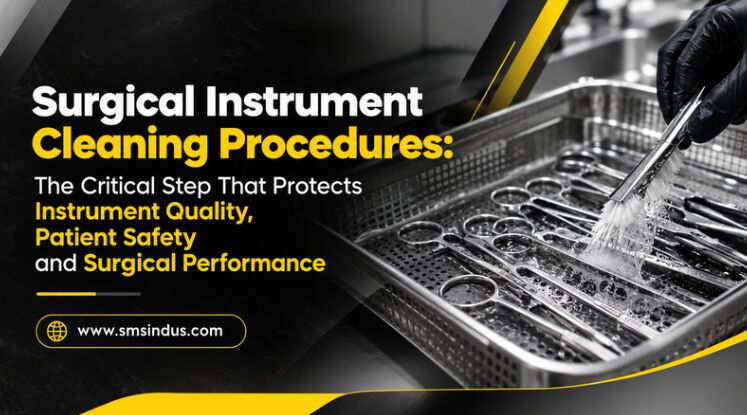
After a procedure, an instrument may appear visually clean while still carrying microscopic residues in joints, serrations, hinges, grooves or other difficult-to-reach areas. Dried blood and organic debris can become considerably harder to remove when instruments are allowed to sit untreated for too long. That creates additional challenges for reprocessing teams and can interfere with subsequent disinfection or sterilization processes. Effective cleaning therefore needs to be considered the foundation of the entire reprocessing workflow rather than an isolated housekeeping activity. A high-quality surgical instrument deserves an equally disciplined cleaning process. Whether a healthcare facility is using SMS Surgical Instruments, dental instruments, orthopedic instruments or other specialized medical products, the objective should always be consistent: remove contamination effectively, protect the instrument from unnecessary damage and prepare it appropriately for the next stage of reprocessing.
Start Cleaning Before Contamination Has Time to Become a Bigger Problem
One of the most practical lessons in surgical instrument care is that timing matters. Instruments should be handled according to the healthcare facility’s validated reprocessing procedures as soon as reasonably possible after use. If blood, tissue or other organic material dries onto an instrument, cleaning becomes more difficult and mechanical action may become more aggressive. That can place unnecessary stress on delicate components, especially instruments with fine tips, articulated joints, cutting edges or textured surfaces. At the point of use, appropriate measures should be followed to prevent contaminants from drying while instruments are safely transported to the designated decontamination area. This does not mean improvising a cleaning method at the operating table. It means having a clearly defined workflow that connects the procedure room, transport process, decontamination area and sterile processing department. The better the workflow, the less opportunity there is for contamination to become embedded or overlooked.
Know the Instrument Before You Clean It
Not every surgical instrument should automatically be treated in exactly the same way. Material, construction, surface finish, moving components, delicate working ends and manufacturer instructions can all affect the appropriate cleaning method. A basic stainless-steel instrument may have different requirements from a highly specialized device with intricate mechanisms. Dental instruments can contain narrow working areas where debris accumulates, while orthopedic instruments may have larger surfaces, specialized components or complex geometries that require careful attention. Surgical instruments with hinges and box locks require particular care around areas where contamination can remain hidden. Before introducing an instrument into a cleaning process, healthcare professionals should understand its intended use and follow the manufacturer’s validated instructions for cleaning and reprocessing. This is one reason procurement decisions should not focus exclusively on purchase price. When hospitals and clinics choose quality instruments, they should also consider cleanability, durability, maintenance requirements and compatibility with their existing reprocessing systems.
Manual Cleaning Requires Control, Not Force
Manual cleaning remains an important part of many instrument reprocessing workflows, particularly when instruments contain complex areas that require direct attention. However, effective manual cleaning is not about scrubbing as hard as possible. Excessive force, unsuitable brushes or abrasive materials can damage instrument surfaces, finishes and working edges. A disciplined approach uses appropriate cleaning agents, water quality, tools and techniques consistent with the instrument manufacturer’s instructions and the facility’s validated procedures. Instruments with hinged or articulated sections may need to be positioned appropriately so that cleaning solutions and mechanical action can reach contaminated areas. Brushes and other cleaning accessories should themselves be suitable for the application and maintained appropriately. The goal is controlled removal of contamination without creating scratches, surface damage or other defects that can make future cleaning more difficult. With the right process, cleaning becomes repeatable and measurable rather than dependent on individual guesswork.
Automated Cleaning Can Improve Consistency, but It Is Not a Substitute for Good Process Design
Automated cleaning systems, including washer-disinfectors where appropriate, can provide important advantages in standardized healthcare environments. Automation can improve consistency, reduce some manual handling and support repeatable processing when equipment is correctly selected, loaded, operated and maintained. But automation does not eliminate the need for professional judgment. Instruments must be positioned correctly, equipment cycles must be appropriate, and the process must be validated and monitored according to applicable requirements. Instruments with complex designs may still require specific preparation or manual attention before automated processing. A poorly loaded washer cannot compensate for a poorly designed workflow. The same principle applies to procurement. Choosing a respected supplier of Surgical Medical Supplies is only one part of the equation. Healthcare organizations must also ensure that their equipment, staff training, cleaning chemistry, water quality, loading practices and monitoring systems work together as one controlled process.
Cleaning Chemistry Matters More Than Many Buyers Realize
The cleaning agent used during instrument reprocessing can influence both cleaning performance and instrument longevity. Healthcare facilities should use products that are appropriate for the instruments and compatible with the validated cleaning process. Concentration, temperature, exposure time and rinsing requirements should follow the relevant manufacturer’s instructions and established facility procedures.