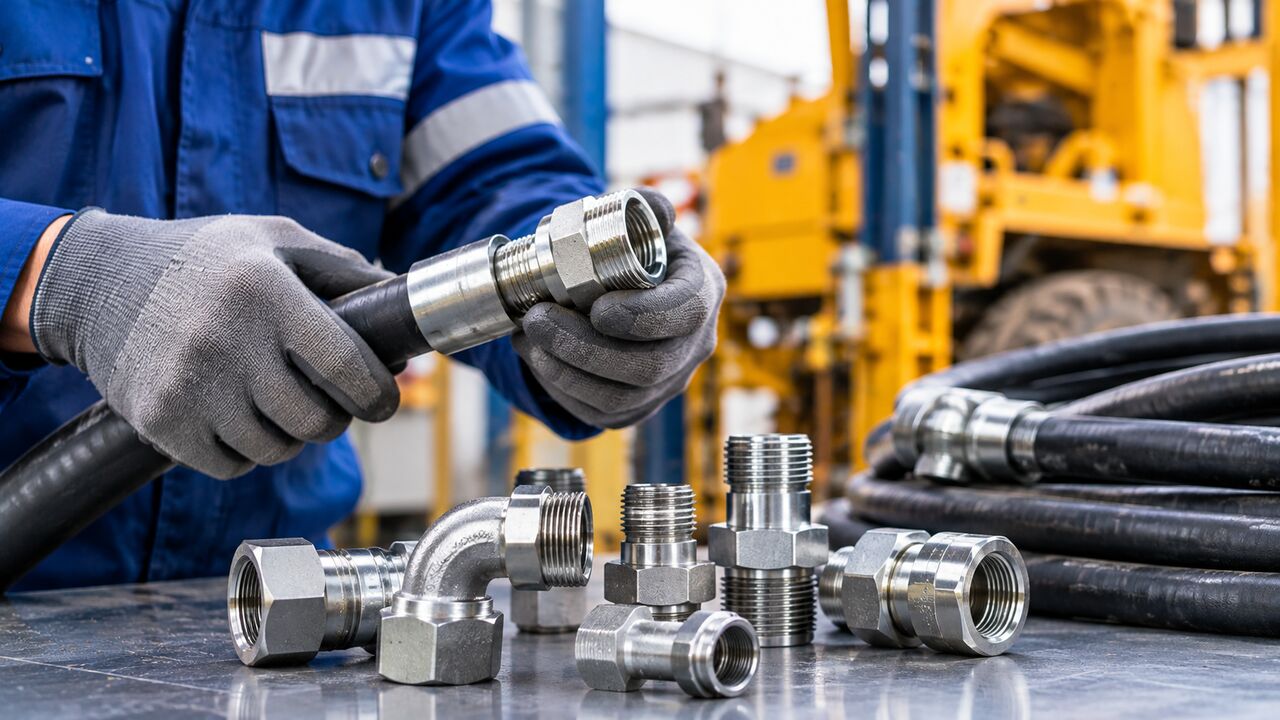
Quick answer: Yes. Incorrect hydraulic fittings can cause leaks, pressure loss, contamination, component damage, and injury. Mismatched threads, insufficient pressure ratings, unsuitable materials, and poor-quality manufacturing are the most common causes. Correct identification, standards compliance, and reliable sourcing reduce the risk.
Why Fittings Carry More Risk Than Their Size Suggests
Hydraulic fittings serve to attach hoses, tubes, and pipes to pumps, valves, and actuators. They must seal fluid at high pressure while resisting vibration, heat, and pressure spikes. Because a single system may contain dozens of connections, one wrong fitting is enough to create a weak point. Since fittings are inexpensive relative to the machinery they serve, they are often chosen quickly, and that is where problems begin.
Common Ways Fittings Go Wrong
Thread mismatch. BSP, NPT, metric, JIC, and SAE threads can look nearly identical. Forcing incompatible threads together may seem to work initially but often leaks or fails under pressure.
Inadequate pressure rating. A fitting rated below the system’s working or surge pressure can crack, blow off, or weep over time.
Wrong material. Carbon steel in a salt-laden marine environment may corrode quickly, while some fluids are incompatible with certain metals or seals.
Poor machining. Rough sealing surfaces and inconsistent threads prevent a reliable seal, even when sizes appear correct.
Incompatible hose and fitting combinations. Mixing components from different manufacturers on crimped assemblies can lead to weak crimps and hose blow-off.
Reused or damaged fittings. Fittings designed for single use may not seal properly the second time.
What Can Happen as a Result
Unplanned downtime: Leaks can stop equipment and interrupt production or project schedules.
Potential hazards include fluid injection injuries, fire risks, and slips caused by high-pressure hydraulic fluid.
Contamination: Air and dirt entering through loose connections accelerate wear in pumps and valves.
Equipment damage: Pressure loss and contamination shorten component life.
Environmental impact: Oil leaks lead to cleanup costs and compliance concerns.
These consequences often cost far more than the fitting itself.
UAE Conditions That Raise the Stakes
Heat increases fluid temperature and stresses seals. Dust and sand work into connections, while coastal humidity and salt accelerate corrosion. Equipment in construction, ports, marine services, and oil and gas operations faces these conditions daily. Fittings chosen without considering the environment tend to wear out sooner than expected.
How to Reduce the Risk
Identify fittings correctly. Confirm thread type, size, seat angle, and sealing method before ordering.
Match ratings to the system. Check working pressure and allow for surge conditions.
Select suitable materials. Consider fluid type, temperature, and environment.
Follow standards. ISO, SAE, DIN, and JIC define dimensions and performance.
Use compatible assemblies. Follow manufacturer guidance for hose and fitting combinations and crimping.
Install correctly. Use proper torque and keep connections clean.
Inspect regularly. Look for leaks, corrosion, and loosening during scheduled maintenance.
What to Look for in Hydraulic Fittings Suppliers in UAE
Supplier selection is part of risk control. Buyers may consider:
Product range: A wide selection of thread types, sizes, and materials reduces the chance of forced substitutions.
Technical support: Staff who can identify unfamiliar fittings help prevent ordering mistakes.
Documentation: Certificates, test data, and traceable batch information indicate quality control.
Stock availability: Local inventory shortens repair time and limits improvised fixes.
Application knowledge: Familiarity with industrial, marine, and construction needs leads to better recommendations.
After-sales support: Clear return and replacement processes add confidence.
Suppliers such as Hydromax list fittings by category, and its hydraulic fittings page shows the type of range and product detail buyers can compare when reviewing the market. Checking several catalogs gives a more balanced view of availability and specifications.
Warning Signs of Poor-Quality Fittings
Missing or unclear markings
Flaking or uneven plating
Rough or inconsistent threads
No certificates or traceability
Unusually low pricing with no explanation
Any of these justifies further checks before the parts are installed.
Frequently Asked Questions
Q1. Can the wrong hydraulic fitting damage equipment?
Yes. Leaks, pressure loss, and contamination caused by incorrect fittings can damage pumps, valves, and cylinders over time.
Q2. How do I know which fitting I need?
Identify the thread type, size, sealing method, and pressure requirement, and consult technical documentation or a knowledgeable supplier if unsure.
Q3. Are BSP and NPT threads interchangeable?
No. They differ in thread form and sealing method, and mixing them often causes leaks.
Q4. What is the safest way to select hydraulic fittings suppliers in the UAE?
Compare range, documentation, technical support, stock, and after-sales service rather than relying on price alone.
Q5. How often should hydraulic fittings be replaced?
There is no fixed interval. Replace them when leaks, corrosion, or damage appear, and when hoses are changed if recommended by the manufacturer.
Q6. Does the operating environment affect fitting choice?
Yes. Heat, humidity, salt, and chemical exposure influence material and coating selection.
Conclusion
Wrong hydraulic fittings are a quiet but real risk to industrial equipment, affecting uptime, safety, and maintenance costs. Most failures trace back to preventable issues such as mismatched threads, inadequate ratings, unsuitable materials, or poor-quality parts. By identifying fittings correctly, following standards, and requesting documentation, buyers can reduce these risks significantly. When assessing hydraulic fittings suppliers in UAE, including providers such as Hydromax and other established distributors, the most dependable approach is to verify specifications and support rather than assume that similar-looking parts are interchangeable.