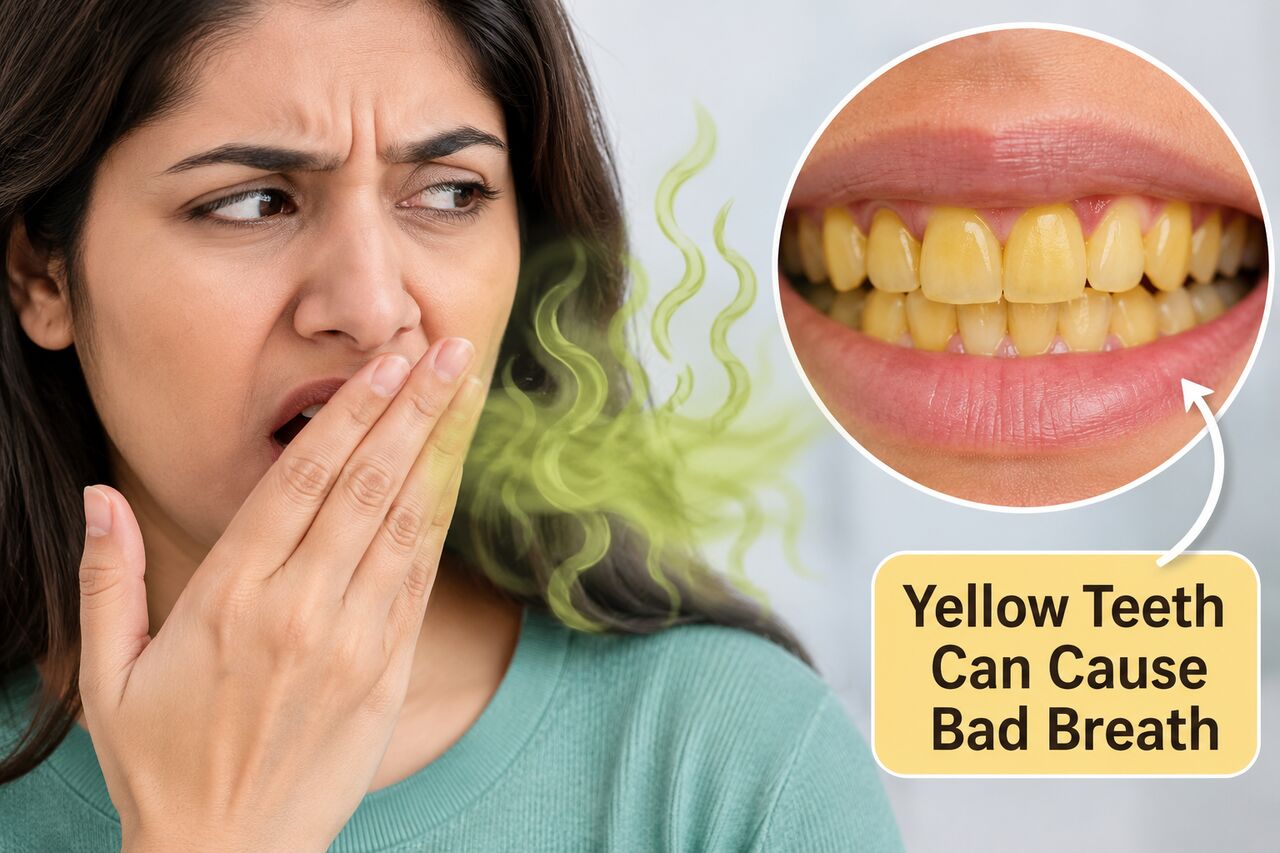
If you notice yellow stains on your teeth along with a persistent unpleasant smell from your mouth, it may be worth paying closer attention to your oral hygiene. Understanding what causes these problems and how they are connected can help you take better care of your teeth and gums.
What Causes Yellow Teeth and Bad Breath?
Yellow teeth and bad breath can develop for several reasons. In many cases, poor oral hygiene allows bacteria, food particles, and plaque to accumulate in the mouth. Over time, this buildup can contribute to tooth discoloration, unpleasant breath, and other dental problems.
Here are some common causes:
- **Plaque and Tartar Buildup:** Plaque is a sticky layer of bacteria that forms on teeth. If it is not removed through regular brushing and flossing, it can harden into tartar. This buildup can contribute to gum inflammation, discoloration near the gumline, and unpleasant breath.
- **Poor Oral Hygiene:** Infrequent brushing, skipping flossing, and not cleaning the tongue can allow bacteria and food debris to accumulate. These bacteria can release unpleasant-smelling compounds that contribute to bad breath.
- **Gum Disease:** Conditions such as gingivitis and periodontitis can cause gum inflammation, bleeding, and persistent bad breath. Tartar buildup associated with gum disease may also make teeth appear yellow near the gumline.
- **Tooth Decay:** Cavities can trap food particles and bacteria, sometimes producing an unpleasant smell or taste. Untreated tooth decay may also affect the appearance and health of your teeth.
- **Food and Drink Stains:** Coffee, tea, red wine, and certain foods can gradually stain tooth enamel. These stains may make teeth appear yellow, although they do not necessarily cause bad breath.
- **Dry Mouth:** Saliva helps wash away food particles and control bacteria in the mouth. When saliva production decreases, bacteria can accumulate more easily, increasing the risk of bad breath.
## How Can Yellow Teeth Contribute to Bad Breath?
Yellow teeth themselves are not usually the direct cause of bad breath. However, when yellow discoloration is associated with plaque, tartar, tooth decay, or gum disease, the same underlying problems may contribute to unpleasant breath.
Bacteria in the mouth break down food particles and other organic substances, producing sulfur-containing compounds that can create an unpleasant odor. If these bacteria accumulate around the teeth, gums, or tongue, bad breath may become more noticeable.
This is why maintaining good oral hygiene is important not only for keeping your teeth clean and bright but also for maintaining fresh breath and healthy gums.
## How to Get Rid of Yellow Teeth and Bad Breath
Improving your oral hygiene habits can help reduce plaque buildup, prevent certain types of tooth discoloration, and control bad breath. However, the right approach depends on what is causing these problems.
Consider the following tips:
- **Brush Twice a Day:** Brush your teeth for two minutes using fluoride toothpaste. Pay attention to the gumline and all tooth surfaces to remove plaque and food debris.
- **Floss Daily:** Use dental floss or an interdental cleaner to remove food particles and plaque from between your teeth, where a toothbrush may not reach effectively.
- **Clean Your Tongue:** Bacteria and debris can collect on the tongue and contribute to bad breath. Gently clean your tongue daily using a tongue scraper or toothbrush.
- **Drink Enough Water:** Staying hydrated helps maintain saliva production and prevents excessive mouth dryness, which can contribute to unpleasant breath.
- **Limit Staining Foods and Drinks:** Reduce frequent consumption of coffee, tea, and other staining beverages. Rinsing your mouth with water afterward may help reduce staining.
- **Avoid Tobacco Products:** Smoking and tobacco use can stain teeth, contribute to gum disease, and cause persistent bad breath.
- **Schedule Regular Dental Checkups:** Visit your dentist regularly to identify plaque buildup, cavities, gum problems, and other conditions that may require professional treatment.
## What Dental Treatments Can Help With Yellow Teeth and Bad Breath?
If home oral hygiene practices do not improve your symptoms, a dentist can examine your teeth and gums to identify the underlying cause. Depending on your condition, different dental treatments may be recommended.
**Professional Dental Cleaning:** Scaling and polishing can remove hardened tartar, plaque, and certain surface stains. This treatment can also help improve gum health and reduce bacteria associated with bad breath.
**Professional Teeth Whitening:** If your yellow teeth are caused by external stains or certain types of discoloration, professional whitening may help improve their appearance. However, teeth whitening does not treat gum disease, tooth decay, or the underlying causes of bad breath.
**Gum Disease Treatment:** If gum inflammation or periodontitis is contributing to unpleasant breath, your dentist may recommend professional cleaning or deeper periodontal treatment, depending on the severity of the condition.
**Tooth Decay Treatment:** Cavities may require dental fillings, while more extensive damage may need root canal treatment and a dental crown. Treating the affected tooth can help address problems associated with trapped food and bacterial buildup.
## When Should You Visit a Dentist?
Occasional bad breath may result from certain foods, dehydration, or waking up in the morning. However, persistent bad breath along with yellow teeth should not be ignored, especially if you also experience other symptoms.
Consider scheduling a dental appointment if you notice:
- Persistent bad breath even after brushing and flossing.
- Yellow or brown deposits near the gumline.
- Bleeding, swollen, or tender gums.
- Toothache or sensitivity to hot and cold foods.
- An unpleasant taste that does not go away.
- Loose teeth or changes in how your teeth fit together.
A dental examination can help determine whether the problem is related to plaque buildup, gum disease, tooth decay, dry mouth, or another oral health concern.
## Final Thoughts
Yellow teeth and bad breath can sometimes occur together because of shared underlying oral health problems, such as plaque accumulation, tartar buildup, and gum disease. However, tooth discoloration alone does not necessarily indicate poor oral health or cause unpleasant breath.
Following a consistent oral hygiene routine, getting professional dental cleanings when needed, and addressing dental problems early can help maintain healthier teeth, fresh breath, and a confident smile. If bad breath or tooth discoloration persists, consult a qualified dentist to determine the cause and discuss