Quick Recommendation
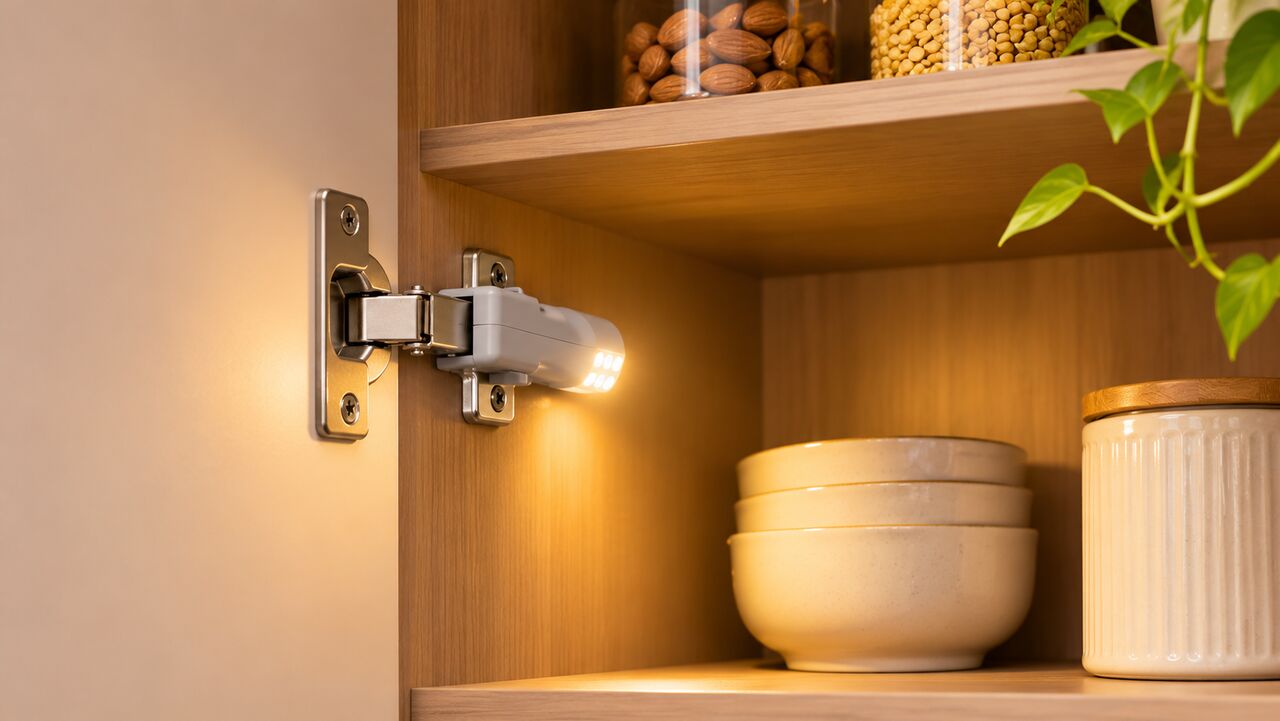
(i) Best for Retrofit & No-Wiring Cabinets: Esysense Hinge Light with Battery (HINGLO) — Installs under standard European hinge mounting screws in seconds to illuminate cabinet interiors automatically.
(ii) Best for Direct AC Mechanical Control: Esysense Push Button Wardrobe Light Switch — Operates on 110–270V AC with a heavy-duty spring plunger for direct mains wiring.
(iii) Best for Double-Door Modular Closets: Esysense Double Door Cabinet IR Sensor — Features twin infrared receiver heads to trigger interior LED strips when either door opens.
(iv) Explore complete wardrobe lighting options: Compare technical specifications and order directly from the official Esysense Wardrobes & Cabinet Sensors Collection.
Product Overview
Modern modular furniture design demands lighting automation that responds instantly to cabinet door movement without manual intervention.
(i) What it is: A comprehensive technical guide and product overview covering mechanical push buttons, battery hinge lights, single-door infrared sensors, and double-door optical modules designed for wardrobes and kitchen pantries.
(ii) What it does: Automatically completes electrical or low-voltage DC circuits when cabinet doors open to deliver bright interior illumination, cutting power instantly upon closure to achieve zero standby energy waste.
(iii) Who it is intended for: Homeowners, renters, interior designers, carpenters, and modular furniture manufacturers seeking smart closet visibility.
(iv) Primary features: Spring-loaded mechanical plungers, active 850nm infrared proximity reflection (5–6 cm range), dual-receiver logic for double doors, 12V–24V DC low-voltage safety, and 110V–270V AC direct wiring options.
(v) Key specifications: Operating Voltage: 12V/24V DC or 110–270V AC; Rated Current: Up to 5A–6A; Detection Range: 1 to 6 cm; Ingress Protection: IP20 indoor rating; Mounting: Surface screw or recessed drill-hole fitting.
(vi) Main use cases: Bedroom wardrobes, double-door almirahs, kitchen modular overhead cabinets, crockery display units, walk-in dressing bays, and shoe storage lockers.
(vii) Important limitations: Non-contact optical IR sensors require an unobstructed inner door surface within 5–6 cm when closed to reflect the infrared beam properly.
Why This Matters
Deep wardrobes, overhead kitchen cupboards, and corner almirahs frequently trap shadows, making it frustrating to locate clothing, utensils, or accessories. Relying on bedroom ceiling lights casts deep shadows behind hanging rails and shelves. Installing a dedicated hinge light for cabinets or an inline almirah sensor switch places bright, targeted illumination directly inside your storage space the moment a door opens—combining luxury convenience with substantial energy savings.
How Cabinet Lighting and Sensor Technology Works
Door-activated wardrobe lighting operates through three primary mechanisms: mechanical spring decompression, active infrared proximity reflection, or battery-powered hinge micro-switching.
1. Resting State (Door Closed)
When the wardrobe door is shut, the door frame physically depresses a spring-loaded plunger or reflects an invisible infrared beam back into an optical transceiver (within a 5–6 cm threshold). This breaks or holds open the electrical circuit, keeping the interior LED lights completely OFF.
2. Door Opening Movement
As you open the cabinet shutter, pressure is released from the mechanical plunger, or the reflective door surface moves away, clearing the infrared beam path.
3. Instant Circuit Closure & Illumination
The internal spring pushes the plunger outward or the microcontroller detects the loss of IR reflection, closing the circuit within milliseconds and delivering power to connected 12V LED strip profiles or 3-LED hinge fixtures.
Main Decision Factors: Choosing the Right Wardrobe Lighting
1. Cabinet Door Configuration (Single vs. Double Doors)
What to look for: Match your sensor architecture to whether your wardrobe uses single swing doors, sliding panels, or wide double-door almirahs.
Why it matters: Standard single-hinged doors work effortlessly with single push switches or IR probes, whereas double-door compartments require a specialized double door sensor with twin receiver heads so that opening either door triggers the interior lights.
Practical recommendation: Specify the Esysense dual-head unit for two-door wardrobes to ensure flawless activation from either side.
2. Power Source & Wiring Complexity (AC Mains vs. DC Low-Voltage vs. Battery)
What to look for: Determine whether your cabinetry has pre-run electrical conduits or requires a wireless retrofit.
Why it matters: Hardwired AC mechanical switches connect directly to household mains without external power drivers, while 12V/24V DC sensors integrate seamlessly with concealed LED aluminum profile channels. Battery-powered hinge lights offer instant DIY installation for rental homes.
Practical recommendation: Choose a plug-and-play hinge light for cabinets for quick upgrades, or install a hardwired wardrobe push button switch for permanent custom modular builds.
Technical Specification Comparison
1. Push-Type Door Sensor Switch
Operation Mode: Mechanical Push Spring Plunger.
Operating Voltage: 110V–270V AC (Direct Mains).
Current Rating: 2 Amps (Supports up to 200W load).
Mounting Style: Surface screw mounting inside cabinet frame.
Best Application: Direct AC switching for hinged wardrobe doors and kitchen pantries.
2. Double Door Cabinet IR Sensor
Operation Mode: Active Infrared (IR) Optical Proximity.
Operating Voltage: 12V–24V DC Low Voltage.
Detection Distance: 5 to 6 cm.
Sensor Heads: Twin (Dual Receivers).
Rated Load: 12V/40W, 24V/60W.
Best Application: Wide double-door wardrobes and almirahs.
3. Single Door Cabinet IR Sensor
Operation Mode: Active Infrared Optical Proximity.
Operating Voltage: 12V–24V DC.
Detection Distance: 5 to 6 cm.
Best Application: Single-door modular wardrobes and glass cabinets.
Use-Case Guide
(i) Custom Modular Wardrobes: Install a recessed push button for wardrobe light systems or an optical IR sensor into aluminum LED channel profiles for clean, architectural interior illumination.
(ii) Double-Door Almirahs: Mount a dedicated double door sensor across large bedroom almirahs so that opening either wardrobe