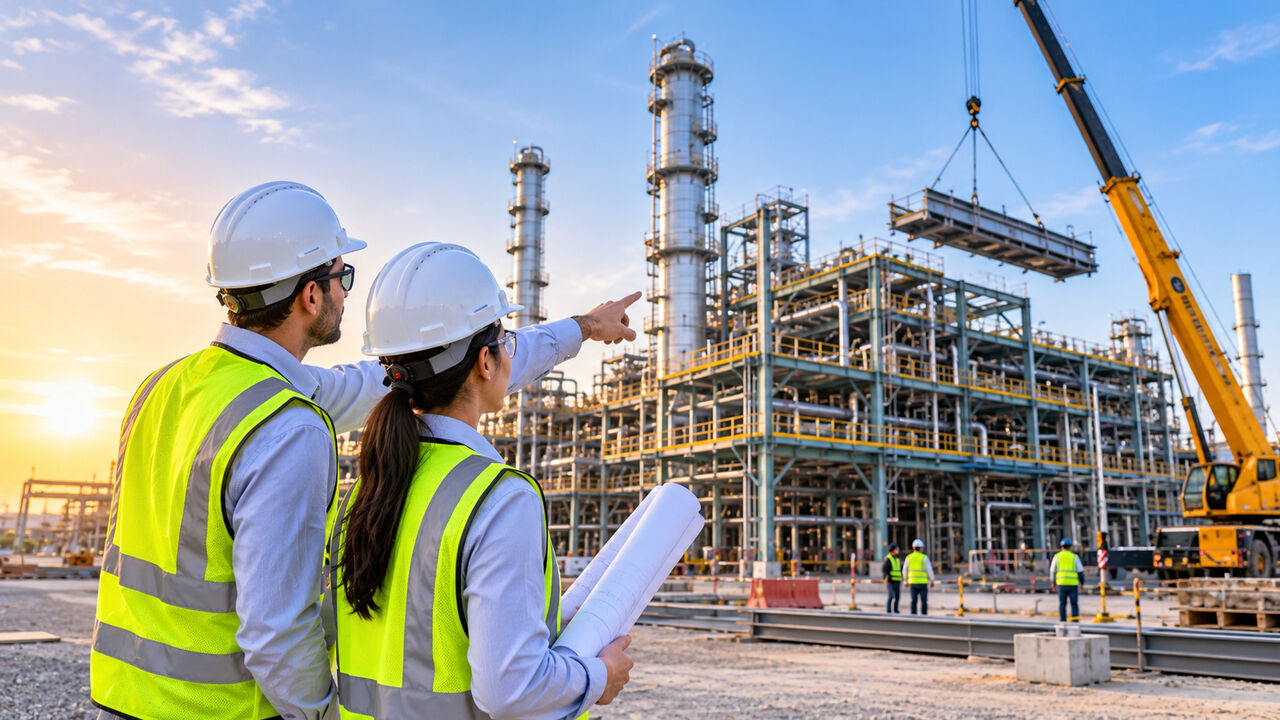
An industrial plant begins as an empty plot, a set of production targets, and a long list of technical requirements. Turning that into a safe, efficient, operating facility involves engineering, procurement, construction, testing, and handover across dozens of disciplines. This article explains how industrial construction works from start to finish and what owners typically consider when reviewing industrial construction companies in Dubai and across the wider region.
What Is Industrial Construction?
Industrial construction covers the building of facilities that produce, process, store, or transport goods and energy. Examples include manufacturing plants, refineries, power stations, water treatment facilities, warehouses, and processing units. Unlike commercial building, these projects must integrate heavy equipment, piping, electrical systems, process controls, and strict safety requirements into a single working system.
Stage 1: Feasibility and Site Selection
Every project begins with a business case. Owners assess market demand, capacity needs, budget, and regulatory requirements. Site selection considers land availability, access to utilities, transport links, soil conditions, and zoning rules. In the UAE, free zones and dedicated industrial areas often influence this decision because of infrastructure and licensing frameworks.
Stage 2: Design and Engineering
Engineering translates the concept into detailed plans. It usually proceeds in phases:
Conceptual design: Defines process flow, capacity, and layout
Front-end engineering design (FEED): Establishes scope, cost estimates, and technical standards
Detailed engineering: Produces drawings, specifications, and equipment lists for construction
Civil, structural, mechanical, electrical, instrumentation, and process disciplines must coordinate closely. Decisions made here shape cost, safety, and future maintenance.
Stage 3: Permits and Approvals
Industrial projects require approvals from municipal, environmental, civil defense, and sector-specific authorities. Environmental impact assessments, fire and life safety reviews, and utility connection permits are typical requirements. Delays in documentation can affect the entire schedule, so experienced teams treat approvals as a parallel workstream from the start.
Stage 4: Procurement and Logistics
Procurement involves sourcing long lead-time items such as turbines, transformers, pressure vessels, and specialized machinery, along with bulk materials like steel, cable, and piping. Global supply chains, shipping times, and customs clearance all influence schedules. Quality inspection of materials and equipment on arrival helps prevent problems later in construction.
Stage 5: Site Preparation and Civil Works
Physical construction begins with clearing, grading, and soil testing. Crews then build foundations, drainage, access roads, and underground utilities. Foundations for heavy equipment must be precisely engineered, since vibration and load can affect long-term performance. In the Gulf region, high groundwater, salinity, and extreme heat require suitable concrete mixes and curing practices.
Stage 6: Structural, Mechanical, and Electrical Installation
This is typically the most labor-intensive phase. Work includes:
Erecting steel structures and building enclosures
Installing tanks, vessels, and major equipment
Fabricating and welding piping systems
Pulling cables and installing power distribution
Mounting instrumentation and control panels
Lifting plans, welding quality control, and non-destructive testing are central to safety and reliability. Sequencing matters, since one trade often depends on another finishing first.
Stage 7: Automation and Controls Integration
Modern plants rely on control systems such as PLCs, SCADA, and distributed control systems to monitor and manage operations. Integrating these with field instruments, safety systems, and plant networks requires careful testing. Early coordination between construction and automation teams reduces rework later.
Stage 8: Testing, Commissioning, and Handover
Before operation begins, systems undergo staged verification:
Mechanical completion: Confirms that installation matches design
Pre-commissioning: Includes pressure tests, flushing, and loop checks
Commissioning: Introduces process materials and verifies performance
Performance testing: Confirms output meets design targets
Handover: Delivers documentation, training, and as-built records
Thorough commissioning is where planning quality becomes visible. Problems found here are far cheaper to fix than those found during production.
Safety and Quality Throughout
Industrial sites involve lifting, confined spaces, hot work, high voltage, and extreme heat. Strong projects maintain permit-to-work systems, regular audits, competency checks, and heat stress management. Quality control runs in parallel, covering material certification, inspection and test plans, and compliance with international codes and local regulations.
Choosing Among Industrial Construction Companies
Owners comparing industrial construction companies in UAE often review:
Experience with similar facility types and project scale
Ability to manage multi-discipline work under one contract
Safety record and certifications
Project management and scheduling capability
Quality assurance procedures
Local regulatory knowledge and supply chain access
Firms such as Tekzone describe their industrial and engineering services publicly at tekzoneme.com, which gives prospective clients an overview of the type of capabilities available before they begin formal discussions. Reviewing these descriptions alongside project references helps owners shortlist suitable partners.
Integrated delivery models, where design, procurement, and construction are handled together, are common among industrial construction companies serving the region. Tekzone and comparable contractors often highlight lifecycle involvement, from construction through commissioning and ongoing support, as part of this approach.
Frequently Asked Questions (FAQs)
Q1. How does industrial construction differ from commercial construction?
Industrial projects involve process equipment, piping, heavy electrical loads, and control systems, with stricter safety and regulatory demands.
Q2. How long does an industrial construction project take?
Timelines vary widely. A small facility may take under a year, while large plants can take several years including design and approvals.
Q3. What is EPC in industrial construction?
EPC stands for Engineering, Procurement, and Construction, a delivery model in which one contractor manages all three phases.
Q4. What should owners look for in industrial construction companies in Dubai?
Relevant experience, safety performance, multi-discipline capability, quality systems, and familiarity with local regulations.
Q5. What causes delays in industrial projects?
Common causes include late approvals, scope changes, supply chain disruption, poor coordination, and weather or site conditions.
Q6. What is commissioning?
It is the structured testing and start-up process that verifies a plant opera