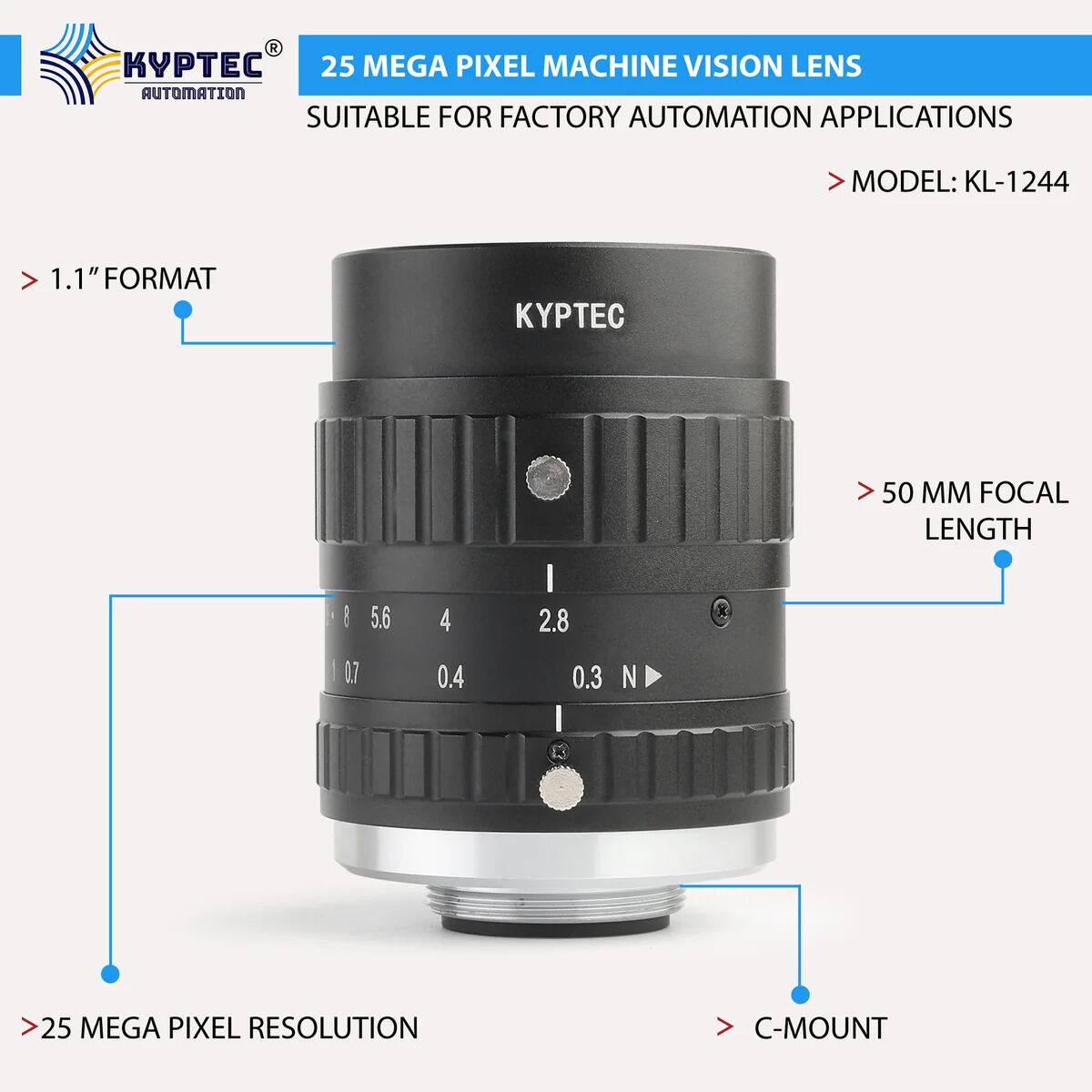
Start lens selection by defining the size of the object or area that must appear in each image, then calculate the field of view using the active sensor dimensions and camera working distance. This focal length can be useful when the inspection target occupies a defined area and the camera needs a more selective view. The required level of detail also matters: check the smallest feature to be inspected against the camera's pixel size and the image scale at the target.
Sensor format and mount are important compatibility checks. Confirm that the lens image circle covers the active 1.1-Inch sensor and that the camera accepts the C-mount connection. The F2.8–22 aperture range provides adjustment for the available lighting and depth-of-field requirements; focus stability, illumination uniformity and secure mounting also contribute to consistent image quality.
Possible uses include automated optical inspection, robotic guidance, part alignment and production quality control. It may be evaluated for targeted component checks, dimensional measurement and positioning tasks where the inspection area is clearly defined. Before purchase, compare the product specifications with your camera model, object dimensions, installation space and required defect size.
Product Webpage Link
https://www.kyptec-automati ...