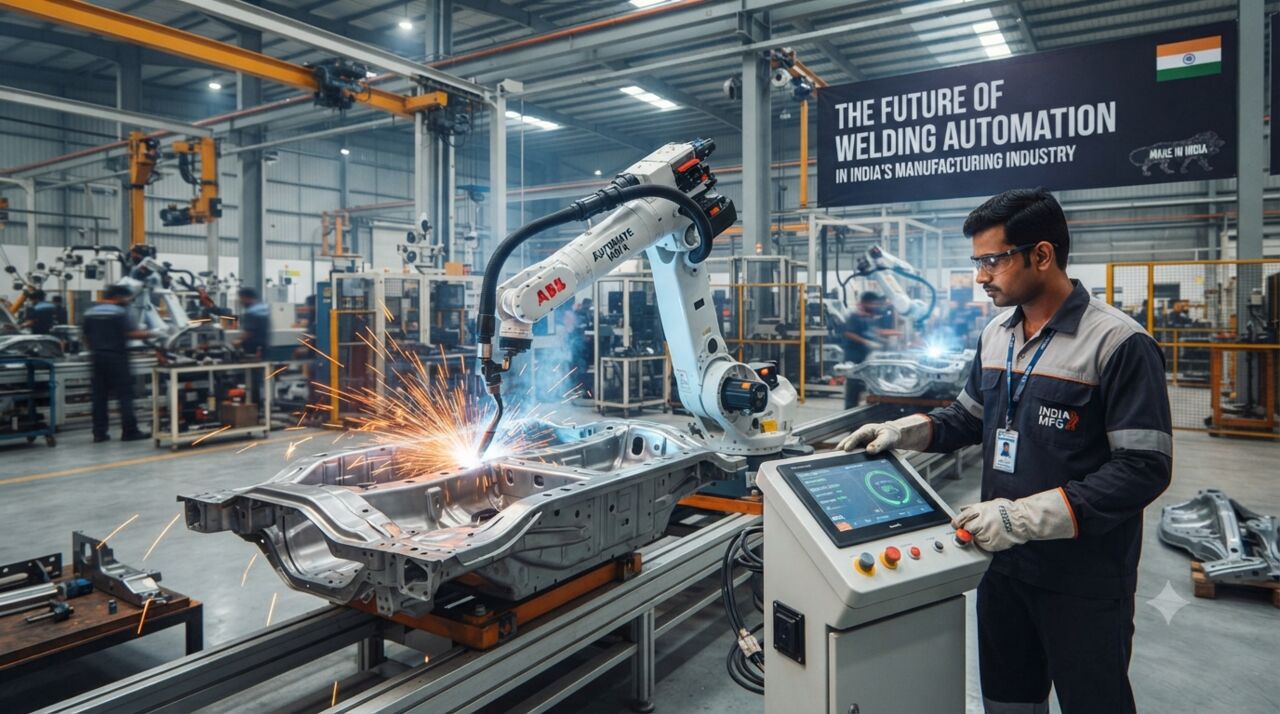
India's manufacturing sector is at a turning point. Labour costs are rising, skilled welders are harder to find, and quality expectations keep climbing. Automation isn't a future option anymore it’s becoming the baseline for staying competitive.
Why Is Welding Automation Growing in India Right Now?
Several industry forces are converging at once, pushing shops of every size toward automated welding equipment.
India's infrastructure boom, steel industry expansion, and rising automotive and EV production are all fueling increased demand for welding capacity. At the same time, growing defense manufacturing and renewable energy projects are adding further demand for welding consumables and equipment.
What Does "Smart" Welding Automation Actually Mean?
Smart automation goes beyond simply mechanizing torch movement it connects machines, collects data, and enables predictive decisions.
Between 2026 and 2030, Indian manufacturing is expected to move from basic automation toward intelligent, data-driven automation built around AI, IoT, and robotics. In practice, that looks like:
1. Connected machines - sensors track speed, arc distance, and output in real time
2. AI-based defect detection - vision systems catch weld flaws before they reach inspection
3. Predictive maintenance - equipment flags wear before it causes downtime
4. Remote diagnostics - technicians troubleshoot issues without visiting every plant floor
Robotic and Cobot Welding Are Entering the Mainstream
Robotic welding used to be reserved for large automotive plants. That's changing fast. Falling robot costs and simpler programming are making welding robots and pick-and-place automation accessible to small and mid-sized manufacturers, not just large enterprises.
Industry players are backing this shift with real deployments. Robotic welding cells with digital connectivity and 3D scanning are being positioned to improve weld quality while reducing dependence on scarce skilled labour a direct response to India's welder shortage.