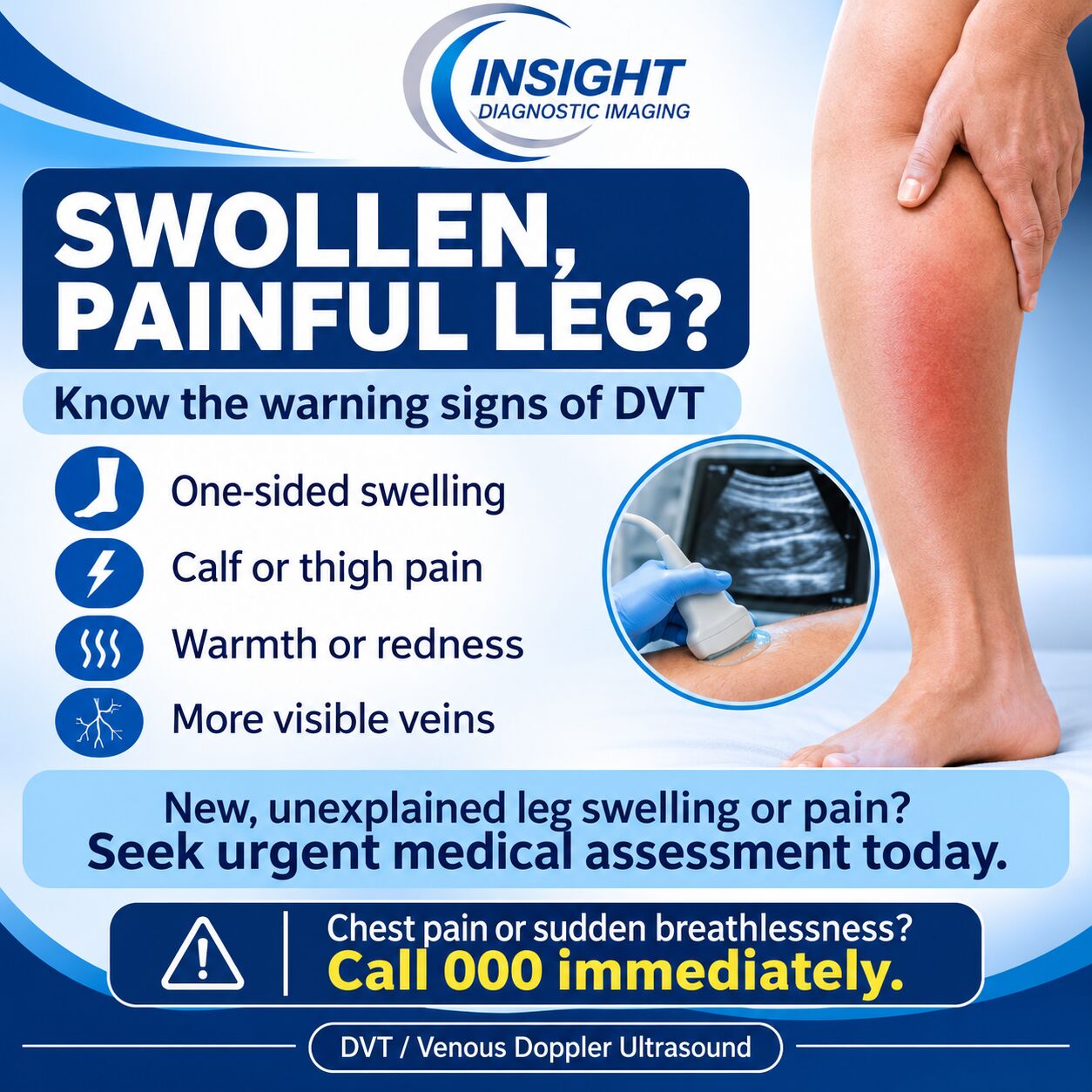
Although not every swollen or painful leg indicates a blood clot, recognising the warning signs and seeking timely medical assessment can help prevent serious complications. Understanding DVT, its risk factors, and the role of ultrasound can help people make informed decisions about their health. :https://insightimaging.com. ...
What Is Deep Vein Thrombosis (DVT)?
Deep Vein Thrombosis occurs when a blood clot forms in a deep vein, usually in the lower leg, calf, or thigh. These veins carry blood back towards the heart. When a clot develops, it can interfere with normal blood circulation.
The main concern with DVT is that part of the clot can break away and travel through the bloodstream to the lungs. This can cause a condition called pulmonary embolism, which is potentially life-threatening.
Early medical assessment is important because doctors can determine whether a clot is present and whether treatment is required.
Common Warning Signs of DVT
DVT symptoms often affect one leg, although some people may experience very few noticeable symptoms. Knowing the common warning signs can help people recognise when medical attention may be necessary.
Some symptoms to watch for include:
One-sided swelling: One calf, ankle, foot, or entire leg may become noticeably swollen.
Calf or thigh pain: The affected area may feel sore, tender, or uncomfortable.
Increased warmth: The skin around the affected area may feel warmer than usual.
Redness or discolouration: The skin may appear red or develop a noticeable colour change.
Prominent veins: Veins beneath the skin may become more visible than usual.
These symptoms can also occur with other medical conditions, so they do not automatically confirm DVT. However, new and unexplained swelling or pain in one leg requires prompt medical assessment. A person should not rely on appearance or discomfort alone to rule out a blood clot.
Who Is at Higher Risk of Developing DVT?
DVT can affect people of different ages and backgrounds. However, certain medical conditions and lifestyle circumstances can increase the likelihood of developing a blood clot.
Some recognised risk factors include:
1. Recent surgery or hospitalisation
Surgery, hospital stays, and significant injuries can increase the risk of blood clots, particularly when movement is restricted during recovery.
2. Long periods of sitting or immobility
Long-distance travel and extended periods without movement can affect normal blood circulation and increase the risk of clot formation.
3. Pregnancy and childbirth
Pregnancy and the period following childbirth are associated with an increased risk of developing blood clots.
4. Hormonal medications
Oestrogen-containing contraceptives and hormone replacement therapy may increase the likelihood of DVT in some individuals.
5. Previous blood clots or certain medical conditions
People with a previous history of DVT, certain clotting disorders, or cancer may have a higher risk.
Having one or more risk factors does not mean someone definitely has DVT. Similarly, blood clots can sometimes develop without an obvious reason.
How Is DVT Diagnosed?
When a doctor suspects DVT, they consider the patient's symptoms, medical history, and possible risk factors before recommending further investigations.
The diagnostic process may involve several steps.
Medical history and physical examination: The doctor asks when the symptoms started, examines the affected leg, and reviews relevant medical history.
Clinical assessment: A clinical assessment tool, such as the Wells score, may help estimate the likelihood of DVT.
D-dimer blood test: In appropriate cases, a D-dimer blood test may help doctors assess the possibility of a clot. A negative result may help rule out DVT when the clinical assessment indicates a low likelihood. However, an elevated result does not necessarily confirm a blood clot.
Venous Doppler ultrasound: If DVT is considered likely or further investigation is required, the doctor may recommend an ultrasound examination to assess the leg veins and look for signs of a clot.
The doctor determines which investigations are appropriate and how urgently they should be arranged.
What Happens During a DVT Ultrasound?
A venous Doppler ultrasound is a non-invasive imaging examination that uses sound waves to assess the veins and blood flow in the leg.
During the examination, a sonographer applies a small amount of gel to the skin and moves a handheld ultrasound probe over the area being examined. Gentle pressure may also be applied to certain veins as part of compression ultrasound.
The examination does not use ionising radiation.
Depending on the referral and clinical requirements, the scan may examine part or all of the leg. If the initial examination does not provide a conclusive result, the doctor may recommend additional investigations or a repeat ultrasound.
If DVT is confirmed, treatment often involves anticoagulant medication, commonly called blood thinners. These medicines help prevent the clot from growing and reduce the risk of further clots. Treatment decisions depend on the patient's individual medical circumstances.
Why Should You Not Ignore Sudden Leg Swelling?
One of the biggest concerns with DVT is the possibility of pulmonary embolism. This happens when a blood clot travels to the lungs and blocks blood flow.
Warning symptoms can include:
Sudden shortness of breath
Chest pain
Coughing up blood
Racing heartbeat
Dizziness or fainting
These symptoms require immediate emergency attention. If you experience them, call 000 immediately. Do not wait for an outpatient ultrasound appointment or attempt to drive yourself to hospital.
If you develop new, unexplained swelling or pain in one leg, seek urgent medical assessment today rather than waiting for a routine scan.
Understanding the Importance of Timely Ultrasound Assessment
Medical imaging plays an important role in investigating suspected DVT. A venous Doppler ultrasound allows healthcare professionals to examine the leg veins and assess blood flow without using ionising radiation.
For people experiencing unexplained leg swelling or pain, timely medical assessment helps doctors decide whether an ultrasound or another investigation is necessary.
At Insight Diagnostic Imaging, venous Doppler ultrasound examinations are available at the Springvale and Dandenong clinics. Eligible patients with a valid referral and Medicare card may qualify for bulk billing, depending on the examination