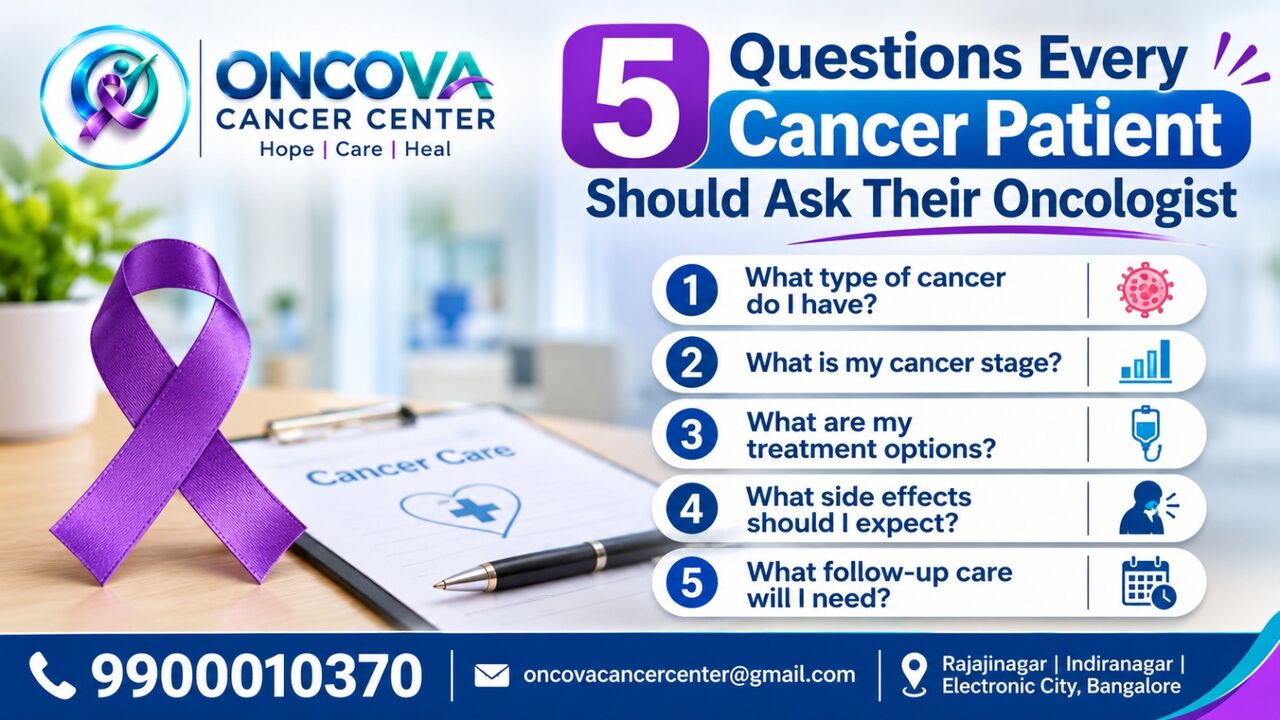
Patients and their family members should feel comfortable asking questions during consultations. Having the right information can help patients understand their condition, participate in treatment decisions and prepare for the next steps in their care.
Why Is It Important to Ask Questions During a Cancer Consultation?
Every cancer diagnosis is different. The type of cancer, its stage, the patient's overall health and other medical factors can influence treatment planning.
Asking questions helps patients:
✓ Understand their diagnosis better.
✓ Learn about available treatment options.
✓ Prepare for possible treatment-related side effects.
✓ Understand what to expect during treatment.
✓ Plan follow-up consultations and care.
5 Important Questions to Ask Your Oncologist
1. What Type of Cancer Do I Have?
Understanding the exact type of cancer is the first step towards understanding your diagnosis.
Ask your oncologist:
✓ What is the specific type of cancer?
✓ Where did the cancer originate?
✓ Do I need any additional tests?
✓ What do my biopsy and diagnostic reports indicate?
Understanding your diagnosis can help you follow your treatment discussions more confidently.
2. What Is My Cancer Stage?
Cancer staging describes the extent of cancer in the body. It helps the medical team understand how far the disease has progressed and plan appropriate treatment.
You can ask:
✓ What stage is my cancer?
✓ Has it spread to nearby tissues or other parts of the body?
✓ What tests were used to determine the stage?
✓ How does the stage influence my treatment plan?
Your oncologist can explain your staging results based on your individual reports.
3. What Are My Treatment Options?
Cancer treatment depends on several factors, including cancer type, stage, location and overall health.
Ask your oncologist:
✓ What treatment options are suitable for my condition?
✓ Do I need surgery, chemotherapy, radiation therapy or other treatments?
✓ What are the benefits and possible limitations of each option?
✓ Will I need a combination of treatments?
✓ Is a second opinion appropriate?
Understanding your options can help you participate in informed discussions about your treatment plan.
4. What Side Effects Should I Expect?
Different cancer treatments can cause different side effects. Knowing what to expect can help patients prepare and communicate concerns to their healthcare team.
Discuss these points:
✓ What are the common side effects of my recommended treatment?
✓ How can these side effects be managed?
✓ Which symptoms require immediate medical attention?
✓ Could treatment affect my appetite, sleep or daily activities?
Always inform your medical team about new or concerning symptoms instead of managing them without medical guidance.
5. What Follow-Up Care Will I Need?
Follow-up care is an important part of the cancer care journey. Regular appointments help the medical team monitor recovery, assess treatment response and identify any concerns that may require attention.
Ask your oncologist:
✓ How frequently should I attend follow-up appointments?
✓ Will I need regular blood tests or scans?
✓ What symptoms should I watch for?
✓ Are there lifestyle or rehabilitation recommendations I should follow?
Follow-up schedules are individualised according to the patient's condition and treatment history.
6. Tips to Prepare for Your Oncology Consultation
Before meeting your oncologist, consider these simple steps:
✓ Carry previous medical reports, scans and biopsy results.
✓ Prepare a list of questions in advance.
✓ Keep a record of your current medications.
✓ Take a family member or trusted person for support if needed.
✓ Write down important instructions given during the consultation.
✓ Ask your doctor to explain anything you do not understand.
7. Conclusion
Asking questions is an important part of understanding your cancer diagnosis and treatment journey. Patients should never hesitate to discuss their doubts, concerns and expectations with their oncologist.
At Oncova Cancer Center, patient education, clear communication and individualised care are important parts of the cancer care journey.
✓ Understand your diagnosis.
✓ Discuss your treatment options.
✓ Learn about possible side effects.
✓ Stay informed about your follow-up care.
Understand your diagnosis. Discuss your options. Stay informed about your care.
Consult :
ONCOVA CANCER CENTER
Hope Care Heal
📞 Phone: 9900010370
✉️ Email: [email protected]
📍 Rajajinagar Indiranagar Electronic City, Bangalore
Ask Questions. Make Informed Decisions